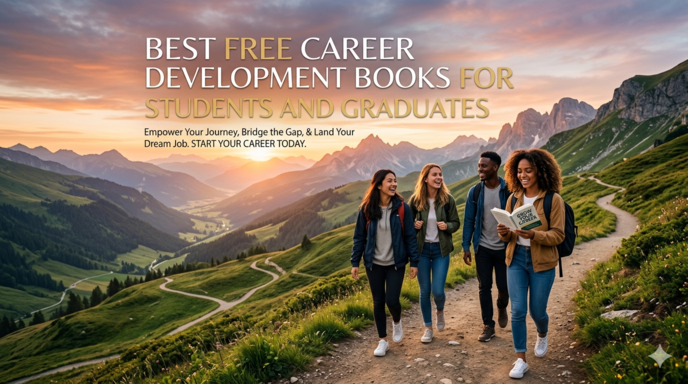
Best Free Career Development Books for Students and Graduates
Starting a career can feel overwhelming especially for students and recent graduates entering a competitive job market.
There are endless questions to navigate:
The uncertainty is real, but the opportunity is greater than ever.
The good news? You do not need expensive coaching programs, paid certifications, or premium courses to start building a successful professional future.
Many of the most valuable career development books are available for free through:
These resources can help students and graduates develop the skills that truly matter:
This guide explores the best free career development books for students and graduates, what each teaches, and how to apply the lessons immediately to gain a career advantage. Many graduates believe that earning a degree is enough.
But degrees open doors skills create opportunities.
The students who accelerate their careers after graduation usually develop strengths in:
Reading career-focused books early helps build these foundations before entering the workforce.
It gives you:
✅ Clear direction Most graduates compete on qualifications.
Top performers compete on mindset and capability.
Before building a successful career, you must build the mindset behind it.
Career growth depends heavily on:
These books build that foundation. Best for: Building a success-oriented mindset
This classic teaches that professional outcomes begin with disciplined thinking.
Students often wait for opportunities.
This book teaches how to prepare for opportunities.
That mindset shift is critical.
Replace:
“I hope I get hired.”
with:
“What skill can I improve this week to increase my value?”
This creates proactive momentum.
Free on: Project Gutenberg, Internet Archive Best for: Long-term professional development
This book emphasizes persistence, self-education, and discipline.
Create a 90-day career development plan focused on one practical skill:
Small daily progress builds long-term advantage.
Free on: Project Gutenberg Strong communication often creates faster career growth than technical ability alone.
Employers value professionals who can:
This is especially important for graduates with limited experience. Best for: Professional writing
This practical guide teaches how to write concise, effective messages.
These skills improve:
Rewrite your resume bullet points to be concise and measurable.
Instead of:
“Responsible for helping customers”
Write:
“Assisted 30+ customers daily, improving satisfaction and response times”
Clearer language increases impact.
Free on: Project Gutenberg Best for: Interview and presentation confidence
Career opportunities often depend on speaking well.
This book helps you:
Practice answering these questions aloud:
Speaking practice builds confidence for interviews.
Free on: Public Domain Libraries Your first years of income shape your long-term financial future.
Without financial discipline, even a strong salary can lead to instability.
These books help create healthy money habits early.
Best for: Personal finance basics
This timeless book teaches practical financial habits.
Save 10% of every income source, including:
This habit builds financial security.
Free on: Public Domain Libraries
Best for: Earning strategy and professional reputation
This book explains how reputation and smart decisions influence income.
Review your social profiles.
Ask:
“Would an employer see professionalism here?”
Your online reputation matters.
Free on: Project Gutenberg Graduates who think strategically advance faster than those who rely on effort alone.
Strategy helps you:
Best for: Opportunity recognition
This book teaches that valuable opportunities often exist close to home.
Identify one challenge in your school, internship, or workplace and suggest an improvement.
Problem-solvers stand out.
Free on: Public Domain Libraries Best for: Competitive awareness
This classic teaches the importance of preparation and strategic positioning.
Review 10 job postings in your target field.
Identify the most repeated skills.
Then focus your learning there.
This aligns your development with market demand.
Free on: Project Gutenberg
Even if you never start a business, entrepreneurial thinking increases your career value.
Employers reward professionals who understand:
Best for: Persuasion and strategic messaging
This book teaches how to communicate value effectively.
Customize each application to the employer.
Instead of sending one resume everywhere, tailor it to match the company’s priorities.
This improves interview chances.
Free on: Project Gutenberg Best for: Modern digital skills
These free resources teach:
Optimize your LinkedIn headline.
Instead of:
“Business Graduate”
Write:
“Business Graduate Focused on Data-Driven Marketing and Customer Growth”
This improves professional positioning.
Free on: HubSpot Resource Library Early-career professionals who manage time effectively gain faster trust and responsibility. Best for: Organization and planning
These resources teach:
Track your weekly goals in:
This builds consistency and accountability.
Free on: OpenStax, Open Library Modern labor markets evolve rapidly.
Free career guides help students understand:
Best for: Career research
This government resource helps compare industries based on:
Research the growth outlook of your target profession before choosing a specialization.
Free on: U.S. Bureau of Labor Statistics Best for: Networking and visibility
LinkedIn provides practical guidance on:
Connect with five professionals in your target industry this week.
Networking builds opportunities.
Free on: LinkedIn You can access these materials legally through:
These sources provide high-value educational resources for free. If you are unsure where to begin, follow this roadmap. Read:
Goal:
Read:
Goal:
Use:
Goal:
Read:
Goal:
By reading and applying these books, students and graduates develop:
✅ Clear communication These skills matter in every profession. Students and graduates often focus only on getting their first job.
But lasting career success begins before that with:
The professionals who advance fastest are those who:
And many of the most important lessons for developing these strengths are available for free.
The difference between an average graduate and a standout professional is rarely information.
It is consistent application.
Start reading.
Start applying.
Start building your professional advantage today.
Why Career Development Reading Matters Early
✅ Professional confidence
✅ Workplace readiness
✅ Financial awareness
✅ Strategic thinking
✅ Growth discipline
1. Career Mindset and Personal Growth
As a Man Thinketh – James Allen
What You’ll Learn:
Apply Immediately:
Self-Help – Samuel Smiles
What You’ll Learn:
Apply Immediately:
2. Communication Skills: The Ultimate Career Multiplier
How to Write Clearly – Edwin A. Abbott
What You’ll Learn:
Apply Immediately:
The Art of Public Speaking – Dale Carnegie
Apply Immediately:
3. Financial Literacy for Career Starters
The Richest Man in Babylon – George S. Clason
What You’ll Learn:
Apply Immediately:
The Art of Money Getting – P.T. Barnum
What You’ll Learn:
Apply Immediately:
4. Strategic Career Thinking
Acres of Diamonds – Russell H. Conwell
What You’ll Learn:
Apply Immediately:
The Art of War – Sun Tzu
What You’ll Learn:
Apply Immediately:
5. Entrepreneurship and Career Flexibility
Scientific Advertising – Claude Hopkins
What You’ll Learn:
Apply Immediately:
HubSpot Free Career and Marketing eBooks
Apply Immediately:
6. Productivity and Time Management
Open-Source Project Management Textbooks
Apply Immediately:
7. Free Modern Career Guides
Occupational Outlook Handbook
Apply Immediately:
LinkedIn Career Guides
Apply Immediately:
Where to Find These Free Career Development Books
60-Day Career Development Plan for Students and Graduates
Weeks 1–2: Build Career Awareness
Weeks 3–4: Improve Communication
Weeks 5–6: Research Career Demand
Weeks 7–8: Build Financial Discipline
Key Skills You’ll Develop
✅ Professional discipline
✅ Financial responsibility
✅ Strategic thinking
✅ Networking confidence
✅ Career planning
✅ Opportunity recognition
Final Thoughts