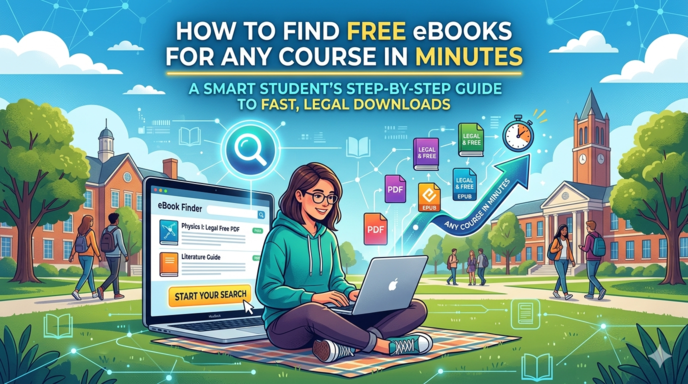
How to Find Free eBooks for Any Course in Minutes A Smart Student’s Step-by-Step Guide to Fast, Legal Downloads
Academic textbooks and course eBooks are essential for student success but they often come with a heavy price tag. For many students, textbook costs can become a major financial burden each semester.
The good news is that finding free eBooks for your courses is easier than ever. With the right search techniques and trusted resources, students can locate free, legal, and high-quality academic eBooks in just minutes.
Whether you're in high school, college, university, or self-studying, this step-by-step guide will show you how to quickly find course eBooks online, safely and legally.
Why Look for Free eBooks?
Students everywhere are turning to free eBooks because they offer both convenience and affordability.
Here are some of the biggest advantages:
💰 Save Hundreds Each Semester
Textbooks can cost $50 to $300 or more per course, and those expenses add up fast. Free eBooks help reduce or eliminate these costs.
âš¡ Instant Access
No need to wait for shipping or bookstore restocks. Free eBooks are usually available immediately for download.
📱 Read Anywhere
Digital textbooks can be accessed on:
- Smartphones
- Tablets
- Laptops
- E-readers
This flexibility makes studying easier from anywhere.
🔎 Searchable Text
Unlike printed books, digital textbooks allow students to search keywords instantly, making it easier to review concepts quickly.
🌠Global Academic Access
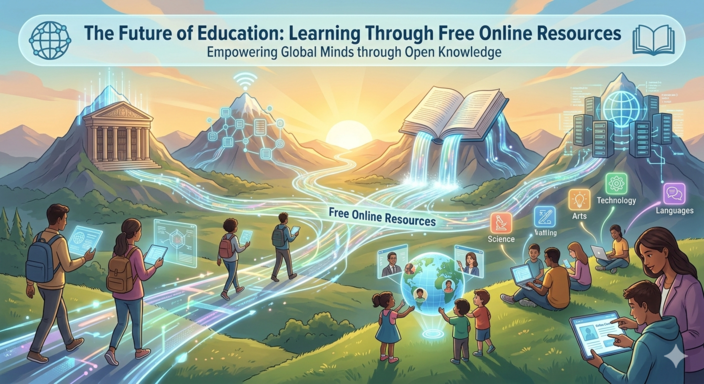
Students can access educational materials from universities and institutions around the world often at no cost.
Many of these resources are distributed legally under Open Educational Resource (OER) licenses or are part of the public domain.
Step-by-Step: How to Find Free eBooks in Minutes
Finding free course books doesn’t require endless searching. By following these five steps, students can locate materials quickly.
Step 1: Search Smart with the Right Keywords
One of the biggest mistakes students make is using broad or vague search terms such as:
“free biology textbook PDF”
This often leads to spammy or irrelevant results.
Instead, use specific keyword combinations like:
- “Introduction to Biology OpenStax PDF”
- “Principles of Economics open textbook”
- “Calculus I OER PDF”
- “Course name + LibreTexts”
- “Subject + MIT OpenCourseWare”
These searches are much more likely to produce legal, trustworthy textbook sources.
Pro Tip:
Add helpful terms like:
- Open textbook
- OER
- Creative Commons
- Public domain
These keywords help filter out pirated copies and low-quality sites.
Step 2: Use Trusted Free eBook Platforms
Rather than searching random websites, go directly to platforms known for offering legal educational resources.
✅ 1. OpenStax – Best for Core College Subjects
Website: OpenStax.org
OpenStax offers peer-reviewed, high-quality textbooks for many college courses.
Subjects include:
- Math
- Biology
- Chemistry
- Physics
- Psychology
- Economics
- Business
All books are free to read online and downloadable in PDF format.
✅ 2. LibreTexts – Huge Subject Library
Website: LibreTexts.org
LibreTexts provides free educational materials in:
- STEM
- Humanities
- Social sciences
- Engineering
Its subject-based organization makes it easy to find textbooks quickly.
✅ 3. MIT OpenCourseWare
Website: ocw.mit.edu
MIT OpenCourseWare offers:
- Lecture notes
- Reading materials
- Assignments
- Downloadable resources
This is especially useful for advanced learners in technical fields.
✅ 4. Open Textbook Library
Website: open.umn.edu
This platform provides peer-reviewed textbooks across multiple subjects and is widely used by educators.
✅ 5. Project Gutenberg
Website: gutenberg.org
Project Gutenberg has 60,000+ free books, especially useful for:
- Literature
- History
- Philosophy
- Classics
Ideal for humanities students.
✅ 6. Internet Archive
Website: archive.org
The Internet Archive offers:
- Older textbook editions
- Borrowable eBooks
- Academic references
It’s useful when current editions aren’t available elsewhere.
✅ 7. Google Scholar with PDF Search
Google Scholar can uncover free PDFs hosted by universities.
Try searches like:
“Book Title” filetype:pdf
or
“Course topic” filetype:pdf OER
This often reveals free educational PDFs that standard search engines miss.
Step 3: Match the eBook to Your Course Syllabus
To find the correct book quickly, always check your syllabus first.
Look for:
- Book title
- Author
- Edition
- ISBN
These details make searching much faster and more accurate.
Search by ISBN
The ISBN is one of the fastest ways to locate a textbook.
Search:
- ISBN + PDF
- ISBN + open textbook
Sometimes older editions are available legally for free.
Ask Your Professor
Many instructors now provide:
- Open educational resources
- Free course packets
- Download links in the LMS
Professors may also recommend free alternatives to expensive books.
Step 4: Use Subject-Specific Platforms
Different subjects often have better resources on specialized platforms.
| Subject | Best Platforms |
|---|---|
| Math | OpenStax, MIT OCW, LibreTexts |
| Biology | OpenStax, NCBI Bookshelf |
| Chemistry | LibreTexts, OpenStax |
| Physics | OpenStax, MIT OCW |
| Computer Science | GitHub Free Programming Books, MIT OCW |
| Business | OpenStax, Saylor Academy |
| Psychology | OpenStax, Noba Project |
| Literature | Project Gutenberg, Internet Archive |
| History | Open Library, Archive.org |
| Nursing/Health | NCBI Bookshelf, WHO Publications |
Using the right platform saves time and improves search results.
Step 5: Avoid Unsafe or Illegal Sites
Not every “free textbook” site is trustworthy.
Some sites may:
- Require credit card information
- Redirect to suspicious pages
- Install malware
- Distribute illegal copies
These sites can harm your device and violate copyright laws.
Stay Safe by:
Using:
- University websites
- Nonprofit educational platforms
- Open textbook libraries
Checking for:
- Creative Commons licenses
- Public domain notices
Avoiding:
- Aggressive pop-ups
- Forced downloads
- Fake “download” buttons
If a site looks suspicious, it’s best to leave.
Use Your School Library A Hidden Goldmine
Many students overlook one of the best free resources available: their university library.
Libraries often provide access to:
- Academic eBook databases
- Publisher collections
- Temporary digital textbooks
- Interlibrary loans
Search your school library portal by:
- Book title
- Author
- ISBN
- Subject
Your institution may already pay for access to:
- EBSCO
- ProQuest
- JSTOR
- SpringerLink
This can save students hundreds.
What If You Can’t Find the Exact Textbook?
Sometimes the exact required book isn’t available for free.
In that case, look for:
✅ Older Editions
Older versions often contain nearly identical material.
✅ Alternative Open Textbooks
Many OER books cover the same course outcomes.
✅ Lecture Notes
Universities often publish lecture notes that match textbook content.
✅ Study Guides
Free companion resources can fill in the gaps.
Often, an open textbook covers 90–100% of the same curriculum.
Best Tools for Managing Free eBooks
Once you download your textbooks, organize them efficiently.
Recommended Tools:
Adobe Acrobat / PDF Expert
For highlighting and annotation
OneNote / Notion
For notes and summaries
Google Drive / Dropbox
For cloud storage and backups
Folder Organization
Sort files by semester and subject
This helps keep all materials accessible and manageable.
How Long Does This Actually Take?
Using the system above:
- 2–3 minutes searching OpenStax or LibreTexts
- 2 minutes checking your library
- 1 minute refining a Google search
That means you can often find what you need in under 10 minutes.
Are Free eBooks Legal?
Yes when downloaded from legitimate sources.
Legal free eBooks include:
Public Domain Books
Books no longer under copyright
Open Educational Resources (OER)
Books released under open licenses
Library Access Copies
Digital books provided by institutions
Author-Approved PDFs
Books shared legally by authors or publishers
Avoid pirated copies of copyrighted commercial textbooks.
Final Thoughts
Finding free eBooks for any course is faster and easier than most students realize.
By using:
- Trusted textbook platforms
- Smart search strategies
- University library resources
- Safe download practices
students can access high-quality academic materials in minutes without spending a fortune.
Education should be accessible, affordable, and efficient.
With the right tools, any student can build a free digital academic library quickly, legally, and safely.