Free Study Books That Help Students Pass Exams Faster
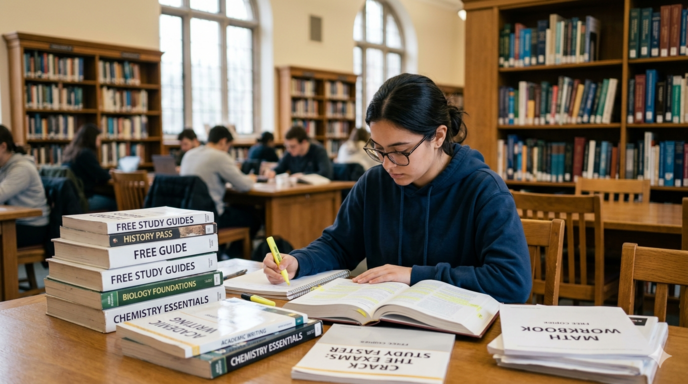
Preparing for exams can feel overwhelming, especially when students lack access to costly textbooks or tutoring. However, research consistently shows that free study books and open educational resources (OER) can be just as effective sometimes even more effective than traditional materials in improving exam performance and learning outcomes.
Studies across multiple disciplines indicate that students using free textbooks often achieve equal or slightly higher grades, benefit from better access to materials, and experience reduced financial stress, all of which contribute to faster and more efficient exam preparation. These advantages make free study resources not just economical, but academically powerful tools.
Why Free Study Books Accelerate Exam Success
Free study books are typically designed with accessibility and clarity in mind. Unlike some traditional textbooks, they often emphasize concise explanations, structured learning, and exam-focused content.
Research-backed benefits include:
- Improved accessibility: Students can access materials instantly without delays or cost barriers
- Better academic outcomes: Several studies show comparable or improved exam scores using OER
- Higher engagement: Students are more likely to consistently use materials they can freely access
- Reduced cognitive overload: Many free resources simplify complex topics for faster understanding
For example, a large-scale review found that students using open textbooks performed as well or better than those using commercial textbooks while saving significant costs (Hilton, 2016). Similarly, a meta-analysis reported positive effects on course grades and achievement when OER were adopted (Cho & Permzadian, 2024).
Types of Free Study Books That Improve Exam Performance
1. Open Textbooks
Open textbooks are comprehensive, peer-reviewed academic books available online for free.
Why they work:
- Structured like traditional textbooks
- Written by subject experts
- Include exercises, examples, and explanations
- Continuously updated
📘 Best for: Deep understanding of subjects
Research shows that open textbooks provide learning outcomes comparable to traditional materials, with no negative impact on exam performance (Clinton & Khan, 2019).
2. Exam Preparation Guides
These are focused resources designed specifically to help students pass exams efficiently.
Typical features:
- Key concept summaries
- Practice tests and mock exams
- Past questions with answers
- Time-management strategies
Why they help:
They eliminate unnecessary content and focus only on high-probability exam topics, improving efficiency and speed.
3. Revision Notes and Condensed Study Guides
These materials summarize entire subjects into digestible formats.
Key features:
- Bullet-point summaries
- Visual aids (charts, diagrams)
- Key definitions and formulas
- Memory techniques
📌 Best for: Last-minute revision
Condensed materials improve recall speed, which is crucial during exams.
4. Practice Workbooks
Workbooks emphasize active learning, which is one of the most effective ways to prepare for exams.
Include:
- Multiple-choice questions
- Problem-solving exercises
- Case studies
- Step-by-step solutions
Why they work:
Practice strengthens neural pathways, improving both accuracy and speed during exams.
5. Past Papers and Solution Manuals
Past exam papers are among the most powerful tools available.
Benefits:
- Familiarity with question formats
- Insight into examiner expectations
- Improved time management
- Reduced exam anxiety
A study on mathematics courses found that students using open resources and practice-based materials achieved higher examination grades than those who did not (Venegas-Muggli & Westermann, 2019).
Subjects with Abundant Free Study Books
Free resources are widely available in:
- Mathematics
- Physics
- Chemistry
- Biology
- Computer Science
- Economics
- English Language
- Social Sciences
Platforms like OpenStax, MIT OpenCourseWare, and Khan Academy provide extensive coverage across these subjects.
How to Use Free Study Books Effectively
Simply downloading books isn’t enough strategy matters.
1. Create a Structured Study Plan
Break your syllabus into sections and assign realistic deadlines.
2. Combine Reading with Practice
Immediately apply what you learn through exercises.
3. Focus on Weak Areas
Use practice tests to identify gaps and revisit those topics.
4. Use Summaries for Revision
Switch to condensed notes closer to exam dates.
5. Simulate Exam Conditions
Practice under timed conditions to improve performance speed.
Advantages of Free Study Books
- 💰 Cost-effective
- 🌍 Globally accessible
- 📱 Mobile-friendly
- 🔄 Frequently updated
- 📚 Wide subject coverage
Importantly, free access ensures all students can consistently engage with learning materials, which directly impacts performance.
Tips for Choosing High-Quality Free Study Books
Not all free resources are equally effective. Choose wisely:
- ✔ Check author credibility
- ✔ Match content with your syllabus
- ✔ Prefer updated editions
- ✔ Look for practice questions
- ✔ Read user reviews if available
Common Mistakes to Avoid
- Downloading too many resources without using them
- Relying only on summaries without understanding concepts
- Ignoring practice questions
- Passive reading without note-taking
Research suggests that active engagement, not just access, determines success.
Final Thoughts
Free study books are not just an alternative they are a proven, effective strategy for faster exam preparation. When used correctly, they can match or even outperform traditional learning methods.
Success in exams depends less on how much you spend and more on how effectively you study. By combining open textbooks, practice materials, and smart study strategies, students can significantly improve their performance and confidence.