Best Free Academic Books Online (Organized by Subject and Level)
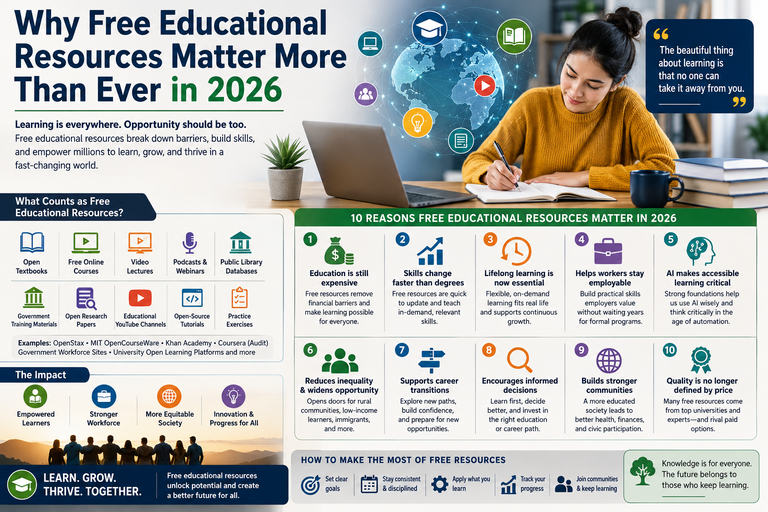
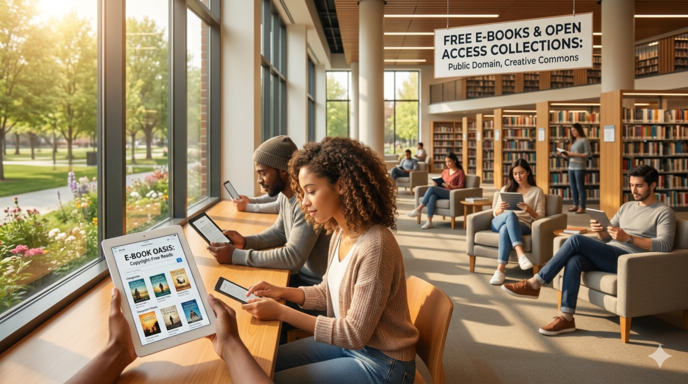
In 2026, accessing free eBooks is easier and riskier than ever. While millions of titles are available online, not all of them are legal or safe. The key is knowing which platforms respect copyright laws and how to identify legitimate sources.
🔠Evidence-Based Overview
Research consistently shows that legal free eBooks primarily come from public domain works, open access publishing, or licensed distribution models. Studies highlight that open access publishing expands knowledge dissemination while still operating within copyright frameworks (Suber, 2012; Willinsky, 2006). Meanwhile, empirical research confirms that when books enter the public domain, availability increases significantly, making them widely accessible and often free (Heald, 2014; Flynn et al., 2019).
Scholarly analyses also emphasize that copyright law plays a central role in determining access, and unauthorized distribution undermines both authors and publishers while exposing users to risks (Esteve, 2024; Frosio, 2014). Open access initiatives like DOAB have been shown to improve academic accessibility and global knowledge equity (Loan, 2015).
📖 Understanding Copyright and Free eBooks
Before downloading any free eBook, it’s essential to understand why some books are legally free.
✅ Legitimate Categories of Free eBooks
1. Public Domain Books
Books enter the public domain when copyright expires. Research shows these works become significantly more accessible and widely distributed once restrictions are lifted (Heald, 2007; Flynn et al., 2019).
2. Open Access / Creative Commons
Open access publishing allows authors to distribute their work freely while retaining certain rights. This model is widely used in academia (Suber, 2012).
3. Open Educational Resources (OER)
Freely available textbooks and learning materials, often peer-reviewed and institution-backed.
4. Promotional Free Books
Authors may temporarily offer books for free to build readership.
5. Government Publications
Publicly funded research is often freely accessible to ensure knowledge dissemination.
âš ï¸ Red flag: If a recent bestseller is permanently free on an unknown site, it is almost certainly illegal.
🌠Best Legal Websites for Free eBooks (2026)
1. Project Gutenberg
🔗 https://www.gutenberg.org
A cornerstone of public domain literature with over 70,000 titles. গবেষণা indicates that such repositories significantly increase access to historical texts.
✔ 100% legal
✔ No registration
✔ Multiple formats
2. Open Library (Internet Archive)
🔗 https://openlibrary.org
Operates on a controlled digital lending model, aligning with copyright frameworks.
✔ Millions of books
✔ Borrow like a library
âš Requires account
3. Google Books (Free Section)
🔗 https://books.google.com
Provides access to public domain works and previews of copyrighted texts.
4. Directory of Open Access Books (DOAB)
🔗 https://www.doabooks.org
A major academic resource. Studies show DOAB enhances scholarly visibility and access globally (Loan, 2015).
✔ 60,000+ peer-reviewed books
✔ University-backed
5. OpenStax
🔗 https://openstax.org
A leading provider of free textbooks. গবেষণা confirms OER improves educational accessibility and reduces costs.
6. ManyBooks
🔗 https://manybooks.net
Combines public domain works with indie publications.
7. Standard Ebooks
🔗 https://standardebooks.org
Focuses on high-quality formatting of public domain books.
8. Smashwords (Free Section)
🔗 https://www.smashwords.com
Offers author-approved free books, often for promotion.
9. Government & Institutional Repositories
Examples include:
- NASA eBooks
- World Bank Open Knowledge Repository
- UNESCO Digital Library
✔ গবেষণা-backed content
✔ Fully legal
📚 Free eBooks by Category
📘 Classics
- Project Gutenberg
- Standard Ebooks
🎓 Academic
- DOAB
- OpenStax
💼 Business
- University press websites
🔬 Science
- arXiv
- Government databases
📖 Fiction
- Smashwords
- ManyBooks
🔠How to Verify an eBook Is Legal
Ask yourself:
- Is the site reputable (.edu, .gov)?
- Is the book labeled public domain or open access?
- Does the site use HTTPS?
Research shows that unauthorized platforms often lack transparency and proper licensing information (Towle, 2007).
âš ï¸ Websites to Avoid
Avoid sites that:
- Offer new bestsellers for free
- Require suspicious downloads
- Use excessive ads or pop-ups
Studies indicate illegal platforms often distribute malware and low-quality files while violating copyright laws (Sang, 2017).
📱 Best eBook Formats
| Format | Best Use |
|---|---|
| EPUB | Most devices |
| Academic texts | |
| MOBI/AZW | Kindle |
| HTML | Browser reading |
🌎 Copyright Laws (2026)
- US / UK / EU / Canada: Life of author + 70 years
- Public domain expands annually
Research confirms that longer copyright terms can limit access to knowledge (Nagaraj, 2018).
💡 Pro Tips for Unlimited Legal Reading
- Use library apps (Libby, Hoopla)
- Subscribe to author newsletters
- Monitor Amazon free promotions
- Explore university press releases
🎯 Benefits of Legal Free eBooks
- No legal risk
- सà¥à¤°à¤•à¥à¤·à¤¿à¤¤ downloads
- উচà§à¦š মানের formatting
- Supports authors
- Reliable academic sources
Open access research highlights that legal distribution enhances innovation, education, and global knowledge sharing (Willinsky, 2006; Suber, 2012).
✅ Final Thoughts
Finding free eBooks legally in 2026 isn’t difficult it just requires using trusted, copyright-compliant platforms. Resources like Project Gutenberg, DOAB, Open Library, and OpenStax provide vast collections without legal or security risks.
Avoid suspicious websites, verify licensing, and take advantage of public domain and open access initiatives. With the right approach, you can build a massive, completely legal digital library.
📑 References
- Heald, P. J. (2007). Property rights and the efficient exploitation of copyrighted works. Minnesota Law Review. https://scholarship.law.umn.edu/cgi/viewcontent.cgi?article=1590&context=mlr
- Loan, F. A. (2015). Open access e-books in science and technology. DESIDOC Journal. https://www.publicationsdrdo.in/index.php/djlit/article/download/8494/4983
- Esteve, A. (2024). Copyright and open access to scientific publishing. IIC. https://link.springer.com/content/pdf/10.1007/s40319-024-01479-z.pdf
- Willinsky, J. (2006). The Access Principle. https://repository.arizona.edu/bitstream/handle/10150/106529/jwapbook.pdf
- Reimers, I. (2016). Copyright protection in publishing. Journal of Law and Economics.
- Frosio, G. (2014). Open access publishing: A literature review. https://papers.ssrn.com/sol3/Delivery.cfm?abstractid=2697412
- Flynn, J., Giblin, R., & Petitjean, F. (2019). Public domain and book markets. https://papers.ssrn.com/sol3/Delivery.cfm?abstractid=3401684
- Nagaraj, A. (2018). Copyright and reuse. Management Science.
- Suber, P. (2012). Open Access. https://assets.pubpub.org/1j1jj6kx/9bd6c7cf-334e-472d-b57a-96d75d93c279.pdf
- Towle, G. (2007). Ebooks and publishing challenges. https://repository.lboro.ac.uk/articles/thesis/Ebooks_challenges_and_effects_on_the_book_chain/9415460
- Sang, Y. (2017). The politics of ebooks. https://www.academia.edu/download/56960439/The_politics_of_ebooks_-Library.pdf