
How Free eBooks Are Helping Students Study Without Financial Stress
Education has always been one of the most powerful tools for improving life opportunities. However, for many students, the cost of textbooks and learning materials creates a serious financial burden. In 2026, while tuition fees and living expenses continue to rise globally, one solution is making a significant difference: free eBooks.
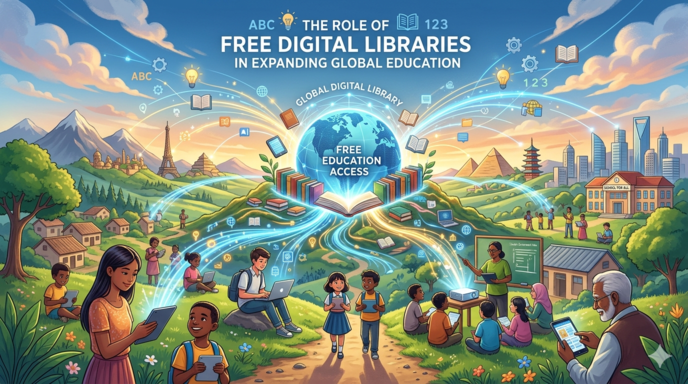
From open textbooks to digital library platforms, free eBooks are transforming how students access knowledge reducing financial stress and increasing educational equality.
This comprehensive article explores how free eBooks are changing education, where students can find them, and why they are becoming essential for modern learning.
The Rising Cost of Education Materials
Textbooks have traditionally been expensive. In many countries:
- Students spend hundreds or even thousands of dollars per year on books.
- Some avoid purchasing required materials due to cost.
- Others rely on outdated editions.
- Many share limited copies, affecting study efficiency.
For students already managing tuition, accommodation, transportation, and daily expenses, textbook costs can become overwhelming.
In some cases, students are forced to choose between:
- Buying required course materials
- Paying rent
- Purchasing food
- Covering transportation costs
When education creates constant financial pressure, learning becomes more stressful and less effective.
Free eBooks are helping eliminate that burden.
What Are Free eBooks in Education?
Free educational eBooks generally fall into three major categories:
1. Open Educational Resources (OER)
These are freely licensed textbooks and academic materials created by educators, institutions, and organizations.
They are designed specifically for learning and are often:
- Peer-reviewed
- Continuously updated
- Legally accessible
- Adaptable for classrooms
2. Public Domain Books
These include classic works whose copyrights have expired.
Students can legally access:
- Literature classics
- Historical texts
- Foundational philosophy books
- Older scientific works
Public domain libraries make these materials available worldwide at no cost.
3. Library-Provided Digital Books
Public and university libraries now offer extensive digital collections through online platforms.
Students can borrow:
- Academic textbooks
- Research materials
- Audiobooks
- Reference guides
without physically visiting a library.
How Free eBooks Reduce Financial Stress
1. Eliminating Textbook Costs
The most immediate benefit is financial relief.
Platforms like:
allow students to access complete textbooks for free.
Over the course of a degree program, this can save students thousands of dollars.
That financial relief allows students to:
- Focus more on academics
- Work fewer hours at part-time jobs
- Reduce dependency on loans
- Avoid unnecessary debt accumulation
For many learners, free eBooks make continued education financially possible.
2. Immediate Access to Learning Materials
Traditional textbooks may be:
- Out of stock
- Delayed in shipping
- Expensive to purchase immediately
Free eBooks solve this problem through instant access.
Students can:
- Download books immediately
- Start studying on the first day of class
- Access materials anytime
- Study from virtually anywhere
This immediate availability improves both academic confidence and preparedness.
3. Equal Access for All Students
Education inequality often begins with unequal access to resources.
Free eBooks help level the academic playing field by ensuring that:
- Low-income students have equal learning opportunities
- First-generation students can access required materials
- International students avoid costly shipping fees
- Rural learners can study without limited bookstore access
Knowledge should not depend on income level.
Free educational resources move education closer to that ideal.
4. Reducing Academic Anxiety
Financial stress directly affects student mental health.
Students who constantly worry about:
- Paying for textbooks
- Falling behind academically
- Managing debt
- Affording learning materials
often experience higher levels of anxiety and academic pressure.
Free eBooks remove one major source of financial concern.
When students no longer worry about obtaining course materials, they can focus more fully on:
- Learning
- Revision
- Assignments
- Exams
- Long-term academic goals
Reducing financial stress improves both educational outcomes and emotional well-being.
5. Supporting Flexible and Remote Learning
Online and hybrid learning are now central parts of modern education.
Free digital textbooks support:
- Distance education
- Hybrid classrooms
- Mobile learning
- Self-paced study
- Remote academic programs
Students can read materials on:
- Laptops
- Smartphones
- Tablets
- E-readers
This flexibility is especially valuable for working students and learners balancing multiple responsibilities.
Popular Platforms Offering Free eBooks for Students
Several trusted platforms now provide high-quality educational materials for free.
✅ OpenStax
OpenStax offers peer-reviewed textbooks in subjects such as:
- Biology
- Physics
- Mathematics
- Psychology
- Economics
- Accounting
Its books are widely used by universities around the world.
✅ Open Textbook Library
This platform provides academic textbooks reviewed by faculty members and educational professionals.
Students can find resources across numerous disciplines.
✅ Project Gutenberg
Project Gutenberg offers over 60,000 free public domain books.
It is especially valuable for:
- Literature students
- History students
- Philosophy learners
- Humanities research
✅ Internet Archive
The Internet Archive provides access to millions of books through digital lending systems.
Students can explore:
- Academic texts
- Historical archives
- Research materials
- Rare publications
✅ Libby and Hoopla Digital
These library apps allow students to borrow eBooks and audiobooks for free using a library card.
They provide convenient access to educational materials from smartphones and tablets.
✅ University Open Course Platforms
Many universities now publish:
- Lecture notes
- Course readings
- Study guides
- Open-access textbooks
alongside free online courses.
This expands educational access globally.
Academic Benefits of Free eBooks
Beyond reducing costs, free eBooks improve the overall learning experience.
1. Searchable Content
Digital books allow students to quickly search:
- Keywords
- Definitions
- Concepts
- Topics
This saves time during:
- Research
- Revision
- Assignment preparation
Searchability improves study efficiency significantly.
2. Highlighting and Note-Taking Features
Many eBook platforms support:
- Digital highlights
- Annotations
- Sticky notes
- Bookmarks
These features encourage active reading and improve information retention.
3. Portability
Instead of carrying several heavy textbooks, students can store an entire semester’s materials on one device.
This makes studying more convenient and mobile.
4. Frequent Updates
Traditional textbooks can become outdated quickly.
Open educational resources are easier to revise and update, helping students access:
- Current research
- Updated statistics
- Modern examples
- Relevant industry information
This is especially important in rapidly changing fields like technology and healthcare.
Environmental Benefits of Free eBooks
Free digital textbooks also support sustainability.
Benefits include:
- Reduced paper consumption
- Lower printing demand
- Fewer shipping emissions
- Reduced physical waste
As schools and universities adopt greener policies, digital learning resources align naturally with environmental goals.
Challenges and Considerations
Although free eBooks provide major benefits, some challenges still exist.
1. Screen Fatigue
Long reading sessions on digital devices can cause:
- Eye strain
- Headaches
- Fatigue
Solution:
Students can:
- Use e-ink readers
- Take regular screen breaks
- Print selected chapters when necessary
2. Internet Access Limitations
Not all students have reliable internet access.
Solution:
Many platforms allow offline downloads so students can study without constant connectivity.
3. Limited Device Access
Some learners may not own personal laptops or tablets.
Solution:
Many schools and libraries now provide:
- Device loan programs
- Computer labs
- Community digital access initiatives
How Educational Institutions Are Supporting Free eBooks
Universities and schools increasingly recognize the value of open-access learning.
Many institutions now:
- Encourage faculty to adopt open textbooks
- Provide grants for OER creation
- Partner with digital libraries
- Promote zero-cost textbook programs
Some universities even offer entire degree programs using free educational materials.
This represents a major shift in how higher education is delivered.
Long-Term Impact on Students
Free eBooks contribute to:
- Lower student debt
- Improved academic performance
- Higher course completion rates
- Increased educational confidence
- Better educational equality
Students who graduate with less financial stress are often better positioned to:
- Start careers earlier
- Continue their education
- Build businesses
- Invest in professional development
The benefits extend far beyond graduation.
The Future of Free Digital Education
Educational technology continues evolving rapidly.
In the coming years, students may increasingly use:
- Interactive eBooks
- AI-powered study assistants
- Adaptive learning systems
- Embedded video lessons
- Collaborative annotation tools
- Personalized learning platforms
Free educational resources are becoming more intelligent, engaging, and accessible.
The future of education is likely to be increasingly open and digital.
Tips for Students Using Free eBooks Effectively
To maximize learning from free eBooks:
Create a Study Schedule
Consistency improves retention and reduces procrastination.
Organize Digital Notes
Use folders, cloud storage, and note-taking apps to manage study materials.
Combine Reading with Practice
Apply concepts through:
- Exercises
- Projects
- Research assignments
- Practice tests
Download Books for Offline Access
This ensures uninterrupted study even without internet access.
Verify Source Credibility
Use trusted educational platforms and peer-reviewed materials whenever possible.
Final Thoughts
Free eBooks are more than digital files they are tools for educational equality, financial relief, and academic empowerment.
By removing textbook costs, they help:
- Reduce financial stress
- Improve educational access
- Support remote learning
- Promote mental well-being
- Increase academic flexibility
- Create long-term economic opportunities
For students struggling with the rising cost of education, free eBooks provide a practical and life-changing solution.
Knowledge should never be limited by financial barriers.
Thanks to free digital resources, education is becoming more accessible one download at a time.