The Role of Free Digital Libraries in Expanding Global Education
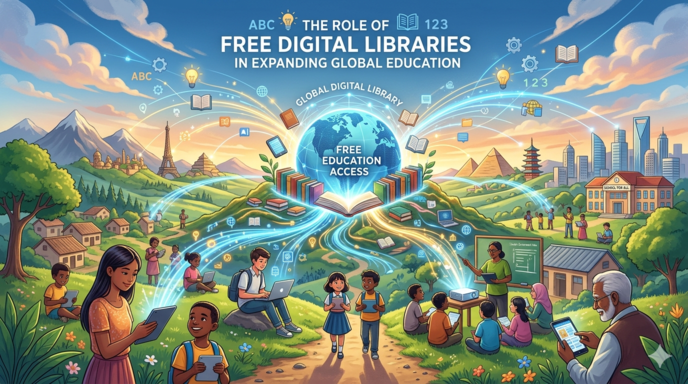
In the digital age, access to knowledge is no longer confined to physical classrooms or traditional libraries. Free digital libraries have emerged as powerful tools in expanding global education, breaking down barriers related to geography, income, language, and infrastructure. In 2026, as internet connectivity and digital learning continue to grow worldwide, these online knowledge repositories are transforming how people learn, teach, and share information.
From students in remote villages to professionals pursuing lifelong learning, millions of people now rely on free digital libraries for educational access that was once impossible or unaffordable.
This comprehensive article explores how free digital libraries are reshaping global education, the opportunities they create, the challenges they face, and their long-term impact on society and economic development.
What Are Free Digital Libraries?
Free digital libraries are online platforms that provide educational and informational resources at no cost. These platforms may include:
- Books
- Academic journals
- Research papers
- Open textbooks
- Multimedia resources
- Historical archives
- Audiobooks
- Educational videos
- Lecture materials
Unlike traditional libraries, digital libraries can be accessed from virtually anywhere with an internet connection.
Many free digital libraries focus on:
- Open-access education
- Public domain works
- Open Educational Resources (OER)
- Academic research accessibility
Types of Resources Available in Digital Libraries
Free digital libraries often contain several categories of educational content.
1. Public Domain Collections
These include books whose copyrights have expired, making them legally free to access and distribute.
Students can access:
- Classic literature
- Historical texts
- Philosophy works
- Early scientific publications
2. Open Educational Resources (OER)
OER materials are educational resources released under open licenses that allow:
- Free access
- Sharing
- Modification
- Redistribution
These resources are widely used in schools and universities.
3. Open-Access Research Publications
Academic journals and repositories increasingly publish research openly, allowing scholars worldwide to access scientific findings without expensive subscriptions.
4. Digital Lending Platforms
Many public libraries now offer digital borrowing systems for eBooks and audiobooks through mobile apps and online portals.
Popular Free Digital Libraries
Several major platforms are helping expand educational access globally.
✅ Project Gutenberg
One of the oldest digital libraries, offering tens of thousands of public domain books.
Popular for:
- Literature
- Humanities
- Historical works
- Language learning
✅ Internet Archive
A massive digital repository containing:
- Books
- Research materials
- Historical archives
- Multimedia resources
It also supports digital lending services.
✅ Open Library
An initiative aiming to create a web page for every published book, providing digital borrowing access to millions of titles.
✅ OpenStax
Provides peer-reviewed open textbooks for higher education subjects such as:
- Mathematics
- Biology
- Economics
- Psychology
- Physics
- Accounting
✅ Directory of Open Access Books (DOAB)
Offers scholarly open-access books from academic publishers worldwide.
✅ Libby and Hoopla Digital
These apps allow users to borrow digital books from public libraries using library cards.
Breaking Geographic Barriers
1. Reaching Remote and Underserved Areas
In many regions, physical libraries are limited or nonexistent. Rural communities and underserved areas often struggle with access to quality educational resources.
Free digital libraries solve this problem by providing:
- Instant access to educational materials
- Downloadable offline resources
- Remote learning opportunities
- Global educational connectivity
A student in a small rural community can now access many of the same educational materials used by students in major universities.
2. Supporting Learners in Conflict Zones
In areas affected by war, political instability, or natural disasters, educational infrastructure may be severely disrupted.
Digital libraries provide continuity by enabling:
- Mobile access to learning materials
- Portable education through smartphones and tablets
- Self-directed learning despite displacement
For refugees and displaced learners, access to educational resources can support both survival and long-term opportunity.
Reducing Financial Inequality
1. Eliminating Cost Barriers
Textbooks and academic subscriptions can be expensive, especially in low-income regions.
Free digital libraries help students by:
- Removing textbook costs
- Providing free research access
- Reducing dependence on paid educational platforms
This financial relief can save students hundreds or thousands of dollars over time.
2. Supporting Lifelong Learning
Education no longer ends after graduation.
Free digital libraries empower:
- Career changers
- Entrepreneurs
- Self-taught professionals
- Retirees
- Independent researchers
People can continue learning throughout their lives without major financial barriers.
Enhancing Academic Collaboration
1. Open Access to Research
Open-access publishing allows researchers worldwide to access scientific studies freely.
This promotes:
- Faster scientific advancement
- International collaboration
- Greater transparency
- Broader participation in research
Researchers in developing countries can now contribute more actively to global academic conversations.
2. Cross-Border Knowledge Sharing
Digital libraries encourage the exchange of ideas across cultures and nations.
Students and scholars can:
- Access international research
- Study different perspectives
- Collaborate globally
- Compare educational approaches
Education becomes more interconnected and globally informed.
Supporting Online and Remote Learning
1. Integration with Online Education
Digital libraries play a foundational role in:
- MOOCs (Massive Open Online Courses)
- Virtual universities
- Hybrid learning programs
- Self-paced online courses
Educators can directly integrate free resources into digital classrooms.
2. Flexible Learning Environments
Free digital libraries support learning that is:
- Mobile
- Self-paced
- Remote
- Personalized
Students can study:
- At home
- While commuting
- During work breaks
- Across different time zones
This flexibility is essential for modern learners balancing education with other responsibilities.
Promoting Educational Equity
Free digital libraries contribute significantly to educational equality.
They help:
- Reduce socioeconomic disparities
- Provide equal resource access
- Support underrepresented communities
- Expand multilingual education
Many platforms also improve accessibility for learners with disabilities through:
- Screen reader compatibility
- Adjustable fonts
- Audio content
- Searchable text
Inclusive access is becoming a central goal of digital education systems.
Encouraging Curriculum Innovation
Educators also benefit greatly from open digital resources.
1. Customizable Teaching Materials
Open Educational Resources allow teachers to:
- Adapt content
- Localize examples
- Update information
- Personalize lessons
This improves relevance and engagement for students.
2. Rapid Updates
Unlike printed textbooks, digital resources can be updated quickly to reflect:
- Technological changes
- New discoveries
- Current events
- Emerging industries
Students gain access to more current and accurate information.
Environmental Benefits
Digital libraries also support environmental sustainability.
Benefits include:
- Reduced paper consumption
- Lower printing demand
- Fewer transportation emissions
- Reduced physical storage needs
As institutions pursue greener policies, digital education aligns naturally with sustainability goals.
Challenges Facing Free Digital Libraries
Despite their advantages, digital libraries still face important challenges.
1. The Digital Divide
Access to digital education depends on:
- Reliable internet access
- Affordable devices
- Electricity infrastructure
In some regions, these remain significant obstacles.
Bridging the digital divide requires continued investment in:
- Broadband expansion
- Affordable technology
- Public internet access
- Community learning centers
2. Copyright and Licensing Issues
Not all educational materials are freely accessible due to copyright restrictions.
Balancing:
- Intellectual property rights
- Educational access
- Publisher interests
- Open-access initiatives
remains an ongoing challenge.
3. Information Overload
The abundance of online information can overwhelm students.
Without proper digital literacy skills, learners may struggle to:
- Identify credible sources
- Avoid misinformation
- Evaluate academic quality
Teaching information literacy is increasingly important.
The Role of Governments and Educational Institutions
Governments and universities are increasingly supporting digital education initiatives.
Many now:
- Fund open-access projects
- Encourage OER adoption
- Support digital repositories
- Require publicly funded research to be openly accessible
Educational policy is gradually shifting toward more open and accessible learning systems.
The Future of Free Digital Libraries
As technology advances, digital libraries are expected to become more interactive and intelligent.
Future developments may include:
- AI-powered recommendations
- Personalized learning systems
- Interactive textbooks
- Multimedia-enhanced content
- Collaborative annotation tools
- Real-time translation features
Artificial intelligence may help learners find relevant materials faster and adapt content to individual learning styles.
Long-Term Global Impact
The expansion of free digital libraries contributes to:
- Higher literacy rates
- Greater educational participation
- Improved workforce skills
- Reduced educational inequality
- Stronger economies
- Increased innovation
Education is closely connected to:
- Economic growth
- Public health
- Social mobility
- Political stability
By expanding access to knowledge, digital libraries help support broader global development goals.
Why Free Digital Libraries Matter More Than Ever
In 2026, knowledge drives:
- Employment opportunities
- Technological advancement
- Entrepreneurship
- Innovation
- Social progress
Yet millions still face barriers to education.
Free digital libraries help bridge those gaps by ensuring that information is accessible regardless of:
- Income
- Location
- Institutional affiliation
- Social background
They transform education from a privilege into a more universal opportunity.
Final Thoughts
Free digital libraries are far more than online book collections they are engines of educational transformation.
They:
- Break geographic barriers
- Reduce financial inequality
- Promote academic collaboration
- Support lifelong learning
- Encourage innovation
- Expand educational equity
In a world increasingly powered by knowledge, access to learning should not be limited by borders, infrastructure, or economic status.
As technology continues to evolve, free digital libraries will likely become even more central to global education systems helping millions of learners build better futures, one digital page at a time.