Lifelong Learning with Free eBooks: A Practical Path to Continuous Growth
Lifelong learning isn’t a trend it’s a survival skill. Careers shift, industries evolve, and knowledge that once guaranteed job security can become outdated within a few years. Yet for many adults, continuing education is limited by time, cost, location, and access to quality instruction.
In this context, free eBooks including legal open-access books, public-domain classics, and Open Educational Resources (OER) have emerged as one of the most practical tools for lifelong learners. They provide flexible learning, reduce financial barriers, support cross-disciplinary skill-building, and make education more inclusive.
This article explores why free eBooks matter, how they support meaningful development, and how learners can use them to create a sustainable, self-directed learning system.
1. Lifelong Learning Needs Low-Cost, High-Frequency Access to Knowledge
Adult learners often stop formal education not because they lack motivation, but because traditional learning is expensive and inconvenient:
-
Degree programs require years of commitment.
-
Professional courses and certifications can be costly.
-
Workplace training budgets may be limited or unequal.
-
Fixed schedules and commuting are difficult to manage.
-
Family and work responsibilities reduce available time.
Free eBooks transform the economics of learning.
-
Explore new fields without financial risk.
-
Build foundational knowledge gradually.
-
Maintain a “just-in-time” reference library for work or personal projects.
-
Continue learning even during transitions or unemployment.
Key insight: Frequent, small learning sessions over time produce stronger, more durable growth than occasional intensive study.
2. Free eBooks Remove the “Permission Barrier”
Many adults hesitate to learn because they feel they need formal permission money, enrollment, or a program to begin. Free eBooks remove this barrier.
-
Start reading immediately.
-
Try exercises or chapters without financial risk.
-
Build a foundational understanding before investing in formal courses.
Result: More learners start frequently, and starting is often the hardest part.
3. Support for Self-Paced, Non-Linear Learning
Life rarely follows a predictable schedule. Free eBooks fit modern adult lifestyles because they are:
-
Accessible anytime on phones, tablets, or laptops.
-
Easy to pause and resume.
-
Downloadable for offline access.
-
Searchable and adaptable to different reading speeds.
Unlike live courses, books don’t penalize missed days. Even short 10-minute sessions accumulate into meaningful progress over time.
4. Enabling “Stackable Learning”
Effective lifelong learning is cumulative. Free eBooks allow learners to build layered learning paths:
-
Foundation: Introductory textbook or overview.
-
Core skills: Practical guides with exercises.
-
Depth: Advanced or specialized texts.
-
Application: Case studies, projects, or real-world practice.
-
Reference: Handbooks for future consultation.
Example learning stacks:
-
Data skills: Basic statistics → Data analysis → Visualization → Machine learning overview
-
Business: Accounting basics → Marketing fundamentals → Strategy → Operations
-
Health literacy: Anatomy basics → Nutrition → Public health → Evidence-based medicine
Free eBooks let learners explore multiple layers without expensive, all-in-one programs.
5. Improving Professional Resilience and Employability
Free eBooks are particularly valuable for career-proofing:
-
Certification preparation aligned with exam objectives.
-
Quick reference for workplace problem-solving.
-
Development of technical skills (coding, data, IT fundamentals).
-
Growth in communication, leadership, and entrepreneurship skills.
Hidden advantage: Free eBooks help learners become T-shaped broad literacy across disciplines plus deep competence in a focused area.
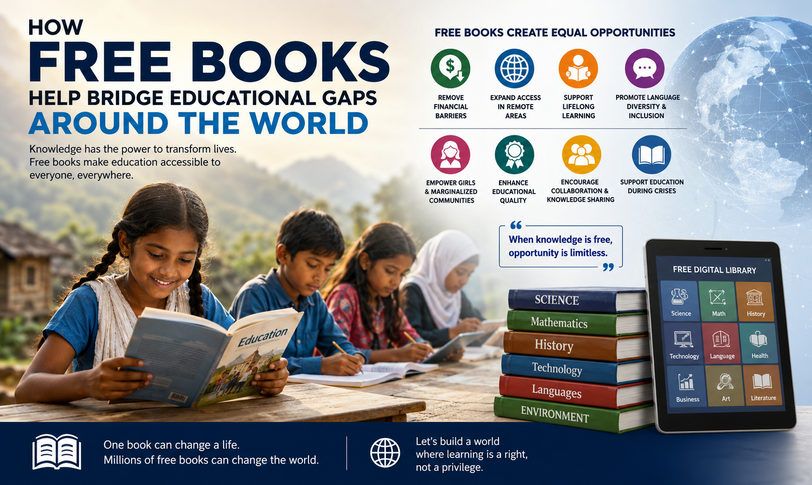
6. Expanding Access for Underserved Learners
Free eBooks can bridge gaps for learners facing:
-
Limited libraries or bookstores.
-
High costs of imported books.
-
Rural isolation or unstable housing.
-
Accessibility barriers or language limitations.
Offline access (download once, read anywhere) ensures learning continuity even with unreliable internet.
Equity impact: Reduces educational disparity between low- and high-resource learners.
7. Promoting Autonomy and Critical Thinking
Unlike structured courses, free eBooks encourage learners to:
-
Select credible sources.
-
Compare perspectives across authors.
-
Identify bias or outdated content.
-
Build independent study plans.
-
Synthesize and apply knowledge through notes or projects.
Key skill: Learning independently without reliance on formal guidance.
8. Supporting Deeper Learning Than Short-Form Content
Quick online videos and summaries encourage shallow understanding. Books, especially textbooks and long-form nonfiction, provide:
-
Coherent sequencing of ideas.
-
Precise definitions and explanations.
-
Context, historical background, and evidence.
-
Exercises and extended examples.
Long-form advantage: Books train sustained attention and mental model building.
9. Creating a Personal “Knowledge Infrastructure”
Free eBooks can become part of a searchable, personal library:
-
Organize by topic or project.
-
Build a Zotero library for searchable references.
-
Annotate PDFs/EPUBs and highlight key ideas.
-
Maintain a portable “reference shelf” for work or study.
Over time, learners have a private knowledge system that grows with their career and interests.
10. Accessibility and Inclusive Learning
Digital formats allow:
-
Adjustable font sizes and themes.
-
Reflowable text for small screens (EPUB).
-
Screen reader compatibility.
-
Text-to-speech support.
-
Searchable text for faster navigation.
Learners with visual impairments, dyslexia, or attention challenges can learn independently.
11. Learning by Doing
Reading alone isn’t enough. Free eBooks are most effective when paired with deliberate practice:
-
Active recall: Summarize sections without looking.
-
Spaced repetition: Review key notes periodically.
-
Exercises: Complete end-of-chapter problems or create original tasks.
-
Projects: Apply concepts to real outputs (reports, portfolios, code).
-
Teaching: Explain material to someone else.
Outcome: Measurable skills, not just passive reading.
12. Exploration and Smarter Investment
Free eBooks allow low-risk experimentation:
-
Try an introductory text.
-
Learn basic concepts and vocabulary.
-
Attempt exercises or mini-projects.
Then decide whether to invest in:
-
Paid courses or certification programs.
-
Advanced textbooks.
-
Coaching or mentorship.
Financial benefit: Avoid spending on areas of uncertain interest or readiness.
13. Reputable Sources for High-Quality Free eBooks
-
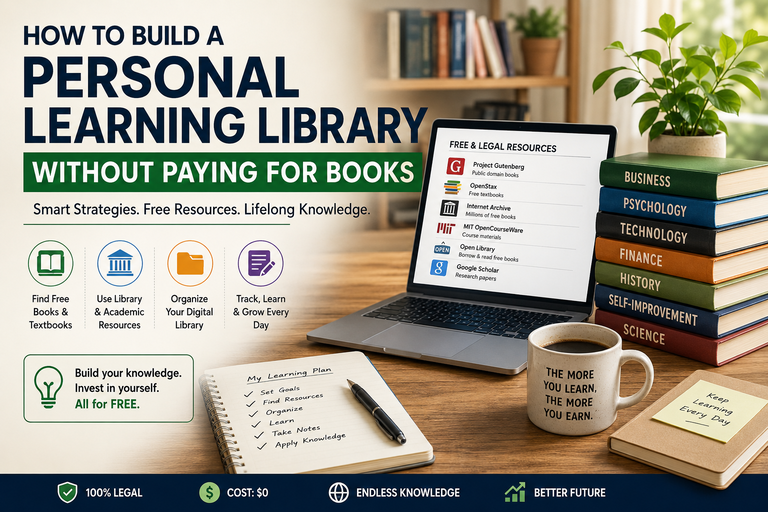
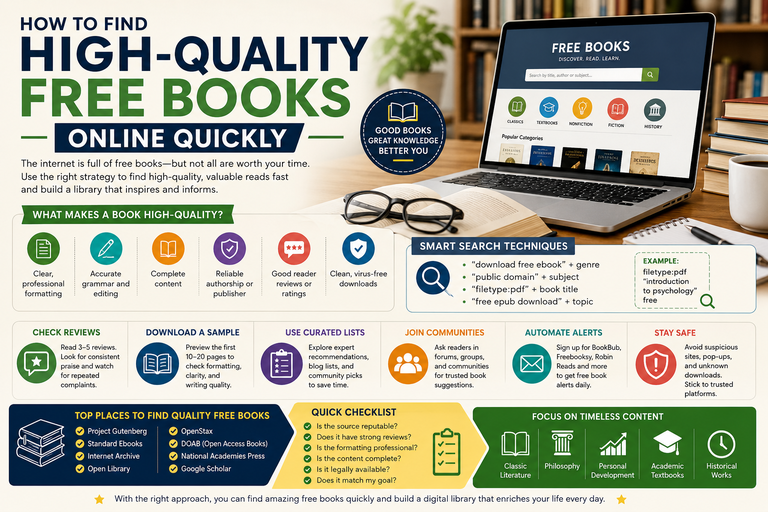
Open textbooks & OER: OpenStax, Open Textbook Library, OER Commons, MIT OpenCourseWare.
-
Open access academic books: Directory of Open Access Books (DOAB), university repositories.
-
Public domain classics: Project Gutenberg, Standard Ebooks, Internet Archive.
Tip: EPUB or HTML is best for mobile reading; PDF for textbooks requiring fixed layouts.
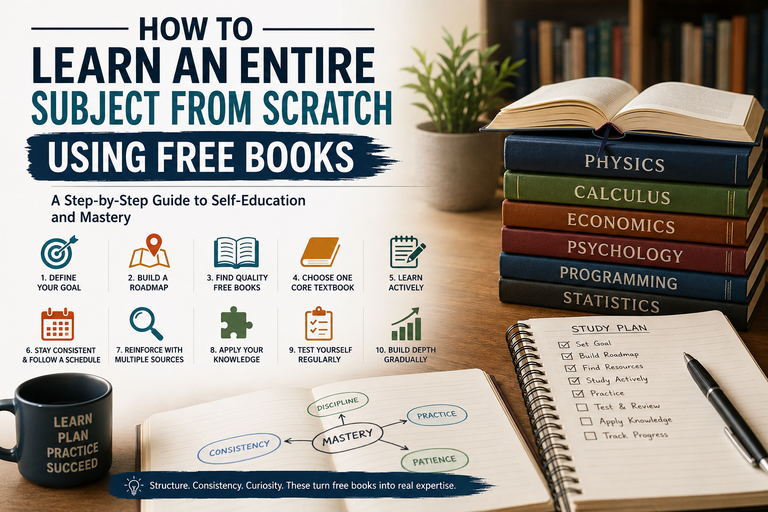
14. A Simple Lifelong Learning Workflow
-
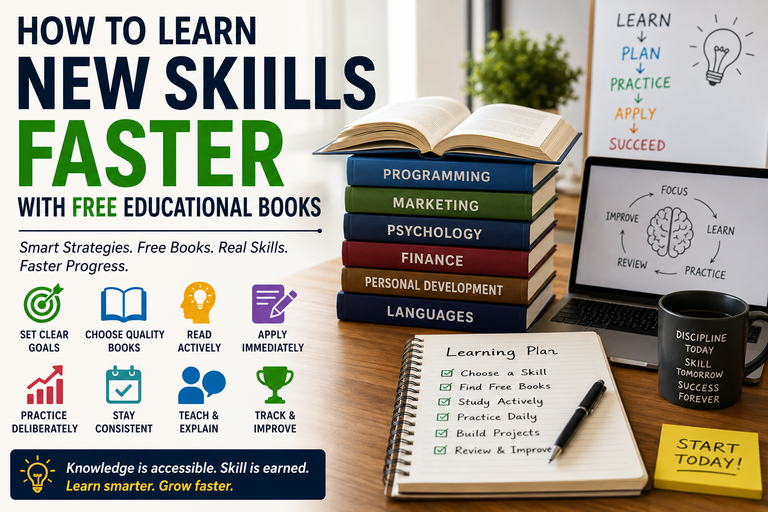
Choose one “spine” book per topic.
-
Set small weekly goals (e.g., 2 chapters/week).
-
Take minimal notes (definitions + 5 key takeaways).
-
Practice once per week (quizzes, exercises, mini-projects).
-
Review monthly and consolidate learning.
-
Build a portfolio of projects, summaries, or annotated readings.
This transforms free eBooks into a continuous growth engine.
Conclusion
Free eBooks empower lifelong learners by removing financial and logistical barriers, supporting self-paced study, enabling stackable learning, and building a personal knowledge infrastructure.
Used intentionally paired with practice, review, and real outputs they can rival formal education in effectiveness while remaining accessible to far more people. For anyone committed to keeping skills relevant, exploring new fields, or cultivating personal growth, free eBooks are not just convenient they are essential tools for survival and success in a rapidly changing world.