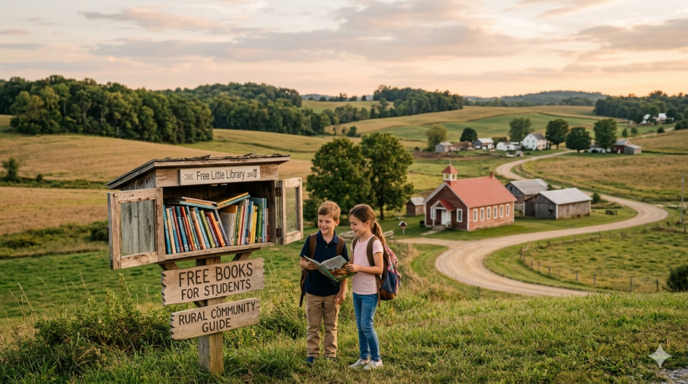
Free Books for Students in Rural Areas: A Complete Guide
Access to quality educational materials remains one of the biggest challenges for students in rural areas. Limited bookstores, underfunded school libraries, long travel distances, and financial constraints often make it difficult for rural learners to obtain the textbooks and supplementary materials they need.
Fortunately, in 2026, free books especially digital ones are transforming education access in rural communities. From open textbooks to mobile-friendly libraries, students now have more opportunities than ever to learn without cost barriers.
This complete guide explores where rural students can find free books, how to access them with limited internet, and strategies to make the most of these resources.
Why Students in Rural Areas Face Book Access Challenges
Students in rural communities often encounter educational barriers that urban learners may not experience. These challenges affect not only access to books but also overall academic performance and learning opportunities.
Common obstacles include:
- Fewer physical libraries
- Limited school funding
- High transportation costs
- Slow or unstable internet connections
- Fewer local bookstores
- Delays in textbook delivery
- Limited access to updated learning materials
- Shortage of teachers and academic support resources
When students cannot easily access textbooks and study materials, it becomes harder to keep up with coursework, prepare for examinations, and develop strong reading habits.
Free book initiatives are helping close this educational gap by making learning materials more accessible regardless of location.
Why Free Books Matter for Rural Education
Free educational resources are more than just cost-saving tools. They represent an important step toward educational equality.
For rural students, free books can:
- Reduce financial pressure on families
- Improve literacy and reading habits
- Increase access to modern academic content
- Support independent learning
- Enhance exam preparation
- Encourage lifelong learning
Many students who previously relied on outdated or shared textbooks can now access current materials through digital platforms and community programs.
Types of Free Books Available to Rural Students
Free educational materials generally fall into several major categories.
1. Open Educational Resources (OER)
Open Educational Resources are freely accessible teaching and learning materials created by educators, universities, and institutions.
These resources are often:
- Peer-reviewed
- Legally free to share
- Downloadable for offline use
- Updated regularly
OER textbooks cover subjects such as:
- Mathematics
- Biology
- Chemistry
- Economics
- Business studies
- Engineering
- Computer science
- Psychology
Because they are openly licensed, schools and teachers can adapt them to local learning needs.
2. Public Domain Books
Public domain books are works whose copyrights have expired. They are legally free to distribute and download.
These books are especially useful for:
- Literature studies
- History courses
- Philosophy
- Political science
- Language learning
Students can access classic works by major authors without paying for expensive printed editions.
3. Digital Library Lending
Many public libraries now provide free digital lending services.
Students can borrow:
- eBooks
- Audiobooks
- Academic resources
- Study guides
This allows rural learners to access books remotely without visiting a physical library.
4. Community-Based Book Programs
Nonprofit organizations, charities, and educational foundations often distribute free books to underserved rural communities.
These initiatives may include:
- Book donation programs
- School textbook support
- Mobile libraries
- Literacy outreach projects
- Community reading centers
Physical books remain extremely important in areas where internet access is limited.
Best Platforms Offering Free Books
Several reliable platforms provide high-quality free educational books for students worldwide.
✅ OpenStax
OpenStax provides peer-reviewed textbooks used by schools and universities around the world.
Subjects include:
- Biology
- Chemistry
- Physics
- Mathematics
- Economics
- Psychology
- Accounting
- Sociology
Books are available in PDF and web formats, making them useful for offline and mobile learning.
✅ Open Textbook Library
Open Textbook Library offers faculty-reviewed textbooks across multiple disciplines.
Students can access books for:
- Business
- Education
- Engineering
- Health sciences
- Humanities
- Computer science
Most books are downloadable at no cost.
✅ Project Gutenberg
Project Gutenberg hosts over 60,000 free public domain books.
It is particularly valuable for:
- Literature students
- History learners
- English language studies
- Philosophy courses
Books are available in EPUB, Kindle, HTML, and plain text formats.
✅ Internet Archive
Internet Archive is one of the largest digital libraries in the world.
Students can find:
- Academic books
- Historical texts
- Research materials
- Educational videos
- Scanned textbooks
The platform is especially useful for older or hard-to-find educational materials.
✅ Directory of Open Access Books (DOAB)
Directory of Open Access Books provides scholarly and academic publications from universities and publishers worldwide.
This resource is ideal for:
- University students
- Researchers
- Advanced learners
✅ Libby and Hoopla
Libby and Hoopla allow students with library cards to borrow digital books for free.
Features include:
- Offline reading
- Audiobooks
- Mobile-friendly access
- Adjustable text settings
These apps are useful for students who primarily rely on smartphones.
How Rural Students Can Access Free Books with Limited Internet
Internet access remains a major challenge in many rural communities. However, several practical strategies can help students continue learning even with weak connectivity.
1. Download Books for Offline Use
Many educational platforms allow students to download:
- PDF textbooks
- EPUB files
- Mobile-friendly documents
- Audio lessons
Students can connect briefly at schools, libraries, or community centers to download materials and then study offline later.
Offline access is one of the most effective solutions for areas with unstable internet service.
2. Use Low-Data Versions
Some educational websites provide:
- Text-only pages
- Compressed PDFs
- Lightweight mobile apps
These formats consume less data and work better on slow networks.
Students should prioritize websites optimized for mobile devices and low-bandwidth environments.
3. Access Community Internet Centers
Community resources may provide temporary internet access, including:
- School computer labs
- Government learning centers
- Public libraries
- Youth centers
- Religious institutions with educational programs
Students can periodically download books and assignments for later use.
4. Share Educational Resources Locally
Community collaboration can significantly improve educational access.
Students and teachers can:
- Share books through USB drives
- Print essential chapters
- Exchange downloaded materials
- Organize community study groups
In many rural areas, peer sharing becomes an important educational support system.
Subjects with Strong Free Book Availability
Some academic subjects have especially strong free resource availability.
These include:
- Mathematics
- Physics
- Chemistry
- Biology
- Computer science
- Economics
- Business studies
- Literature
- History
- Psychology
Many open textbook projects focus heavily on these disciplines because of high student demand.
Benefits of Free Books for Rural Students
Free educational resources provide advantages that go far beyond affordability.
1. Financial Relief for Families
Textbooks can be expensive, especially for families managing multiple children in school.
Free books help reduce:
- Textbook costs
- Transportation expenses
- Printing expenses
- Delivery fees
This financial relief can make continued education more sustainable.
2. Equal Educational Opportunity
Students in rural communities deserve the same educational opportunities as learners in urban areas.
Free digital resources help bridge this gap by providing access to materials used in major schools and universities worldwide.
3. Immediate Access to Learning Materials
Traditional textbook delivery can take weeks in remote regions.
Digital books allow students to begin learning immediately instead of waiting for physical copies.
4. Portability and Convenience
Students can store hundreds of books on:
- Smartphones
- Tablets
- Laptops
- E-readers
This is especially helpful in areas where travel is difficult or schools are far from home.
5. Support for Independent Learning
Free educational platforms encourage students to:
- Research topics independently
- Compare explanations from multiple sources
- Develop digital literacy skills
- Take greater responsibility for learning
These habits strengthen long-term academic growth.
Physical Free Book Options for Rural Areas
Although digital resources are expanding rapidly, physical books remain essential in many rural communities.
1. Government Education Programs
Some governments provide:
- Free school textbooks
- Rural literacy materials
- Examination preparation guides
- Supplemental reading books
Students should check with local schools and education authorities for available programs.
2. Nonprofit Organizations
Several organizations work specifically to improve educational access in underserved communities.
Examples include:
These organizations distribute books, establish libraries, and promote literacy programs globally.
3. Mobile Libraries
Some regions operate traveling libraries that visit rural communities regularly.
Mobile libraries may use:
- Vans
- Motorcycles
- Boats
- Portable book stations
These initiatives help students access books without traveling long distances.
4. Community Book Exchanges
Local communities sometimes organize:
- Book donation drives
- School book swaps
- Mini community libraries
- Shared reading centers
These grassroots programs can significantly improve local educational access.
Common Challenges and Practical Solutions
Even with free resources available, rural students may still face difficulties.
Challenge 1: Limited Devices
Not every student owns a laptop or tablet.
Practical Solutions
- Use shared family devices
- Study through smartphones
- Access school computer labs
- Participate in device loan programs
- Download books onto inexpensive memory cards
Smartphones are increasingly becoming the primary learning device for many rural students.
Challenge 2: Digital Literacy Gaps
Some learners may not know how to search for reliable educational resources.
Practical Solutions
- Teacher-led training sessions
- Peer mentoring programs
- Community workshops
- Step-by-step online tutorials
- School orientation programs
Digital literacy is becoming a crucial educational skill.
Challenge 3: Electricity and Power Supply Problems
Power outages can interrupt online learning and device charging.
Practical Solutions
- Download materials in advance
- Use battery-efficient reading apps
- Print essential chapters
- Utilize solar chargers where possible
- Study during periods of electricity availability
Preparation is key in areas with unstable electricity.
Tips for Making the Most of Free Books
Students can maximize the value of free educational materials by using smart study strategies.
1. Match Books to Your Curriculum
Focus on books that align closely with:
- School syllabi
- Examination requirements
- Learning objectives
This prevents information overload and improves study efficiency.
2. Use Multiple Learning Sources
Different books explain concepts differently.
Combining multiple resources often improves understanding and problem-solving ability.
3. Take Notes and Highlight Important Sections
Active reading improves retention.
Students should:
- Highlight key concepts
- Write summaries
- Create flashcards
- Save important pages for review
Digital annotation tools can make studying more effective.
4. Form Study Groups
Collaborative learning allows students to:
- Share resources
- Discuss difficult topics
- Teach one another
- Stay motivated
Community learning can be especially powerful in rural environments.
5. Build a Consistent Study Schedule
Structure and discipline are essential for successful independent learning.
Students should create regular study routines that fit their daily responsibilities and available resources.
How Educators Can Support Rural Students
Teachers and schools play a major role in expanding educational access.
Educators can help by:
- Adopting open textbooks
- Sharing direct download links
- Providing offline copies of materials
- Teaching digital literacy skills
- Recommending trusted educational platforms
- Organizing community resource sharing programs
Schools that embrace free educational resources can dramatically reduce barriers for students.
The Long-Term Impact of Free Books in Rural Communities
Access to free educational materials creates benefits that extend beyond individual students.
Long-term impacts may include:
- Higher literacy rates
- Increased graduation rates
- Improved workforce readiness
- Reduced educational inequality
- Greater social mobility
- Stronger local economies
- Increased access to higher education opportunities
When rural students gain access to quality learning materials, entire communities benefit from improved educational outcomes.
The Future of Rural Education Access
Technology continues to reshape educational access across the world.
In the coming years, rural education may benefit from:
- Expanded rural internet infrastructure
- Solar-powered digital learning systems
- AI-supported offline education apps
- Increased government investment in open education
- Stronger nonprofit partnerships
- More affordable digital devices
- Community-based digital learning hubs
Free books both physical and digital will continue to play a central role in educational development.
Final Thoughts
Geographic location should never determine educational opportunity.
Free books are helping rural students:
- Overcome financial barriers
- Access high-quality learning materials
- Strengthen independent learning skills
- Improve academic performance
- Compete more effectively with urban peers
With the right tools, support systems, and determination, students in rural communities can thrive academically and unlock opportunities previously limited by distance and cost.
Education is no longer confined by geography.
Through free books, digital learning, and community support, knowledge can now reach even the most remote corners of the world.