Critical thinking the ability to analyze information, evaluate arguments, detect bias, and make reasoned judgments is one of the most valuable intellectual skills a person can develop. It helps people make better decisions, understand complex issues, and navigate a world filled with information, opinions, and competing narratives.
Contrary to popular belief, critical thinking is not an innate talent reserved for academics or experts. It is a learnable skill that improves with practice. One of the most powerful and accessible ways to develop it is through reading books.
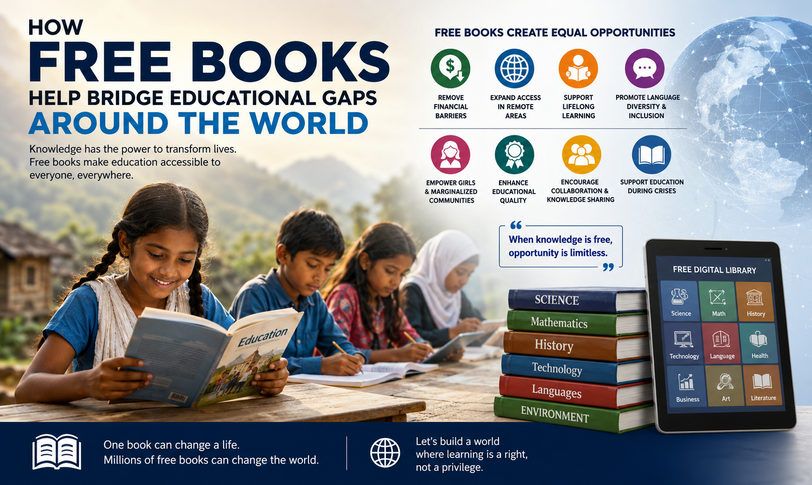
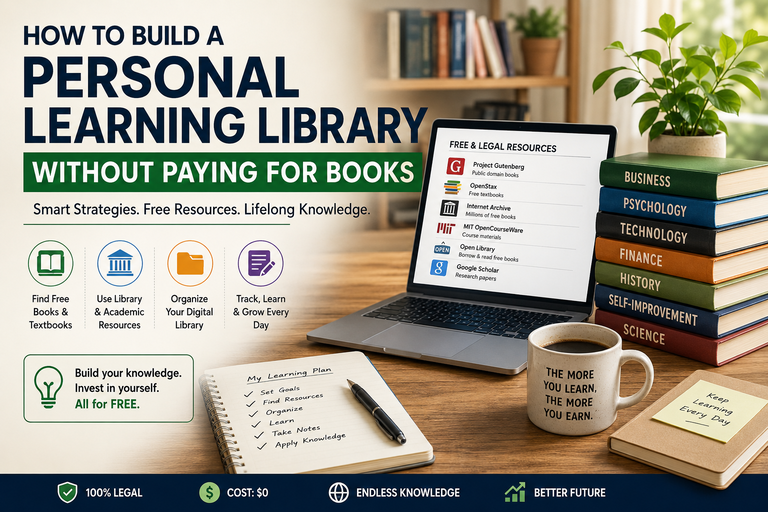
Today, access to reading materials has expanded dramatically. Free books available through public libraries, open-access repositories, public-domain archives, and digital libraries allow millions of people to read more widely and consistently than ever before. This expanded access matters because critical thinking improves most when readers encounter many ideas, disciplines, and viewpoints.
Below is a comprehensive exploration of how reading free books strengthens critical thinking skills, the types of books that develop reasoning most effectively, and strategies for turning reading into a powerful thinking exercise.
1. Reading Builds the Mental Tools Critical Thinking Requires
Critical thinking relies on several underlying abilities such as vocabulary, attention, reasoning frameworks, and conceptual understanding. Sustained book reading strengthens these cognitive tools simultaneously.
Vocabulary and Conceptual Precision
Clear thinking depends on clear language. When people lack precise terms for ideas, their reasoning becomes vague and confused.
Books introduce readers to important concepts such as:
-
correlation vs. causation
-
validity and reliability
-
incentives and trade-offs
-
opportunity cost
-
narrator reliability
Learning these terms allows readers to:
-
distinguish between similar ideas
-
ask more precise questions
-
recognize misleading language
-
analyze complex arguments
Free access to books increases exposure to specialized language across disciplines such as science, history, philosophy, economics, and politics.
The more concepts you understand, the more mental tools you possess for analyzing the world.
Attention Span and Cognitive Endurance
Critical thinking often fails not because people lack intelligence but because they lack sustained attention.
Books require readers to:
-
follow arguments across chapters
-
remember earlier claims
-
evaluate evidence over long sections
-
tolerate uncertainty and complexity
This builds:
-
longer attention spans
-
stronger working memory
-
patience with complicated ideas
These endurance skills are essential for making thoughtful judgments in real-life situations.
Mental Models and Analytical Frameworks
Books especially nonfiction introduce structured ways to interpret the world.
Examples include:
-
scientific reasoning
-
historical causation
-
ethical analysis
-
statistical thinking
-
economic trade-off analysis
Each framework becomes a mental lens readers can apply to other topics.
Over time, readers accumulate a toolbox of mental models that help them evaluate new problems more effectively.
2. Books Are Extended Arguments Perfect for Practicing Evaluation
Unlike short articles or social media posts, books typically develop arguments over many pages or chapters. Authors define concepts, present evidence, respond to objections, and build a structured case.
This makes books ideal for practicing argument evaluation.
Identifying Claims, Reasons, and Evidence
While reading, readers can ask questions such as:
-
What is the author's main claim?
-
What reasons support that claim?
-
What evidence is provided?
-
What assumptions must be true for the argument to work?
Repeated exposure to these patterns strengthens analytical reading skills.
Eventually, readers begin evaluating arguments automatically whether in books, news reports, political speeches, or workplace discussions.
Distinguishing Evidence from Storytelling
Books often combine facts with narrative. Critical readers learn to distinguish between:
-
emotional appeals and logical reasoning
-
anecdotes and representative evidence
-
correlation and causation
-
authority and proof
This distinction is central to critical thinking and helps readers resist persuasive but misleading narratives.
Recognizing What Is Missing
One of the most powerful thinking habits is noticing what an argument leaves out.
When reading books, critical readers look for:
-
counterarguments not addressed
-
missing evidence
-
alternative explanations
-
narrow perspectives
Because books are long-form arguments, these gaps become easier to detect.
3. Free Books Enable Breadth A Key Driver of Better Judgment
Critical thinking improves dramatically when readers encounter many perspectives.
Free books make broad reading possible by removing financial barriers.
Source Triangulation
Reading multiple books on the same subject allows readers to:
-
compare interpretations
-
identify ideological bias
-
distinguish consensus from controversy
-
separate facts from interpretation
For example, reading different historical accounts of the same event often reveals that facts and interpretations are not the same.
Escaping Algorithmic Echo Chambers
Online platforms often recommend content similar to what users already believe. This creates information bubbles.
Libraries and open book collections allow readers to choose outside algorithmic recommendations, exposing them to unfamiliar ideas.
Exposure to diverse viewpoints strengthens independent judgment.
Pattern Recognition in Arguments
After reading many books, readers begin noticing recurring patterns in reasoning, including:
-
overconfident conclusions
-
cherry-picked evidence
-
false dilemmas
-
weak analogies
-
emotionally loaded language
Critical thinking becomes faster because the brain recognizes flawed reasoning more quickly.
4. Fiction Strengthens Critical Thinking in Unique Ways
Critical thinking is not limited to logic and data. It also involves understanding human behavior, motives, and social complexity.
Fiction develops these abilities.
Perspective-Taking
Stories require readers to interpret characters’ intentions, emotions, and beliefs.
This develops:
-
empathy
-
interpretation of social behavior
-
awareness of self-deception
-
tolerance for multiple perspectives
Understanding different viewpoints is a core component of thoughtful judgment.
Ethical Reasoning
Many novels present characters facing moral dilemmas.
Readers practice:
-
weighing consequences
-
evaluating motives
-
balancing principles and outcomes
-
questioning simplistic moral conclusions
These exercises strengthen ethical reasoning in real-life situations.
Detecting Narrative Bias
Fiction also teaches readers to analyze storytelling choices.
Readers learn to ask:
-
Who is telling the story?
-
Whose perspective is emphasized?
-
Which voices are missing?
-
What assumptions shape the narrative?
These skills transfer directly to analyzing nonfiction and media coverage.
5. Reading Encourages Intellectual Humility
One of the most important traits of critical thinkers is epistemic humility recognizing the limits of one's knowledge.
Many books, especially in history and science, reveal that:
-
knowledge evolves over time
-
evidence can be incomplete
-
intelligent people disagree
-
certainty should match evidence
Readers who encounter many perspectives often become less dogmatic and more open to revising their views.
6. Types of Free Books That Strengthen Critical Thinking
Different genres develop different reasoning abilities.
Science and Scientific Thinking
Science books teach readers to evaluate evidence and causal claims.
Readers learn:
-
how experiments work
-
how hypotheses are tested
-
how data supports conclusions
-
how errors and biases affect research
History
Historical books train readers to interpret evidence within context.
Readers learn to evaluate:
-
primary sources
-
conflicting accounts
-
historical bias
-
cause-and-effect relationships over time
Philosophy and Logic
Introductory philosophy books provide tools for analyzing arguments.
Readers practice:
-
identifying premises and conclusions
-
recognizing logical fallacies
-
evaluating ethical frameworks
Psychology and Cognitive Bias
Psychology books reveal how human thinking can be distorted by mental shortcuts.
Readers learn about:
-
confirmation bias
-
motivated reasoning
-
availability heuristic
-
groupthink
Recognizing these biases improves self-awareness.
Economics and Public Policy
Economics encourages thinking about incentives and trade-offs.
Readers learn to analyze:
-
unintended consequences
-
cost-benefit trade-offs
-
policy effectiveness
-
differences between values and evidence
Literature and Memoir
Narrative works improve interpretation and perspective analysis.
Readers practice:
-
reading between the lines
-
interpreting motives
-
detecting emotional persuasion
-
understanding human complexity
7. How to Read in Ways That Build Critical Thinking
Simply reading more books helps, but specific reading habits make the process more effective.
Use the Claim–Evidence Method
After reading a chapter, summarize:
-
Claim: What is the author arguing?
-
Evidence: What supports it?
-
Assessment: Is the argument strong or weak?
This trains the brain to analyze reasoning rather than passively absorbing information.
Ask Analytical Questions
While reading, consider questions like:
-
What evidence would disprove this claim?
-
What assumptions are being made?
-
Are there alternative explanations?
-
Is the evidence representative or exceptional?
-
Is the author mixing facts with opinions?
These questions deepen engagement with the material.
Compare Multiple Books
Reading two books with different perspectives on the same topic can be particularly powerful.
Readers can map:
-
areas of agreement
-
points of disagreement
-
differences in evidence quality
This process strengthens independent analysis.
Annotate and Reflect
Mark passages that seem overly confident or unclear.
Watch for:
-
sweeping generalizations
-
unsupported claims
-
leaps from anecdote to conclusion
Returning to these notes later improves long-term reasoning skills.
8. Why Free Access Matters
Free books create conditions that allow critical thinking to flourish.
They support:
-
Consistency: readers can read regularly without financial barriers
-
Diversity: access to many disciplines and viewpoints
-
Depth: more long-form reading instead of fragmented online content
-
Equity: people from different backgrounds can build the same intellectual skills
When access expands, the ability to think critically spreads beyond elite institutions.
9. Common Pitfalls to Avoid
Treating Books as Authority
Books should not be accepted automatically as truth.
Critical readers treat books as arguments to evaluate, not authorities to obey.
Reading Only Confirming Views
Reading only books that support existing beliefs limits intellectual growth.
A useful strategy is to read credible opposing perspectives.
Confusing Complexity With Insight
Some writing appears sophisticated but lacks clear reasoning.
A useful question is: What evidence could prove this wrong?
If nothing could disprove a claim, it should be treated cautiously.
Reading Without Reflection
Large reading volume helps, but reflection converts reading into skill.
Writing short summaries or discussing books with others deepens understanding.
Conclusion
Reading free books improves critical thinking because it provides ongoing access to the raw material that reasoning skills require: complex ideas, structured arguments, diverse perspectives, and nuanced language.
Through sustained reading, people strengthen attention, evaluate evidence more carefully, recognize bias, and learn frameworks for interpreting the world.
Perhaps most importantly, free access to books makes these benefits widely available. When cost is no longer a barrier, the development of critical thinking becomes less of a privilege and more of a shared societal capability.
One book at a time, free reading resources help build a more thoughtful, analytical, and informed public one capable of navigating complexity with curiosity, skepticism, and intellectual humility.