
How to Turn Free Knowledge Into Income: The Ultimate Student Strategy
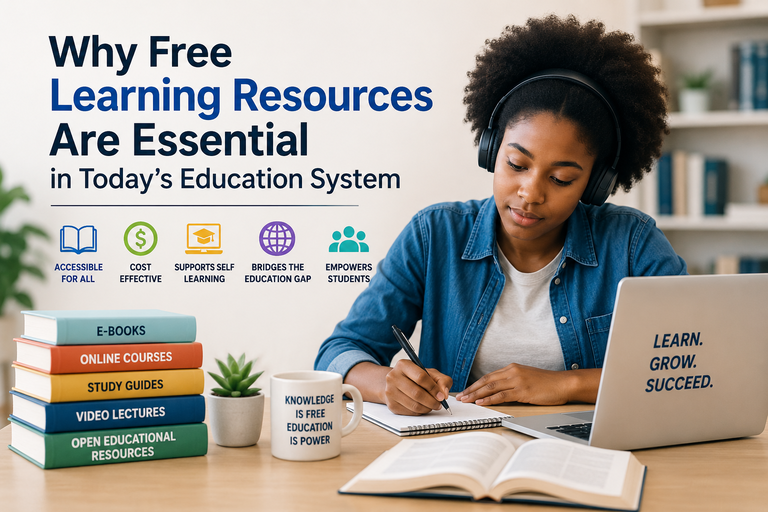
Students today have access to more free knowledge than any generation in history. You can learn full-stack development from open-source repositories, high-level copywriting from industry blogs, and cinematography from video tutorials all without spending a dime.
The challenge is no longer access; it is conversion. Many students fall into the "Passive Learning Trap" consuming endless content, saving bookmarks, and feeling productive without ever producing value. To turn free knowledge into income, you must shift from a consumer to a practitioner.
Phase 1: The "Income-First" Skill Selection
Not all free knowledge is equally profitable. To earn while studying, you need a skill that is decoupled from a degree meaning people care about your results, not your diploma.
The High-Demand Student Quadrant
| Skill Category | What to Learn for Free | Primary Monetization Path |
| Technical | HTML/CSS, Webflow, No-Code automation. | Building landing pages for startups. |
| Creative | Canva Mastery, CapCut/Premiere, Branding. | Short-form video editing for Reels/TikTok. |
| Analytical | Google Sheets/Excel, Basic SEO, GA4. | Data cleanup or SEO audits for blogs. |
| Communication | Cold Emailing, Copywriting, Technical Writing. | Ghostwriting for LinkedIn or Newsletter support. |
The Golden Rule: Choose a skill where the "Proof of Work" (a portfolio) is more important than a "Certificate of Completion."
Phase 2: Hyper-Niche Learning (The 20-Hour Rule)
The biggest mistake is trying to "master" a field. Mastery takes years; competence takes about 20 hours of focused practice.
Instead of learning "Digital Marketing," learn "How to run Lead-Generation Ads for local Gyms." Narrowing your focus reduces the amount of free knowledge you need to digest and allows you to reach "marketable" status in weeks rather than semesters.
How to Filter Free Content:
The 70/30 Rule: Spend 30% of your time watching/reading and 70% of your time building/doing.
Audit the Source: Use platforms like YouTube University, Coursera (Financial Aid/Audit mode), HubSpot Academy, and GitHub.
Reverse Engineer: Find a piece of work you admire (a website or a flyer) and use free tutorials to recreate it from scratch.
Phase 3: Building a "Ghost Portfolio"
You don’t need a boss to get experience. A "Ghost Portfolio" consists of projects you did for imaginary clients or existing brands to prove your skill.
The "Fix-It" Project: Find a local business with a bad website or messy social media. Redesign one page or three posts and put them in your portfolio as a "Conceptual Rebrand."
The Personal Lab: If you are learning data analysis, download a public dataset (like weather patterns or sports stats) and create a visual dashboard.
The Documentation Method: Document your learning journey on LinkedIn. "Day 4 of learning Python: Here is a script I wrote to automate my study schedule." This builds "Passive Credibility."
Phase 4: Overcoming the "Imposter" Barrier
The "Psychology of the First Dollar" is the hardest hurdle. Many students feel like "frauds" because they learned for free.
Remember this: Value is subjective. If a business owner spends 5 hours struggling with an Excel macro that you can fix in 20 minutes because you watched a tutorial, you have saved them 4 hours and 40 minutes. That time has a dollar value.
Transitioning from "Free" to "Paid":
The Beta Test: Offer your service for free to exactly three people in exchange for a detailed testimonial and permission to use the work in your portfolio.
The "Student Rate" Advantage: Be transparent. "I am a student building my portfolio, so my rates are currently lower than an agency's, but I provide the same dedicated focus."
Phase 5: Strategic Outreach (The "Value-In-Advance" Method)
Avoid generic "Hire me" posts. Instead, use the Point-Out-and-Solve method.
Example Outreach:
"Hi [Business Owner], I’m a student at [University] and I’ve been studying short-form video trends. I noticed your recent video didn't have captions which usually increases views by 40%. I took the liberty of editing a 30-second version of your video with captions and a hook. Attached is the sample. If you like it, I'd love to do this for your next five videos for a flat student rate."
This approach is nearly impossible to ignore because you have already provided the value.
Phase 6: Scaling and Ethics
As your income grows, your most precious resource becomes Time, not knowledge.
Productize your Knowledge: If you find yourself tutoring the same topic, create a $10 PDF "Cheat Sheet" or "Study Guide." This turns your active labor into a digital product.
The Ethical Line: Never cross into "Academic Dishonesty." Writing a company’s blog post is a professional service; writing another student's thesis is a violation that can end your academic career. Stick to business, technical, and creative services.
Summary Action Plan
Day 1-7: Identify one narrow skill and find 3 top-tier YouTube playlists on it.
Day 8-14: Create 3 "Mock Projects" to prove you can do it.
Day 15-21: Reach out to 5 people in your network (or local businesses) offering a "Beta Test" service.
Day 22+: Secure your first paid client and reinvest a portion of that income into a paid tool or advanced certification to stay ahead.