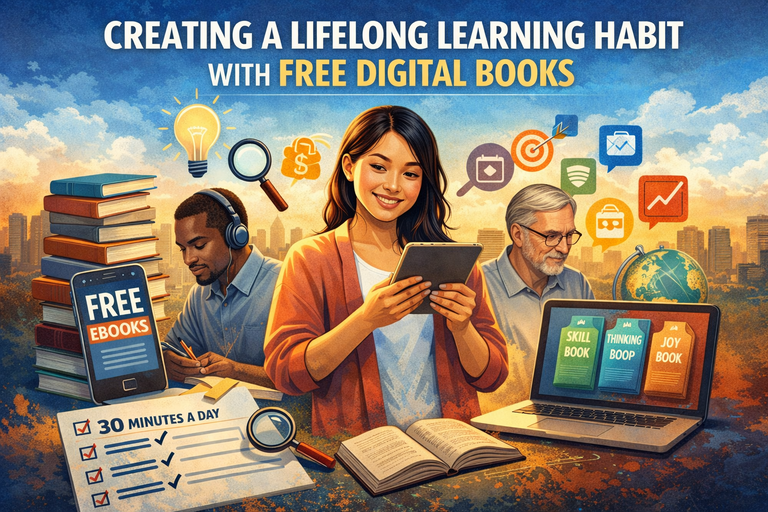
Creating a Lifelong Learning Habit With Free Digital Books
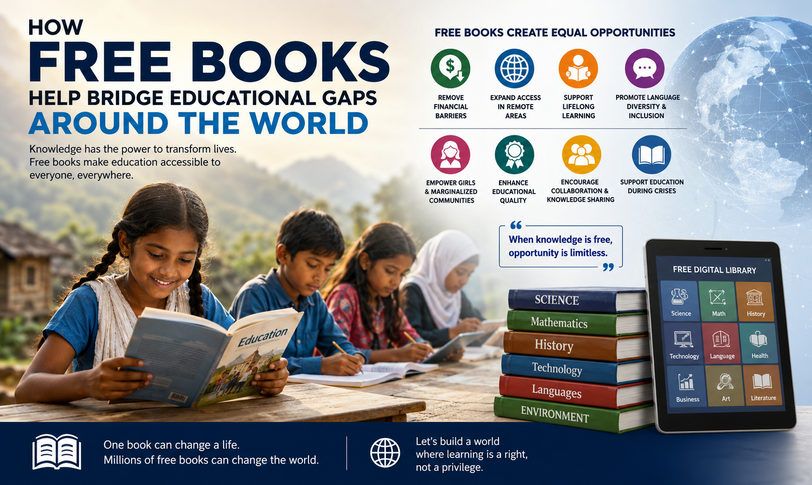
Lifelong learning isn’t a personality trait it’s a system. The main challenge isn’t access to information; it’s building a repeatable routine that survives busy weeks, distractions, and changing goals. Free digital books open-access eBooks, library eBooks, public-domain classics, and open textbooks make lifelong learning easier by removing cost barriers and letting you carry an entire library on a phone, tablet, or laptop.
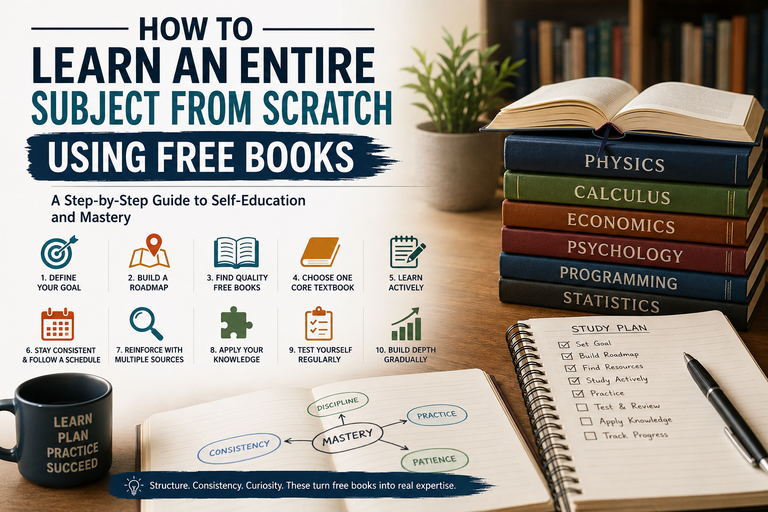
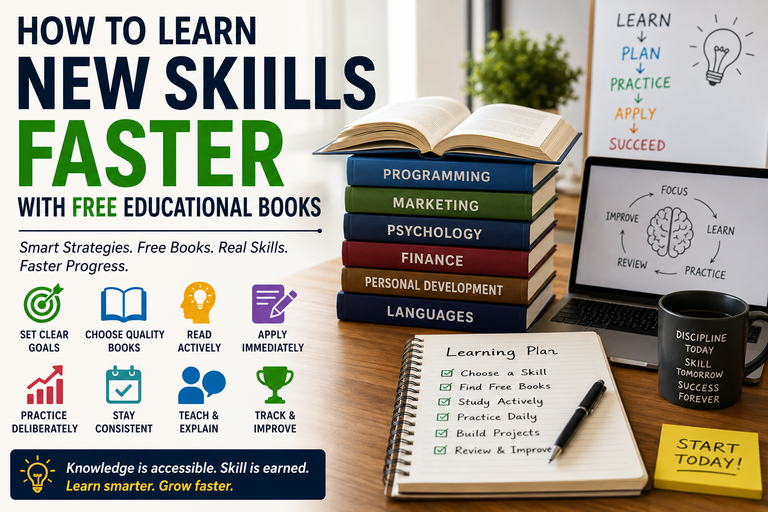
This article explores how to create a lifelong learning habit using free digital books: where to find them legally, how to choose what to read, how to retain knowledge, and how to turn reading into real-world skills over time.
1) Why Free Digital Books Are Ideal for Lifelong Learning
A. They Reduce Friction and Cost
Habits form faster when the startup cost is low. Free eBooks remove:
-
The price of buying books
-
The delay of shipping
-
The pressure to “get your money’s worth,” which can paradoxically discourage starting
B. They’re Portable and Always Available
If your reading device is your phone or tablet, you can learn during:
-
Commutes
-
Waiting time
-
Short breaks
-
Travel
Consistent, short sessions are more effective than rare, long reading marathons.
C. They Support Personalized Learning Paths
Digital books allow you to tailor your learning to:
-
Career growth or change
-
Hobbies
-
Health and wellness goals
-
Intellectual curiosity
-
Civic engagement
D. They’re Searchable and Highlightable
Most eReaders allow:
-
Instant search
-
Highlighting
-
Bookmarking
-
Note-taking
These features make studying and revisiting ideas much easier.
2) Start With a Learning Purpose
A common trap is building a huge digital library without reading it. Avoid this by defining your “why.”
Practical Lifelong Learning Purposes
-
Career growth: communication, management, or data literacy
-
Career change: structured path to a new field
-
Personal development: habits, relationships, mental health literacy
-
Civic knowledge: economics, history, ethics, media literacy
-
Creativity: writing, design, music, storytelling
-
Health literacy: nutrition, fitness, public health
Tip: Write one sentence:
“I want to learn X so I can do Y within Z months.”
Example:
“I want to learn basic statistics so I can interpret reports at work within 3 months.”
3) Where to Find Free Digital Books Legally
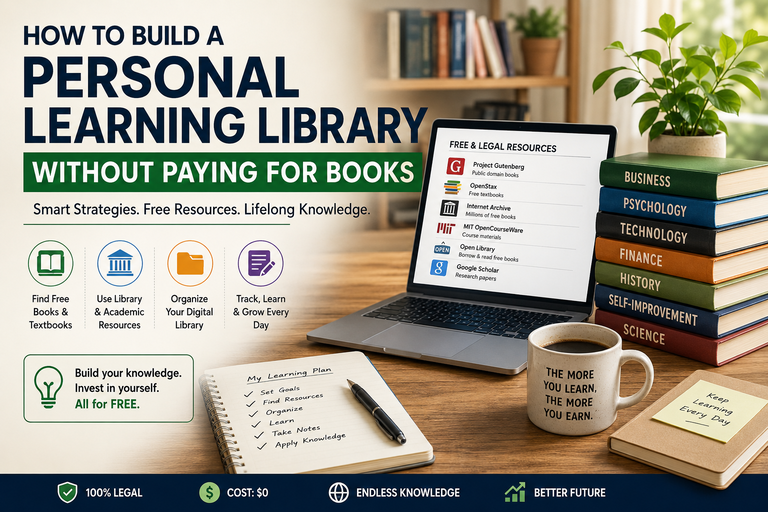
Avoid pirated PDFs. Strong sources include:
A. Libraries
-
Public libraries: free eBooks and audiobooks
-
University libraries: academic textbooks
Benefits: curated collections, legal access, reliable quality
B. Open Textbooks and OER
-
Peer-reviewed, updated textbooks
-
Best for structured topics: math, science, business
C. Open-Access Academic Books
-
Humanities, social sciences, history, policy
D. Public-Domain Collections
-
Classics for writing skills, critical thinking, cultural literacy
E. Author and Nonprofit Giveaways
-
Free introductions or newsletters from authors or nonprofits
Format Tip: EPUB for reflowable text on phones; PDF for textbooks where layout matters.
4) Build a Reading System: Habit Before List
A. Set a “Minimum Viable” Daily Practice
-
10 minutes a day, 5 pages, or one section
Consistency beats intensity.
B. Attach Reading to Existing Routines
-
After breakfast, commute, before bed, after lunch
Example:
“After I brush my teeth at night, I read 5 pages.”
C. Keep Your Book One Tap Away
-
Home screen access, offline download, auto-open to last-read page
D. Create a Distraction Barrier
-
Use airplane mode or focus mode
-
Use a dedicated eReader app instead of a browser
5) Choose Books Strategically: Active Shelf > Giant Library
The 3-Book Active Shelf
-
Skill book: practical career skill
-
Thinking book: philosophy, science, or history
-
Joy book: fiction, biography, or leisure reading
80/20 Selection Rule
-
Recommended by experts or courses
-
Credible authors
-
Structured with exercises or summaries
6) Read for Retention: Turn Reading Into Knowledge
A. Active Recall
After reading, summarize:
-
3 key points
-
1 question
-
1 application idea
B. Learning Notebook
-
One page per book: main ideas, quotes, takeaways, actions
C. Teach-Back Technique
Explain concepts as if teaching a friend.
D. Weekly Review
-
Pick one idea to practice
-
Re-read one section
-
Summarize one insight
7) Turn Reading Into Real Skills: The Read–Do–Reflect Loop
-
Read a concept
-
Do a small practice task
-
Reflect on results
Examples:
-
Spreadsheets → create a small dashboard
-
Writing → rewrite an email using new principles
-
Psychology → test a habit strategy for 7 days
-
Leadership → run a meeting with a new approach
8) Design a Personal Curriculum
A. Learning Tracks (4–8 weeks)
-
Data literacy, communication, personal finance, health literacy, teaching, entrepreneurship, language
B. Levels: Beginner → Intermediate → Applied
-
Gradual progression prevents overwhelm
C. Milestones
-
Every 4 weeks: one-page summary, blog post, project prototype, or lesson taught
9) Stay Consistent Long-Term
A. Track Progress
-
Days read, pages completed, sessions completed
B. Rebuild After Interruptions
-
Restart rule: “If I miss a week, I restart with 5 minutes a day for 3 days.”
C. Community (Optional)
-
Reading groups, monthly summaries, share takeaways
D. Rotate Difficulty
-
Pair heavy reading with light, enjoyable content
10) Common Challenges With Free Digital Books
-
Too many choices: active shelf + one track
-
Eye strain: adjust brightness, font, night mode, EPUB over PDF
-
Lack of structure: open textbooks or weekly milestones
-
Inconsistent quality: reputable sources only
-
Forgetting content: active recall + weekly review + small application
11) 30-Day Habit-Building Plan
Week 1: Set up purpose and track; read 10 minutes/day; write one sentence learned
Week 2: Start active recall; highlight sparingly
Week 3: Apply one idea in a small task; record results
Week 4: Create milestone output: cheat sheet, blog post, project prototype, or short lesson
Outcome: stable routine, clear learning direction, at least one applied result
Conclusion
Creating a lifelong learning habit with free digital books is less about finding the perfect reading list and more about designing a system:
-
Small daily minimum
-
Active shelf of purposeful books
-
Active recall for retention
-
Simple practice tasks to turn reading into skills
Free digital books remove the cost barrier; routines remove the consistency barrier. Combine both, and lifelong learning becomes a natural, sustainable part of life.