Download Free eBooks for All Subjects (Complete Student Guide)
Free eBooks can cover everything from first-year textbooks to classic literature and advanced research monographs if you know where to look and how to verify what’s legal and safe. This comprehensive guide walks you through trusted sources, subject-by-subject options, smarter search techniques, and practical tools to help you download, read, and organize eBooks for your studies.
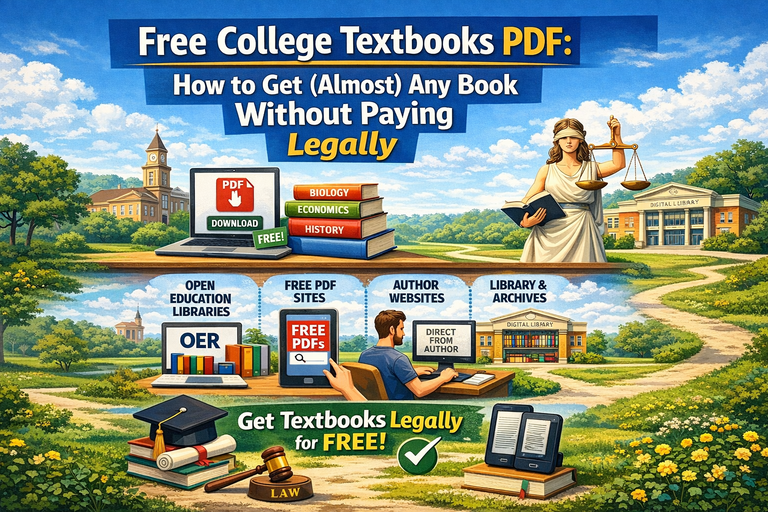
1) Understand “Free eBooks”: What’s Actually Legal (and What to Avoid)
Not every “free PDF” you find online is safe or legal. Knowing the difference protects you from scams, malware, and academic issues.
✅ Legitimate Free eBooks Come From:
- Public domain books (copyright expired)
- Open Educational Resources (OER) with open licenses (e.g., Creative Commons)
- Open-access (OA) academic publications from universities and publishers
- Library eBooks (free via institutional subscriptions)
- Author-posted copies (preprints or permitted versions)
🚫 Red Flags to Avoid:
- “Download now” sites full of ads and pop-ups
- Pages asking for credit card details to “verify” access
-
Suspicious file types like
.exe,.scr, or locked archives - Websites offering pirated copies of recent textbooks
Sticking to verified platforms ensures safety, quality, and academic integrity.
2) The Best Places to Get Free eBooks (All Subjects)
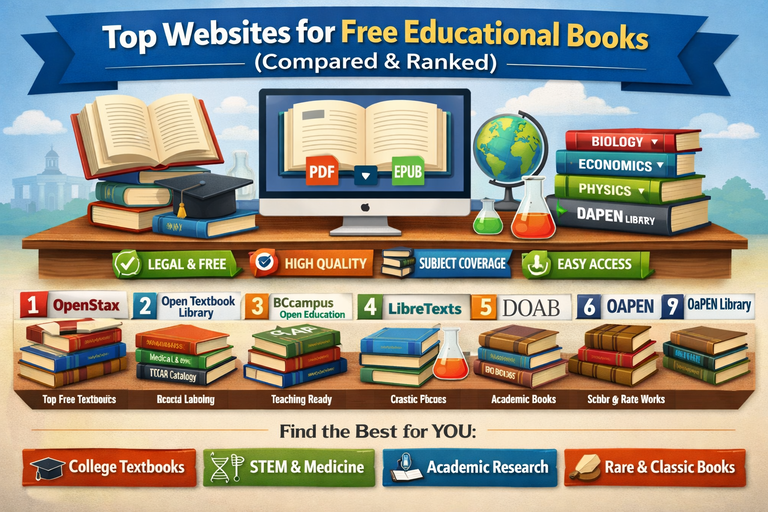
A) Open Textbooks (OER) Best for Course-Ready Materials
These are designed for students and often include quizzes, slides, and instructor resources.
- OpenStax – high-quality college textbooks
- Open Textbook Library – broad academic catalog
- BCcampus OpenEd – strong general education content
- LibreTexts – massive STEM library
- Saylor Academy – structured learning resources
- OER Commons – search across providers
- Wikibooks – community-created content
Formats: PDF, ePub, and online readers
B) Library eBooks The Most Underrated Resource
Your school or public library can give you free access to expensive textbooks.
- Course reserves (short-term loans)
- Institutional eBook databases
- Interlibrary loan (ILL) services
Popular apps:
- Libby
- Hoopla
- CloudLibrary
💡 Tip: Librarians can often request books or suggest alternatives—don’t hesitate to ask.
C) Public Domain & Classics (Free Forever)
Great for literature, philosophy, history, and foundational texts.
- Project Gutenberg
- Internet Archive
- HathiTrust
- Google Books
- Standard Ebooks
- LibriVox
D) Open-Access Academic Books (Research-Level)
Ideal for essays, theses, and advanced coursework.
- Directory of Open Access Books
- OAPEN Library
- JSTOR (Open Content section)
E) Science & Medical References
- NCBI Bookshelf
- PubMed Central
- World Health Organization
- Centers for Disease Control and Prevention
3) Subject-by-Subject: Where to Start
🎓 General Education
- OpenStax
- Open Textbook Library
- LibreTexts
📊 Math & Statistics
- OpenStax (Calculus, Statistics)
- OpenIntro
- LibreTexts Mathematics
💻 Computer Science & Programming
- MIT OpenCourseWare
- University repositories (.edu domains)
💼 Business & Economics
- OpenStax (Economics)
- Government and central bank publications
🧠 Social Sciences
- OpenStax (Psychology, Sociology)
- OER Commons
- DOAB / OAPEN
📚 Humanities
- Project Gutenberg
- Internet Archive
- HathiTrust
🔬 Sciences
- OpenStax
- LibreTexts
- NCBI Bookshelf
🏥 Health Sciences
- Open RN
- NCBI Bookshelf
- WHO / CDC
⚖️ Law & Policy
- Government publications
- University OA presses
🌍 Languages
- Wikibooks
- Public domain readers
4) How to Search Smarter (Find Legit Copies Fast)
Use these proven strategies:
- Search by ISBN + “open textbook”
-
Use site filters:
-
site:openstax.org -
site:oapen.org -
site:doabooks.org
-
- Check your library first
- Look for Creative Commons licenses (e.g., CC BY)
- Search “author + PDF” only on trusted domains (.edu, repositories)
Always Verify:
- Correct edition
- Author(s)
- Table of contents matches your syllabus
5) Best File Formats for Students
- PDF: Best for printing and exact layouts
- ePub: Best for phones/tablets (adjustable text)
- MOBI/AZW: For Kindle users
- DJVU: Common for scanned older books
📌 Tip: If text isn’t selectable, the file is likely scanned use OCR tools for search functionality.
6) Reading Apps and Tools
For PDFs:
- Adobe Acrobat Reader
- Foxit Reader
- SumatraPDF
For ePub:
- Google Play Books
- Kobo
- FBReader
For Organization & Citations:
- Zotero
- Calibre
- Mendeley
7) Step-by-Step Workflow to Get Free eBooks
- Check syllabus (edition, ISBN, access code)
- Search OER platforms first
- Check your school library
- Use public library apps
- Explore OA platforms (DOAB, OAPEN)
- Search older editions (Internet Archive, HathiTrust)
- Ask your professor about alternatives
- Request via library if unavailable
8) Special Case: “Access Code Required” Textbooks
Platforms like Pearson, McGraw Hill, or Cengage often require paid access codes.
What You Can Do:
- Ask for alternative assignments
- Check for fee waivers or inclusive access
- Use free trial periods
- Look for OER-based course options
9) Safety Checklist Before Downloading
- Download only from trusted sources
- Avoid “special downloader” software
- Never enter school credentials on random sites
- Scan files if unsure
- Prefer PDF/ePub with clear licensing
10) Quick FAQ
Can I really get free eBooks for all subjects?
Yes especially through OER, libraries, and open-access platforms. However, not every commercial textbook will be free.
Are free eBooks good enough for college?
Absolutely. Many (especially OpenStax) are high-quality and widely used.
What if I need a PDF specifically?
Most OER platforms offer PDFs. If only ePub is available, tools like Calibre can help convert formats (where permitted).
Final Thoughts
Free eBooks are no longer a workaround they’re a powerful, legitimate ecosystem that can replace or supplement traditional textbooks. By combining OER platforms, library access, and open-access research sources, you can build a complete academic library without spending hundreds of dollars each semester.
The key is simple: use trusted sources, verify what you download, and organize your materials effectively.