How Free eBooks Support Teachers in Low-Resource Classrooms
In low-resource classrooms, teachers face a daily balancing act. Students need high-quality learning materials but budgets are tight, textbooks are outdated, libraries may be limited or nonexistent, and internet access is often unreliable.
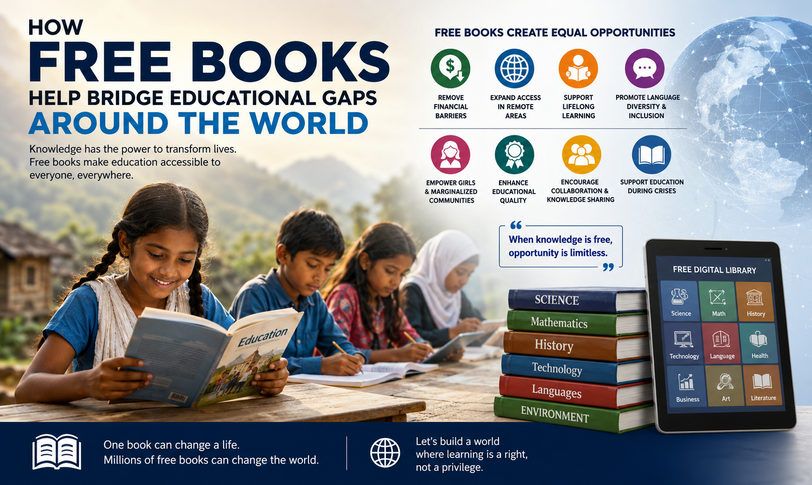
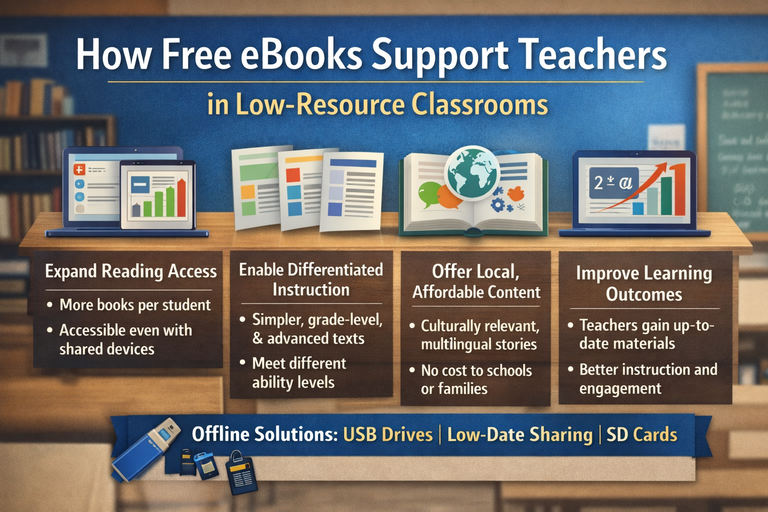
Free eBooks when legal, accessible, and aligned with curriculum needs can significantly reduce these barriers. They expand reading access, support differentiated instruction, strengthen language development, and provide up-to-date content without depending entirely on printed books.
This article explains why free eBooks matter, how teachers can use them effectively, what works in low-connectivity environments, and how to implement sustainable systems that last.
1) Understanding the Reality of Low-Resource Classrooms
Low-resource classrooms differ across regions, but common challenges include:
-
Insufficient textbooks (sometimes one per 3–5 students)
-
Outdated editions misaligned with current standards
-
Minimal or nonexistent school libraries
-
Limited printing or photocopying budgets
-
Few devices (often one teacher phone or shared laptop)
-
High data costs or unstable internet
-
Large class sizes with mixed ability levels
Despite these constraints, teachers must still:
-
Plan lessons
-
Provide reading practice
-
Assign and assess work
-
Keep students engaged
-
Differentiate instruction
Free eBooks, combined with thoughtful routines and offline strategies, can help bridge these gaps.
2) What “Free eBooks” Really Means (And Why Legality Matters)
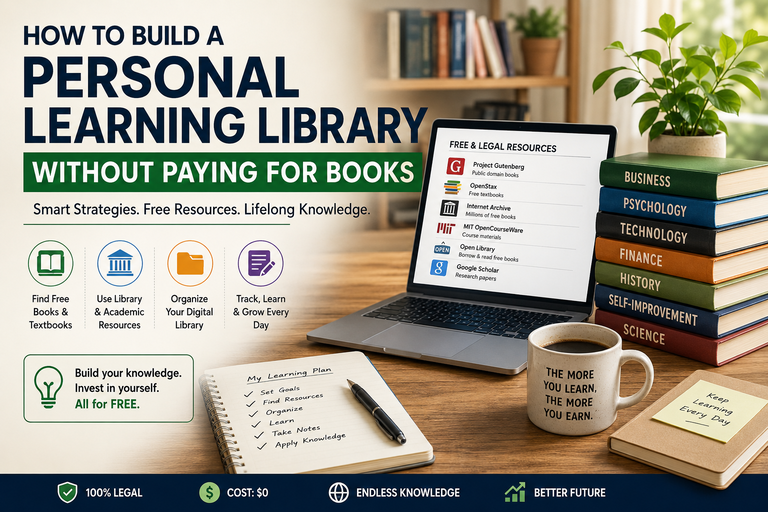
Not all “free PDFs” online are legal or safe. A strong strategy prioritizes:
-
Openly licensed books (e.g., Creative Commons)
-
Public domain books (copyright expired)
-
Library eBooks (legally borrowed)
-
Publisher or NGO-provided materials
Legal sources protect teachers and schools from:
-
Copyright violations
-
Low-quality or incomplete scans
-
Malware risks
-
Broken or disappearing links
Using verified platforms ensures sustainability and credibility.
3) Key Ways Free eBooks Help Teachers and Learners
A. Expanding Access to Reading Materials Immediately
Free eBooks increase the number of books available per student even when accessed through shared devices or teacher projection.
Impact:
-
Increased reading time
-
More independent and small-group work
-
Reduced reliance on a single textbook
Reading volume is one of the strongest predictors of literacy improvement. Access matters.
B. Supporting Differentiated Instruction
Low-resource classrooms often contain students reading far below or above grade level. Free eBooks allow teachers to provide:
-
Simplified texts for struggling readers
-
Grade-level materials for core instruction
-
Enrichment texts for advanced learners
Impact:
-
Reduced frustration
-
Higher engagement
-
Improved classroom management
Differentiation becomes possible even without multiple printed textbook sets.
C. Enabling Culturally Relevant and Multilingual Content
Many open resources include local stories and multilingual materials. For example:
-
StoryWeaver offers multilingual children’s stories.
-
International Children's Digital Library provides global children’s books.
This supports:
-
Mother-tongue instruction
-
Smoother second-language transitions
-
Greater cultural relevance
Impact:
-
Improved comprehension
-
Higher participation
-
Stronger home–school connections
D. Providing Up-to-Date Content
Printed textbooks often remain unchanged for years due to procurement cycles. Open textbooks from platforms like:
-
OpenStax
-
Open Textbook Library
can be updated more frequently and adapted locally.
Impact:
-
More accurate instruction
-
Better alignment with standards
-
Increased teacher confidence
E. Reducing Costs for Schools and Families
Free eBooks can reduce or replace:
-
Class reader sets
-
Teacher reference materials
-
Supplemental worksheets
Impact:
-
Funds redirected to essentials (devices, repairs, electricity)
-
Reduced burden on families
F. Strengthening Teacher Professional Development
Teachers benefit directly from free eBooks that support:
-
Subject mastery
-
Inclusive education strategies
-
Assessment methods
-
Classroom management
Platforms like:
-
Project Gutenberg
-
Directory of Open Access Books
offer a wide range of open-access materials for professional growth.
Impact:
-
Higher instructional quality
-
Greater instructional variety
-
Improved learner outcomes
4) Practical Classroom Use Cases (Even With Limited Devices)
Free eBooks can work with one device or many. The strategy matters more than the hardware.
Scenario 1: One Teacher Phone + Group Learning
How it works:
-
Teacher downloads short texts in advance.
-
Reads aloud or paraphrases sections.
-
Students respond orally and complete written tasks.
Best for: Early grades, language classes, storytelling.
Scenario 2: One Laptop + Projector
How it works:
-
Project the eBook.
-
Model reading strategies (predicting, summarizing, vocabulary inference).
-
Annotate together.
Best for: Comprehension instruction and shared discussion.
Scenario 3: Station Rotation (2–5 Devices)
How it works:
-
One reading station uses eBooks.
-
Other stations use offline writing or peer tutoring.
-
Groups rotate every 10–15 minutes.
Best for: Large or mixed-level classes.
Scenario 4: Low-Data Take-Home Reading
Where appropriate:
-
Share files via Bluetooth or memory cards.
-
Provide QR codes to public-domain stories.
-
Offer small downloadable EPUB files.
Always follow safeguarding and school policies.
5) Offline and Low-Bandwidth Strategies
Connectivity challenges require offline-first planning.
A. Download Once, Reuse Often
-
Prefer EPUB (smaller file size)
-
Download chapter-by-chapter when possible
-
Store organized offline folders
B. Use Offline eReader Apps
Features that support learning:
-
Font resizing
-
Bookmarks
-
Highlighting
-
Text-to-speech (when available)
C. Build a Micro-Library
Use a flash drive or SD card:
Grade1/
Grade2/
Grade3/
Teacher_Resources/
Start_Here_Index.doc
Keep backup copies.
D. Print “Bridge Materials”
When printing is limited:
-
Print key vocabulary page
-
Print comprehension questions
-
Students read digitally, respond on paper
This blends digital and traditional methods effectively.
6) Instructional Advantages Over Print
Even simple eBooks offer benefits:
-
Search function
-
Adjustable font size
-
Built-in dictionaries
-
Text-to-speech
-
Rapid distribution
These features improve accessibility without additional cost.
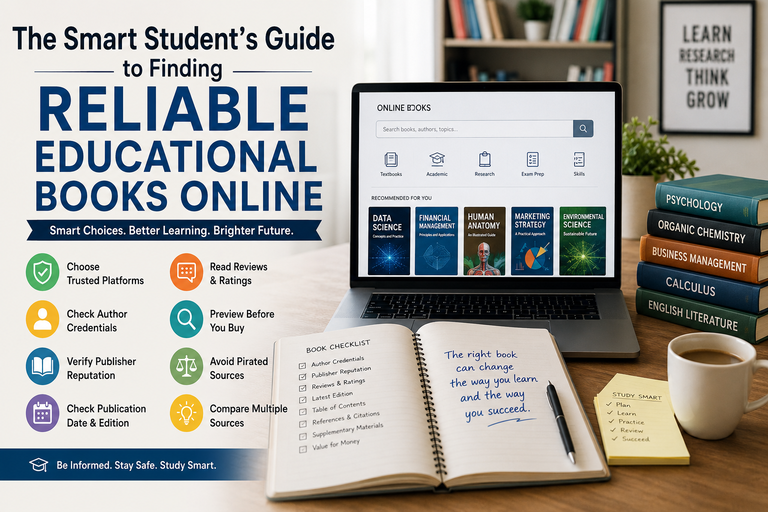
7) Quality Control: Choosing the Right eBooks
Teachers can apply five filters:
A. Curriculum Alignment
Does it meet learning objectives?
B. Reading Level
Is vocabulary appropriate?
C. Accuracy and Credibility
Who is the publisher?
D. Usability
Is formatting clear on small screens?
E. Licensing
Can it be legally shared or adapted?
8) Common Challenges and Solutions
Device Shortages
-
Rotation systems
-
Teacher-led projection
-
Community partnerships
Limited Electricity
-
Power banks
-
Scheduled device days
-
Hybrid digital + paper routines
Digital Distraction
-
Airplane mode
-
Clear device rules
-
Short, structured reading blocks
Teacher Workload
-
Start small (10–20 core books)
-
Reuse texts across activities
-
Collaborate across grade levels
Accessibility Needs
-
Choose reflowable EPUB files
-
Pair text with oral reading
-
Use text-to-speech where available
9) Building a Sustainable School eBook Library
A long-term system ensures continuity.
Step 1: Curate
-
20–50 student readers
-
10–20 teacher reference texts
-
Core open textbooks
Step 2: Organize
Consistent naming:
Grade_Subject_Title_Level
Include a “Start Here” guide.
Step 3: Train Teachers
A short 60-minute workshop can cover:
-
Downloading
-
File management
-
Reading stations
-
Attribution requirements
Step 4: Maintain Quarterly
-
Remove broken links
-
Add 5–10 titles per term
-
Collect feedback
Step 5: Encourage Local Adaptation
Where licenses allow:
-
Translate short sections
-
Add comprehension questions
-
Adapt examples to local context
Over time, schools develop aligned, culturally relevant resources.
10) Recommended Free, Legal eBook Sources
Availability varies by country, but useful starting points include:
-
OpenStax (open textbooks)
-
Open Textbook Library
-
Project Gutenberg
-
International Children's Digital Library
-
StoryWeaver
-
Worldreader
-
UNESCO and UNICEF resource hubs
-
Local public libraries with digital lending
Always verify licensing and sharing permissions.
Conclusion
Free eBooks can dramatically strengthen teaching and learning in low-resource classrooms. They expand access to reading, enable differentiation, support multilingual learning, reduce costs, and enhance teacher professional development.
But the real transformation happens when teachers move beyond simply “having digital books” and build consistent systems:
-
Curated collections
-
Offline access plans
-
Structured reading routines
-
Clear assessment methods
With a small, well-chosen collection and practical classroom routines, free eBooks can provide something every classroom deserves: reliable, sustainable access to learning.