
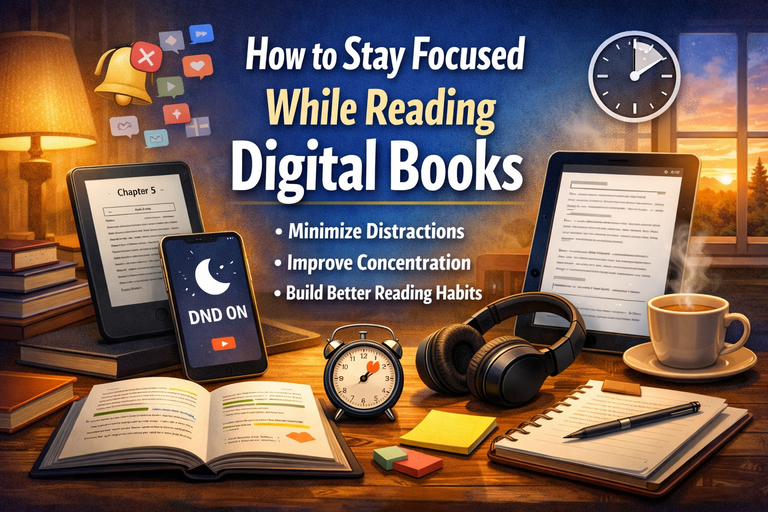
How to Stay Focused While Reading Digital Books
Reading digital books offers unmatched convenience. You can carry hundreds of titles on a single device, adjust text to your comfort, and access knowledge instantly. But alongside these advantages comes a common struggle: maintaining focus.
Unlike printed books, digital reading often happens on devices designed to distract. Notifications, app switching, and screen fatigue can break your concentration before you fully settle into the text. The good news is that focus is not something you either have or lack it’s a skill you can build with the right strategies.
This guide explores practical, proven ways to help you stay focused while reading digital books and turn your reading sessions into meaningful, immersive experiences.
Why Digital Reading Feels More Distracting
Digital environments are built for interaction, not stillness. When you read on a phone, tablet, or computer, you are surrounded by interruptions competing for your attention.
Common challenges include:
- Constant notifications and alerts
- Temptation to check other apps or tabs
- Eye strain and screen fatigue
- Habitual skimming instead of deep reading
- Multitasking
- Poor reading posture or lighting
- Lack of clear reading goals
With physical books, the experience is naturally focused and linear. Digital reading requires you to actively create that same level of structure.
1. Choose the Right Device
Your device plays a major role in your ability to concentrate.
E-readers (Best for Focus)
Devices like Kindle or Kobo are designed for reading. They minimize distractions, use eye-friendly screens, and feel closer to reading a physical book.
Tablets (Balanced Option)
Great for textbooks, PDFs, and visual content but also more distracting. Use focus mode and keep only reading apps visible.
Smartphones (Most Distracting)
Phones are convenient but filled with interruptions. If you must use one:
- Enable Do Not Disturb
- Hide social apps
- Read in short sessions
Key idea: Use the least distracting device available.
2. Turn Off Notifications Completely
Even a single notification can break your attention. Worse, the anticipation of interruptions reduces focus.
Before you start reading:
- Turn on Do Not Disturb
- Silence calls and alerts
- Disable pop-ups and banners
- Use airplane mode if possible
Simple rule: If your device can interrupt you, fix it before you begin reading.
3. Create a Distraction-Free Reading Environment
Your surroundings matter as much as your device.
Choose a consistent reading spot:
- A quiet corner
- A comfortable chair
- A well-lit desk
- A library or calm outdoor space
Improve lighting:
- Use soft, indirect light
- Avoid glare on your screen
- Adjust brightness to match your environment
Control background noise:
- Silence, if possible
- Or steady sounds like white noise or rain
Consistency trains your brain to associate that space with focus.
4. Set a Clear Reading Goal
Reading without direction often leads to distraction.
Examples of simple goals:
- Read for 20 minutes
- Finish one chapter
- Identify key ideas
- Take notes on one section
Ask yourself:
- Why am I reading this?
- What do I want from this session?
- How long will I read?
Clear goals make reading intentional and easier to sustain.
5. Use Time Blocks for Better Focus
Long, unstructured reading sessions can lead to fatigue. Instead, use timed intervals.
Try the Pomodoro technique:
- 25 minutes reading
- 5-minute break
- Repeat
If you’re rebuilding your focus:
- Start with 10–15 minutes
- Gradually increase
Consistency beats duration. A focused short session is more effective than a distracted long one.
6. Adjust Your Display for Comfort
Physical discomfort quickly leads to mental distraction.
Optimize your reading settings:
- Increase font size for easy reading
- Adjust line spacing
- Choose a comfortable font style
Control brightness:
- Lower in dark environments
- Moderate in normal lighting
Use eye-friendly modes:
- Dark mode
- Sepia background
- Warm lighting
Comfortable visuals reduce strain and help you read longer.
7. Read in Full-Screen Mode
Clutter on your screen divides attention.
Use:
- Full-screen mode
- Minimal interface view
- Hidden menus and controls
The fewer elements on your screen, the easier it is to stay immersed in the text.
8. Avoid Multitasking Completely
Digital devices encourage switching between tasks but reading requires sustained attention.
To stay focused:
- Close unused apps
- Avoid multiple tabs
- Log out of distracting platforms
- Use website blockers if needed
Mindset shift: Reading is not something you do between distractions it is the main task.
9. Practice Active Reading
Engagement improves focus. Passive reading invites distraction.
Try:
- Highlighting key ideas
- Writing short notes
- Summarizing chapters
- Asking questions as you read
For nonfiction:
- Capture insights and arguments
For fiction:
- Track themes and character development
Active reading keeps your mind involved and reduces wandering.
10. Preview Before You Read
Before diving in, scan:
- Table of contents
- Chapter titles
- Headings and summaries
This creates a mental roadmap, making it easier to follow the material and stay engaged.
11. Match Format to Content
Not all books work well on all devices.
- Novels → e-readers
- PDFs → tablets or laptops
- Illustrated books → color screens
- Reference materials → searchable formats
When the format fits the content, reading feels smoother and less frustrating.
12. Build a Reading Ritual
A simple routine signals your brain that it’s time to focus.
Your ritual might include:
- Making tea or coffee
- Sitting in the same place
- Setting a timer
- Taking a deep breath
Small, repeated actions create strong focus habits over time.
13. Read at the Right Time
Your energy levels affect your focus.
Best times:
- Early morning
- Quiet afternoon breaks
- Evening wind-down
Avoid:
- When exhausted
- After long screen exposure
- During high-interruption periods
Sometimes the issue isn’t the book it’s the timing.
14. Manage Screen Fatigue
Too much screen time reduces your ability to focus.
Reduce strain by:
- Taking breaks
- Following the 20-20-20 rule
- Using e-ink devices
- Limiting screen use before reading
Healthy eyes support longer, more focused sessions.
15. Resist the “Quick Check†Habit
“I’ll just check one thing†often leads to major distractions.
Instead:
- Keep a notepad nearby
- Write down what you want to check
- Return to reading immediately
Most urges fade once you capture them.
16. Use Audiobooks Strategically
Audiobooks can support focus when used intentionally.
Helpful when:
- You’re tired
- You’re commuting
- You’re reading complex material
Best practice:
- Follow along with the text
- Pause and reflect
- Avoid passive listening
Use audio as support not a replacement for attention.
17. Track Your Reading Progress
A reading log builds awareness and motivation.
TrackTime spent reading
- Pages or chapters completed
- Key insights
- Focus level
This helps you identify what works best for your focus.
18. Choose the Right Books
Sometimes the issue isn’t focus it’s the material.
Ask:
- Is this book engaging?
- Is it relevant to my goals?
- Is it too difficult or too easy?
Switching to a better book can instantly improve concentration.
19. Build Focus Gradually
If digital reading feels difficult, your attention may need retraining.
Start small:
- Read one chapter without switching apps
- Increase time gradually
- Choose engaging books
Focus is like a muscle the more you use it, the stronger it becomes.
20. Know When to Use Print Instead
Digital reading isn’t always the best choice.
Switch to print when:
- You have eye strain
- You need deep comprehension
- The format is frustrating
The goal is effective reading not forcing a format.
A Simple Focused Reading Routine
Here’s a practical system you can follow:
- Choose your book and device
- Turn on Do Not Disturb
- Sit in your reading spot
- Adjust brightness and font
- Set a goal (e.g., 20 minutes)
- Read in full-screen mode
- Take light notes
- Write down distractions
- Take a short break
- Log your progress
Common Mistakes to Avoid
- Reading on a distraction-heavy device
- Starting without a goal
- Reading while mentally exhausted
- Using uncomfortable display settings
- Multitasking
- Over-highlighting
- Trying to read too long too soon
Final Thoughts
Staying focused while reading digital books is completely achievable—but it requires intention. Unlike printed books, digital reading does not automatically create a distraction-free experience. You must design that environment yourself.
The most effective strategies are simple:
- Use the least distracting device
- Eliminate notifications
- Create a comfortable reading space
- Set clear goals
- Read in structured time blocks
- Engage actively with the text
Most importantly, be patient. Focus improves with practice. As you build better habits and reduce distractions, digital reading can become just as immersive, enjoyable, and rewarding as reading a physical book.
With the right approach, your device can transform from a source of distraction into a powerful tool for deep learning one focused session at a time.