How to Avoid Plagiarism: Paraphrasing, Citations, and Tools
Plagiarism can seriously harm your grades, academic reputation, and professional credibility. The good news? It’s completely preventable once you understand what plagiarism is and adopt a few consistent writing habits.
This guide breaks plagiarism prevention into practical, easy-to-follow skills: paraphrasing correctly, quoting responsibly, citing sources accurately, and using tools to manage references and check originality.
What Is Plagiarism and Why Does It Happen?
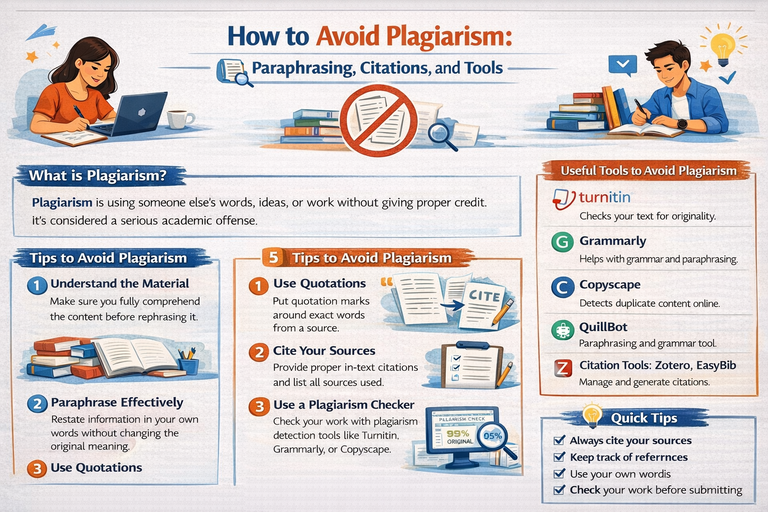
Plagiarism occurs when you present someone else’s words, ideas, data, or structure as your own without proper acknowledgment. It can take several forms:
-
Direct plagiarism – Copying text word-for-word without quotation marks and a citation.
-
Mosaic (patchwork) plagiarism – Piecing together phrases from a source with minor edits.
-
Paraphrasing plagiarism – Changing a few words while keeping the original structure or meaning too closely, without citation.
-
Self-plagiarism – Reusing your own previous work without disclosure or permission when required.
-
Citation plagiarism – Citing sources inaccurately, incompletely, or misleadingly.
Most plagiarism isn’t intentional. It often happens due to poor note-taking, tight deadlines, confusion about citation rules, or misunderstanding what qualifies as common knowledge.
Practical Ways to Avoid Plagiarism
1. Paraphrase Properly (Change Structure, Not Just Words)
A strong paraphrase does four things:
-
Fully changes the wording
-
Changes the sentence structure
-
Preserves the original meaning
-
Includes a citation (because the idea still belongs to the source)
What not to do
-
Swap a few words with synonyms
-
Keep the same sentence order
-
Follow the source sentence too closely
A reliable paraphrasing method
-
Read the passage until you fully understand it.
-
Close the source and write the idea from memory in your own words.
-
Compare your version to the original to ensure:
-
You didn’t reuse unique phrases
-
You didn’t mirror the structure
-
You didn’t distort the meaning
-
-
Add the citation immediately.
Paraphrase vs. Summary
-
Paraphrase: Similar length; restates specific ideas
-
Summary: Shorter; condenses main points
👉 Both require citation.
2. Use Quotation Marks for Direct Quotes
Any time you use an author’s exact wording, you must:
-
Place the text in quotation marks (or use block quotes for longer passages)
-
Include an in-text citation
-
Provide page or paragraph numbers when required by your citation style
Use quotes when:
-
The wording is especially precise or memorable
-
You’re analyzing language (literature, law, discourse analysis)
-
Accuracy depends on exact phrasing
Avoid over-quoting. In most academic and professional writing, your voice should lead, with quotes used sparingly for support.
3. Cite All Sources Correctly
A simple rule works every time:
If the idea isn’t yours, cite it.
This includes:
-
Theories, arguments, and interpretations
-
Statistics and data
-
Research findings
-
Images, tables, figures, and graphs
-
Specialized or non-obvious facts
Most citation styles require two elements:
-
In-text citations (within the body of your work)
-
Reference list or bibliography (full source details)
Common citation styles
-
APA – Social sciences
-
MLA – Humanities
-
Chicago – History and some social sciences
-
IEEE – Engineering and technical fields
Mistakes to avoid
-
Listing sources only in the bibliography but not in-text
-
Missing page numbers for direct quotes
-
Citing the wrong source
-
Improperly using secondary citations
Best practice: read and cite the original source whenever possible.
4. Keep Track of References from the Start
Many plagiarism issues happen simply because writers forget where ideas came from.
Smart source-management habits
-
Label your notes clearly:
-
Direct quote (exact text + page number)
-
Paraphrase draft (your wording + source)
-
My idea (original analysis)
-
-
Save PDFs and URLs with access dates
-
Record full bibliographic details immediately
Avoid “citation scrambling”
Instead of writing first and citing later:
-
Cite as you write
-
Use placeholders like (CITE: Author, Year, p. X) until final formatting
Helpful Tools (Used the Right Way)
Tools don’t replace judgment but they make ethical writing faster and easier.
1. Plagiarism Checkers
Plagiarism checkers can help identify:
-
Missing citations
-
Unintentionally close phrasing
-
Forgotten quotation marks
Important limitations
-
They can’t reliably judge paraphrasing quality
-
Databases vary (not all sources are indexed)
-
Similarity scores can be misleading
Best practice
Run a check before submission and review flagged sections carefully. Rewrite close paraphrases and confirm all quotes and citations are correct.
2. Reference Managers
Reference managers help you:
-
Store and organize sources
-
Generate citations and bibliographies
-
Switch citation styles easily
-
Annotate PDFs and add notes
Popular options include:
-
Zotero – Free, student-friendly, strong browser tools
-
Mendeley – PDF annotation and reference storage
-
EndNote – Common in large research environments
Always proofread auto-generated citations tools can make formatting errors.
3. Citation Guides
Even experienced writers rely on citation guides for:
-
In-text citation rules
-
Reference formatting
-
Block quotes and special sources
Use:
-
Official style manuals (APA, MLA, Chicago)
-
University library citation pages
-
Style-specific quick guides
Consistency matters stick to one style unless instructed otherwise.
Ethical Writing Habits That Work
Avoiding plagiarism isn’t about fear it’s about workflow.
A simple integrity workflow
-
Gather and review sources
-
Annotate key claims and evidence
-
Write from understanding, not copying
-
Cite as you go
-
Revise to strengthen your own voice
-
Run a plagiarism check
-
Finalize references in the correct style
Understanding “common knowledge”
You don’t need to cite:
-
Widely known facts (e.g., water freezes at 0°C)
You do need to cite:
-
Specific statistics or data
-
Specialized or disputed claims
-
An author’s interpretation or framing
When unsure, cite.
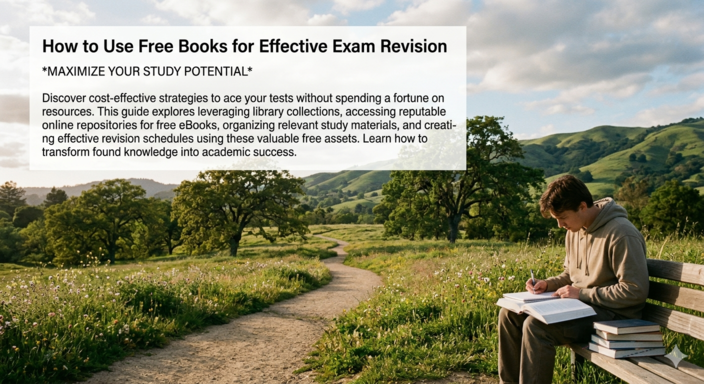
Learning Support: Free Academic Writing Resources
Free academic writing books and reputable educational resources can help you:
-
Integrate sources smoothly
-
Paraphrase and summarize accurately
-
Structure arguments with evidence
-
Follow discipline-specific citation norms
Check your university library, writing center resources, and open-access textbooks on research writing and information literacy.
Final Pre-Submission Checklist
✔ All direct quotes have quotation marks and citations
✔ All paraphrases include citations
✔ Page numbers are included where required
✔ In-text citations match the reference list
✔ Notes clearly separate quotes, paraphrases, and original ideas
✔ Similarity highlights were reviewed and revised
✔ Citation style is consistent and correct