
Free Books That Help Improve Focus and Study Discipline
In today’s fast-paced digital world, maintaining focus and building strong study discipline can be difficult. Students are constantly surrounded by distractions social media notifications, entertainment apps, online conversations, and the pressure of multitasking. These interruptions often reduce concentration, weaken productivity, and make studying feel overwhelming.
At the same time, academic success requires the opposite: focus, consistency, self-control, and disciplined habits. Without these qualities, even the most intelligent students may struggle to manage their time effectively or achieve their goals.
The good news is that valuable guidance is widely available through free books. Many public domain classics and open educational resources offer practical advice on building concentration, improving self-discipline, and creating better study habits. These books provide timeless wisdom and actionable strategies that can help learners strengthen their mental focus and academic routines without spending money.
This article explores some of the best free books that can help improve focus and study discipline, explains why these books matter, and shows how to apply their lessons in everyday academic life.
Why Read Books on Focus and Study Discipline?
Focus and discipline are essential for effective learning. They help students stay consistent, complete tasks on time, and make steady progress toward academic goals. However, these qualities are not simply natural talents—they are skills that can be learned and developed.
Books on focus and study discipline help readers:
- Understand how productive habits are formed
- Learn techniques to reduce procrastination
- Improve time management
- Develop self-control
- Build long-term consistency
- Strengthen motivation and mental resilience
By reading these books, students gain insights into how the mind works and how habits shape performance. This knowledge allows them to make better decisions, manage distractions, and create routines that support success.
More importantly, these books often provide practical systems that students can use immediately. Whether it is learning how to organize study sessions, stay motivated, or manage time wisely, the right book can transform the way a student approaches learning.
As a Man Thinketh by James Allen
Availability: Public domain (available free on Project Gutenberg and similar platforms)
As a Man Thinketh is a short but influential book that explores the connection between thoughts, actions, and personal success. James Allen argues that a person’s thoughts shape their behavior, character, and future outcomes.
For students, this message is particularly powerful. Academic discipline often begins with mindset. When students believe they are capable of improvement and take responsibility for their actions, they become more motivated to stay focused and disciplined.
How this book helps improve focus and discipline:
- Encourages purposeful and intentional thinking
- Promotes personal responsibility
- Helps replace negative thought patterns with constructive ones
- Strengthens self-motivation
The book teaches that disciplined actions are the result of disciplined thinking. Students who understand this connection are better able to control distractions and stay committed to their goals.
Although it was written over a century ago, its message remains relevant: success begins in the mind.
Self-Help by Samuel Smiles
Availability: Public domain
Samuel Smiles’ Self-Help emphasizes the importance of perseverance, hard work, and personal responsibility. Through inspiring examples of successful individuals, the book demonstrates how consistent effort and disciplined habits lead to achievement.
This book is especially valuable for students who struggle with procrastination or lack motivation. It shows that success is not based solely on talent but on sustained effort and strong character.
Key lessons students can gain:
- The value of persistence
- The importance of time management
- The role of discipline in long-term achievement
- The importance of taking responsibility for one’s progress
By reading about people who achieved success through determination and discipline, students are encouraged to build similar habits in their own academic lives.
The Art of War by Sun Tzu
Availability: Public domain
Although The Art of War was written as a military strategy guide, its principles apply far beyond warfare. The book focuses on planning, preparation, awareness, and disciplined action all of which are valuable for students.
Academic success often requires strategic thinking. Students must prepare for exams, prioritize tasks, and use their time effectively. The Art of War teaches readers how preparation and discipline create advantage.
Lessons that apply to studying:
- Plan before taking action
- Prepare thoroughly
- Stay aware of challenges and obstacles
- Use discipline to maintain control
For example, just as military success depends on preparation, academic success depends on organized study habits. Students can use the book’s principles to prepare strategically for assignments and examinations.
Meditations by Marcus Aurelius
Availability: Public domain
Meditations is a collection of personal reflections written by Roman Emperor Marcus Aurelius. It is one of the most influential texts in Stoic philosophy and focuses on self-control, rational thinking, and inner discipline.
Students often face stress, anxiety, and distractions that weaken concentration. Meditations teaches the importance of focusing on what can be controlled and accepting what cannot.
Benefits for students include:
- Improved emotional control
- Greater resilience under pressure
- Better management of distractions
- Stronger personal accountability
This book encourages calmness and self-awareness two essential qualities for disciplined studying. By learning to manage thoughts and emotions, students can stay focused even in difficult situations.
How to Live on 24 Hours a Day by Arnold Bennett
Availability: Public domain
Time management is one of the most important elements of study discipline, and Arnold Bennett’s How to Live on 24 Hours a Day offers practical guidance on using time wisely.
The book emphasizes that everyone has the same amount of time each day, but disciplined people use it more intentionally.
Key lessons from the book:
- Use small blocks of time productively
- Avoid wasting free hours
- Build consistent routines
- Treat time as a valuable asset
Many students feel they do not have enough time to study, but often the real issue is how time is used. This book helps students recognize wasted opportunities and create better daily habits.
Open Educational Resources (OER) Study Skills Books
In addition to public domain classics, many universities and educational institutions provide free modern books on study skills through Open Educational Resources platforms.
Examples include:
- College Success by OpenStax
- A Guide to Effective Studying
- Learning How to Learn companion resources
These books are based on educational research and provide practical strategies for academic performance.
Topics often covered:
- Effective note-taking
- Time management
- Memory improvement
- Concentration strategies
- Goal setting
Because these resources are designed for modern learners, they often address current challenges such as digital distractions, online learning, and information overload.
They are especially useful for students who want step-by-step systems for improving study habits.
Free eBooks on Minimalism and Digital Discipline
Focus is not only about study techniques it is also about reducing distractions. Many free eBooks available on public platforms discuss minimalism, intentional living, and digital discipline.
These books help readers:
- Reduce unnecessary screen time
- Build intentional habits
- Simplify daily routines
- Reduce mental clutter
A simpler environment supports better concentration. When students reduce digital distractions and unnecessary commitments, they create more mental space for studying.
Books about minimalism can therefore indirectly strengthen study discipline by improving focus and reducing stress.
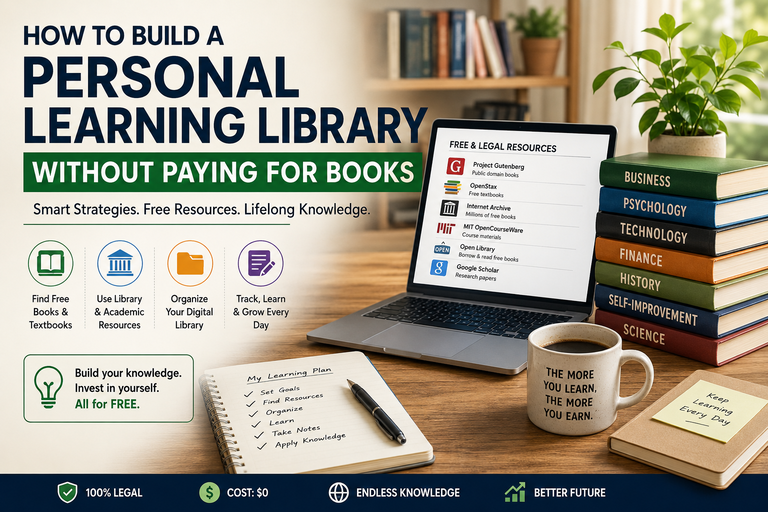
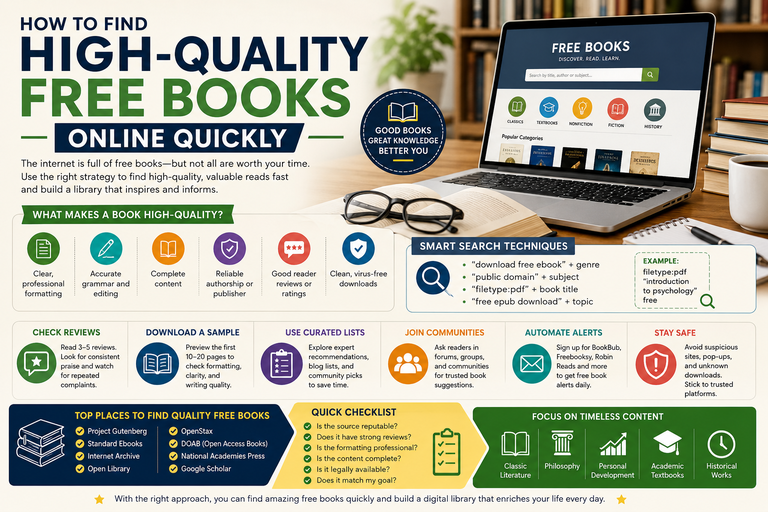
Where to Find Free Books
Students can access thousands of free books legally through reputable online platforms such as:
- Project Gutenberg – www.gutenberg.org
- Open Library – openlibrary.org
- OpenStax – openstax.org
- Google Books (Free section)
- Internet Archive – archive.org
These websites provide access to public domain classics, academic textbooks, and educational resources in formats compatible with computers, tablets, and smartphones.
This means students can begin improving their study habits immediately without purchasing expensive materials.
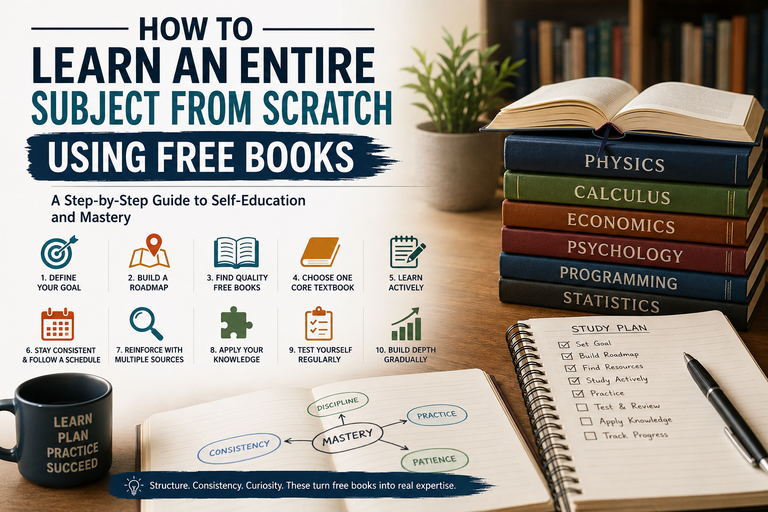
How to Get the Most Value from These Books
Reading books on focus and discipline is helpful, but lasting improvement comes from applying what you learn.
To gain the greatest benefit:
- Take notes while reading
- Highlight actionable strategies
- Apply one lesson at a time
- Reflect on progress regularly
- Practice consistently
For example, after reading about time management, create a daily study schedule. After reading about self-control, remove distractions during study time.
Knowledge becomes valuable only when turned into action.
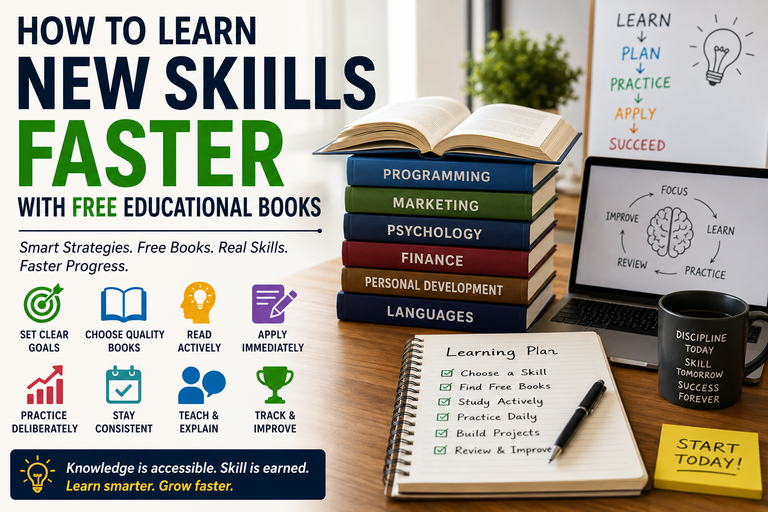
Building a Focus Routine from These Lessons
The ideas in these books can help students build a simple and effective focus routine.
A practical routine might include:
- Setting clear daily study goals
- Studying in focused blocks of 25 to 50 minutes
- Removing distractions during study sessions
- Taking short breaks to maintain energy
- Reviewing progress at the end of the day
This routine combines principles of discipline, focus, and consistency found in the books above.
Over time, these habits become automatic, making studying easier and more productive.
Conclusion
Improving focus and study discipline does not require expensive courses or paid coaching. Some of the most powerful lessons on self-control, concentration, and productivity are available for free in books that anyone can access online.
From timeless classics like Meditations and As a Man Thinketh to modern study skills resources, these books provide practical wisdom that can help students overcome distractions, manage time effectively, and build lasting academic discipline.
By reading thoughtfully and applying these lessons consistently, students can develop stronger focus, better habits, and greater confidence in their ability to succeed.
In the end, academic success is not simply about intelligence it is about discipline, consistency, and the ability to stay focused on what truly matters.