How to Build a Daily Reading Habit Using Free eBooks
Building a daily reading habit can transform how you think, learn, and live. Reading consistently improves knowledge, focus, creativity, and emotional intelligence. It also helps reduce stress, sharpen your thinking, and expose you to new ideas every day.
Yet many people struggle to read regularly. They feel too busy, too distracted, or unsure where to start. Others assume reading is expensive. Fortunately, with free eBooks, anyone can build a strong reading habit without spending money.
This guide shows you how to create a simple, sustainable daily reading habit using free eBooks from finding books to staying consistent long-term.
Why a Daily Reading Habit Matters
A daily reading habit works because small, consistent actions lead to powerful long-term results. Even 10–20 minutes a day can significantly impact your life over time.
Benefits include:
- Continuous learning
- Improved focus and attention span
- Better memory and comprehension
- Reduced screen distraction
- Stronger discipline and patience
- A calmer, more intentional routine
Reading daily is less about volume and more about consistency.
Why Free eBooks Make It Easier
Free eBooks remove common barriers like cost and access. You can instantly download and read books on your phone, tablet, or e-reader.
They allow you to:
- Access books anytime, anywhere
- Carry multiple titles in one device
- Adjust fonts and brightness for comfort
- Start reading immediately without delays
Convenience makes habits easier to maintain and that’s the real advantage.
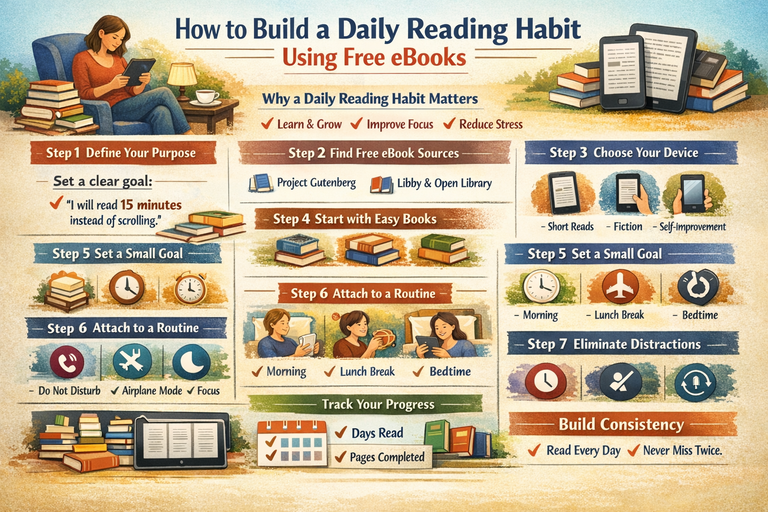
Step 1: Define Your Purpose
A habit becomes stronger when it has meaning.
Ask yourself:
- Do I want to learn new skills?
- Do I want to reduce screen time?
- Do I want to grow personally or professionally?
Be specific:
- “I will read 15 minutes every night instead of scrolling.â€
- “I will use free eBooks to improve my mindset.â€
Clarity creates commitment.
Step 2: Find Reliable Free eBook Sources
To stay consistent, you need easy access to quality books.
Start with trusted platforms like:
- Project Gutenberg
- Standard Ebooks
- ManyBooks
- Internet Archive
- Open Library
You can also use apps like Libby or Hoopla if you have a library card.
Step 3: Choose the Right Device
The best reading device is the one you will use consistently.
- E-readers: Best for focus and long sessions
- Tablets: Good for PDFs and illustrated content
- Phones: Best for short reading sessions on the go
- Computers: Useful for academic or technical reading
Choose convenience, but reduce distractions as much as possible.
Step 4: Start With Easy, Enjoyable Books
Many people quit because they start with difficult or boring books.
Instead, choose:
- Short nonfiction
- Personal development books
- Essays or reflections
- Engaging fiction
- Biographies
The goal is to build momentum, not impress yourself.
Step 5: Set a Small Daily Goal
Start small to make the habit sustainable.
Examples:
- 10 minutes per day
- 5–10 pages
- One chapter
Make it easy enough to do even on busy days.
Rule: Make the habit too small to fail.
Step 6: Attach Reading to a Routine
Link reading to something you already do daily.
Examples:
- After breakfast → read 10 minutes
- Before bed → read one chapter
- During lunch → read instead of scrolling
This reduces reliance on motivation.
Step 7: Make Reading Easy to Start
Remove friction by:
- Downloading books in advance
- Keeping your reading app visible
- Opening your book before reading time
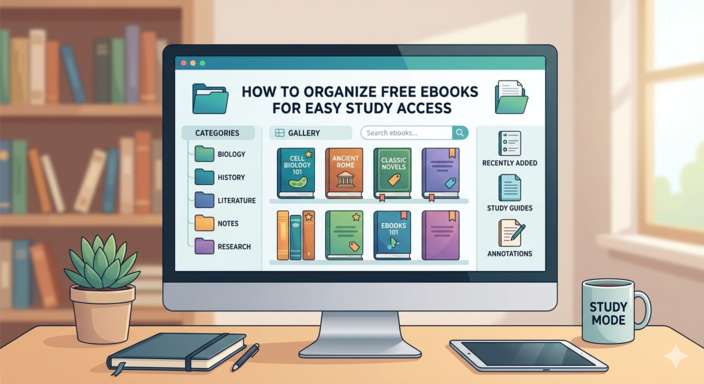
- Organizing your library
The easier it is to begin, the more consistent you’ll be.
Step 8: Eliminate Distractions
Digital devices can interrupt your focus.
Improve your reading sessions by:
- Turning on Do Not Disturb
- Using airplane mode
- Closing other apps
- Reading in full-screen mode
Focused reading builds stronger habits than distracted reading.
Step 9: Create a Comfortable Setup
Make reading enjoyable:
- Adjust font size and brightness
- Use dark mode or warm tones
- Sit comfortably with good posture
- Read in a quiet, well-lit space
Comfort encourages consistency.
Step 10: Track Your Progress
Tracking builds motivation and awareness.
You can track:
- Days read
- Minutes spent
- Pages completed
- Reading streaks
Even simple checkmarks on a calendar can reinforce the habit.
Step 11: Keep a “Next Book†List
Avoid losing momentum after finishing a book.
Prepare a short list of:
- Books you genuinely want to read
- A mix of easy and serious titles
Always have your next book ready.
Step 12: Read Based on Your Mood
Different days require different types of reading.
- Fiction → relaxation
- Essays → quick insights
- Self-help → motivation
- Philosophy → deep thinking
Flexibility keeps the habit enjoyable.
Step 13: Use Small Time Gaps
Take advantage of short moments:
- Waiting in line
- During commutes
- Before meetings
- Breaks during the day
These small sessions add up quickly.
Step 14: Replace Low-Value Habits
Swap unproductive habits with reading:
- Replace social media scrolling
- Reduce random video watching
- Limit unnecessary browsing
Even 15 minutes replaced daily can make a big difference.
Step 15: Engage With What You Read
Active reading improves focus and retention.
- Highlight key ideas
- Take short notes
- Save meaningful quotes
This makes reading more rewarding.
Step 16: Join a Reading Community
Accountability helps habits stick.
You can:
- Join online reading groups
- Participate in challenges
- Share your progress
Just remember: consistency matters more than comparison.
Step 17: Stop Uninteresting Books
Don’t force yourself through books you don’t enjoy.
It’s okay to quit if:
- The book is boring
- It doesn’t match your goals
- You’re only reading to finish
Better books lead to better habits.
Step 18: Build a Reading Identity
Shift your mindset from:
“I’m trying to read moreâ€
To:
“I am someone who reads daily.â€
Identity strengthens habits more than motivation.
Step 19: Stay Consistent, Not Perfect
You don’t need perfect streaks.
If you miss a day:
- Don’t quit
- Don’t overthink
- Start again immediately
Rule: Never miss twice.
Step 20: Notice the Benefits
Reflect on your progress:
- Are you learning more?
- Are you more focused?
- Are you less distracted?
Awareness reinforces the habit.
A Simple Daily Reading Routine
Morning Option:
- Read 10 minutes after breakfast
- Highlight one key idea
- Track your progress
Evening Option:
- Turn off notifications
- Read before bed
- Stop after your goal
Flexible Option:
- Read 5–10 minutes during the day
- Read again at night
Keep it simple and repeatable.
Best Free eBooks to Start With
To build a habit, choose:
- Short classics
- Essays and reflections
- Personal development books
- Fiction or short stories
- Biographies
Start with books that are easy to finish.
Common Mistakes to Avoid
- Choosing too many books at once
- Setting unrealistic goals
- Waiting for motivation
- Ignoring distractions
- Starting with difficult books
- Not having a routine
- Quitting after one missed day.
Final Thoughts
Building a daily reading habit using free eBooks is one of the simplest ways to improve your life. You don’t need money, perfect timing, or long hours just consistency and a clear system.
Start small. Stay consistent. Remove friction.
Over time, daily reading becomes part of who you are not just something you try to do.
The most important step is simple:
Start reading today even if it’s just one page.