The Power of Curiosity: How Free Books Encourage Lifelong Learning
Curiosity is one of the most powerful forces in human development. It drives children to ask endless questions, motivates adults to solve problems, and inspires people of all ages to seek meaning, mastery, and growth. At its core, curiosity is the desire to know more about the world, about others, and about ourselves. When nurtured, it becomes the foundation of lifelong learning.
Books have always been among the most effective tools for satisfying curiosity. They allow readers to explore unfamiliar worlds, engage with new disciplines, challenge assumptions, and encounter transformative ideas. Yet, for many people, access to books has historically been limited by cost, geography, or circumstance. This is where free books play a crucial role. They do more than provide reading material they unlock opportunity.
Curiosity as the Starting Point of Learning
Every meaningful learning journey begins with a question. Why do economies fluctuate? How does technology shape society? What makes great leaders effective? These questions ignite the desire to learn.
Curiosity matters because it makes learning self-driven. When people are curious, they are not learning out of obligation but out of genuine interest. This type of learning is deeper, more engaging, and longer-lasting. Curious learners are more likely to retain information, connect ideas across disciplines, and continue exploring beyond initial discoveries.
Books support this process in a unique way. Unlike quick online content, books provide depth and context. They allow ideas to unfold gradually, giving readers the space to think, reflect, and understand. A simple curiosity about a topic whether it’s history, science, business, or art can evolve into lifelong expertise through consistent reading.
Why Access Matters
Curiosity alone is not enough if people lack the means to explore it. When books are expensive or unavailable, learning becomes restricted. This is why free books are transformative.
By removing financial barriers, free books democratize knowledge. They ensure that education is not limited to those who can afford it. A free book can reach:
-
A student in a low-income household
-
A job seeker learning new skills
-
A parent supporting a child’s education
-
A professional looking to grow
-
A retiree exploring new interests
Access is not just about fairness it’s about unlocking human potential. Talent and curiosity exist everywhere, but opportunity does not. Free books help bridge that gap.
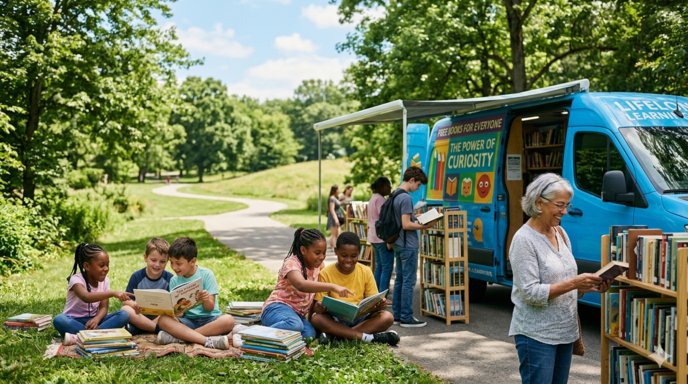
Libraries, community book exchanges, school initiatives, and digital platforms all contribute to making books accessible. When books are free, learning becomes a shared public resource rather than a private privilege.
Free Books Lower the Risk of Exploration
One of the most overlooked benefits of free books is that they encourage experimentation. When people must pay for every book, they tend to choose “safe” options books they are certain will be useful. This limits discovery.
Free access changes behavior. Readers feel more comfortable exploring unfamiliar topics without the fear of wasting money. They may:
-
Try a subject they’ve never studied
-
Read outside their usual genre
-
Explore creative or technical fields
This freedom is essential because lifelong learning is rarely linear. People often discover passions by accident. A single free book can open the door to a new interest, career path, or way of thinking.
Learning Beyond the Classroom
Education does not end with school. In today’s rapidly changing world, learning must continue throughout life. Free books make this possible by supporting learners at every stage:
-
Children build literacy and imagination
-
Teenagers explore identity and academic interests
-
Students supplement formal education
-
Professionals develop new skills
-
Parents support family learning
-
Older adults stay mentally active and engaged
Free books reinforce the idea that learning is not tied to age, institution, or status. Anyone can learn at any time.
They also empower self-directed learning. People can study topics that matter to them personally, rather than following a fixed curriculum. This autonomy strengthens motivation and makes learning more meaningful.
Building Reading Habits and Confidence
Lifelong learning depends on consistency. Free books help turn reading into a regular habit by removing friction. When books are easy to access, people are more likely to read frequently.
They also help build confidence. Many individuals feel intimidated by reading, especially if they had negative educational experiences. Free and open access environments like libraries or digital platforms allow readers to:
-
Start at their own level
-
Choose topics they enjoy
-
Learn without pressure or judgment
This is especially important for emerging readers and multilingual learners. Access to diverse and relatable materials helps people connect with reading in a personal way, making it more enjoyable and sustainable.
Encouraging Intellectual Independence
Free books do more than provide knowledge they encourage independent thinking. Readers can explore topics deeply, compare perspectives, and form their own conclusions.
In an age of fast information and misinformation, this is critical. Books offer context, depth, and evidence that shorter content often lacks. They help readers move beyond surface-level understanding and ask deeper questions:
-
Why does this idea exist?
-
What evidence supports it?
-
How does it connect to other ideas?
This kind of thinking strengthens critical analysis, media literacy, and informed decision-making.
The Social Impact of Free Books
The benefits of free books extend beyond individuals they strengthen communities.
Communities with access to books tend to be more informed, more literate, and more engaged. Libraries and reading programs often serve as gathering spaces where people share ideas and experiences.
Free books also promote equity. They help reduce educational disparities by ensuring that all individuals regardless of background have access to learning resources.
Additionally, access to diverse books fosters empathy. When readers encounter stories and perspectives different from their own, they develop a broader understanding of the world and the people in it.
Digital Access and Expanding Opportunity
The digital age has expanded access to free books dramatically. E-books, online libraries, and open educational resources allow people to read from virtually anywhere.
Digital books offer several advantages:
-
Instant access
-
Searchable content
-
Adjustable formats for accessibility
-
Portability across devices
While physical books remain valuable, digital resources complement them by reaching wider audiences. However, to fully benefit from digital access, there must also be investment in internet access, devices, and digital literacy.
Challenges to Address
Despite their benefits, free books alone are not enough. Several challenges remain:
-
Awareness: Many people don’t know about available resources
-
Curation: Too many choices can overwhelm readers
-
Quality: Free materials must still meet high standards
-
Inclusivity: Collections should reflect diverse voices and needs
Addressing these challenges ensures that free books truly support lifelong learning.
How to Use Free Books Effectively
To turn free access into meaningful growth, individuals can adopt simple strategies:
-
Follow your natural interests and questions
-
Visit libraries or explore free digital platforms regularly
-
Read across different subjects
-
Keep a list of topics and books to explore
-
Read consistently, even in short sessions
-
Discuss ideas with others
-
Revisit topics as your perspective evolves
-
Share books within your community
These habits transform reading from a passive activity into an active learning practice.
Conclusion
Curiosity is the spark that ignites learning, but access determines whether that spark grows or fades. Free books bridge the gap between interest and understanding. They make it possible for anyone to explore ideas, develop skills, and continue learning throughout life.
Their value goes beyond cost they create opportunity. They encourage exploration, build confidence, support independence, and strengthen communities. Most importantly, they remind us that learning is not limited by age, income, or circumstance.
When books are freely available, curiosity thrives. And when curiosity thrives, lifelong learning becomes not just an aspiration, but a reality.