The Role of Free Knowledge Platforms in Supporting Global Education
In the modern world, education is no longer confined to classrooms, libraries, or printed textbooks. A growing share of learning now takes place through digital tools that can be accessed from almost anywhere. Among the most influential of these tools are free knowledge platforms websites, repositories, digital libraries, and learning systems that provide open or no-cost access to educational content.
Platforms such as Wikipedia, Khan Academy, Project Gutenberg, Internet Archive, OpenStax, and OER Commons have transformed how knowledge is accessed and shared across the globe.
These platforms are now central to global education. They reduce financial barriers, support teachers and students, encourage lifelong learning, and expand access to knowledge across borders. At the same time, they raise important questions about quality, access, and sustainability.
What Are Free Knowledge Platforms?
Free knowledge platforms are digital systems that provide access to educational or informational content at no cost. They include:
-
Online encyclopedias
-
Open educational resource (OER) platforms
-
Free course providers
-
Digital libraries
-
Open textbook initiatives
-
Video-based learning platforms
-
Research repositories and open-access journals
Some of these platforms are simply free, while others are also open. Open platforms allow users to reuse, adapt, translate, and redistribute content under open licenses. This distinction is important—because openness enables customization and broader educational impact.
Together, these platforms form a global ecosystem that supports both formal education and independent learning.
Expanding Access to Education
One of the most significant contributions of free knowledge platforms is their ability to expand access.
1. Reducing the Cost of Learning
Educational materials can be expensive. Free platforms provide alternatives such as open textbooks, lessons, and practice tools making learning more affordable.
2. Reaching Underserved Communities
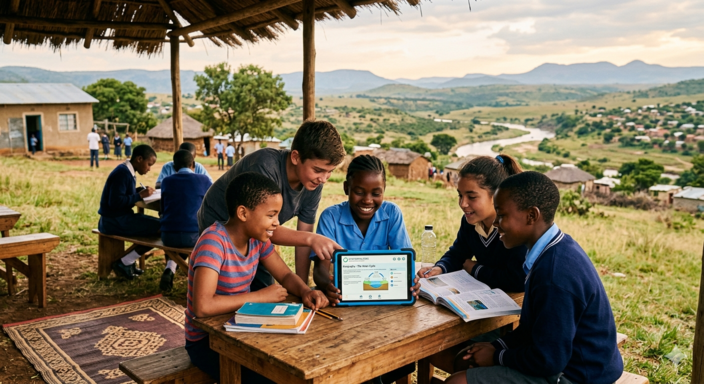
Learners in rural areas, conflict zones, or underfunded regions often lack access to physical resources. Digital platforms help bridge this gap, especially when optimized for mobile or offline use.
3. Supporting Independent Learners
Not everyone is part of a formal education system. Free platforms empower self-learners, career changers, and adult learners to study at their own pace.
4. Enabling Continuous Learning
Learning is no longer limited to school hours. Students can revisit materials, explore new topics, and deepen understanding anytime.
In this way, free knowledge platforms make education more flexible, inclusive, and continuous.
Promoting Educational Equity
Global education is shaped by inequality differences in income, infrastructure, and institutional support.
Free knowledge platforms help reduce these disparities by making high-quality resources accessible to anyone with internet access. This is especially impactful for:
-
Students in low-income households
-
Learners in underserved regions
-
Women and girls with restricted access to education
-
Adult learners returning to study
-
Students with disabilities needing adaptable formats
While these platforms cannot eliminate inequality entirely, they significantly narrow the opportunity gap by democratizing access to knowledge.
Supporting Teachers and Educational Systems
Free knowledge platforms are powerful tools for educators.
They provide:
-
Lesson plans and teaching guides
-
Instructional videos and visual aids
-
Practice exercises and quizzes
-
Open textbooks and primary sources
-
Professional development resources
Teachers can use these materials to enhance lessons, save preparation time, and introduce new teaching methods.
Open platforms are particularly valuable because they allow educators to:
-
Adapt content to local contexts
-
Translate materials into different languages
-
Customize lessons for specific student needs
This flexibility supports more inclusive and relevant teaching.
Encouraging Lifelong Learning
Learning does not stop after formal education. In today’s world, continuous learning is essential for adapting to new technologies, careers, and societal changes.
Free knowledge platforms support lifelong learning by enabling individuals to:
-
Learn new skills
-
Explore academic subjects
-
Improve professional competencies
-
Stay informed about global issues
They make education accessible to people who may not have the time, resources, or opportunity to return to traditional schooling.
Enabling Education During Crises
Free knowledge platforms have proven especially valuable during disruptions such as pandemics, conflicts, or natural disasters.
When schools close or become inaccessible:
-
Students can continue learning online
-
Teachers can assign digital materials
-
Families can support home education
These platforms also play a vital role in humanitarian contexts, helping displaced learners maintain access to education.
They contribute to educational resilience, ensuring that learning continues even in difficult circumstances.
Supporting Diverse Learning Styles
Traditional education often relies heavily on textbooks and lectures. Free knowledge platforms expand this by offering multiple formats:
-
Text-based content
-
Video lessons
-
Audio resources
-
Interactive exercises
-
Simulations and visual aids
This variety helps accommodate different learning preferences and improves engagement.
For example, a student struggling with a written explanation may better understand a concept through a video or interactive tool.
Fostering Global Collaboration
Many free knowledge platforms are built collaboratively. Contributors from around the world help create, edit, and improve content.
This collaborative model:
-
Encourages continuous improvement
-
Allows diverse participation
-
Supports localization and translation
-
Builds shared educational infrastructure
It shifts education from a centralized model to a more distributed and participatory system.
Expanding Access to Research
In higher education, access to research has often been restricted by expensive subscriptions.
Free platforms and open-access repositories help remove these barriers by making academic research available to:
-
Students
-
Educators
-
Researchers
-
Policymakers
This promotes innovation, informed decision-making, and global academic collaboration.
Language and Cultural Inclusion
For free knowledge platforms to truly support global education, they must be accessible in multiple languages and culturally relevant contexts.
Effective platforms:
-
Offer multilingual content
-
Include local examples and perspectives
-
Support translation and adaptation
-
Reflect diverse cultures and histories
Without this, access remains limited for many learners.
Bridging Infrastructure Gaps
In regions with limited educational infrastructure, free knowledge platforms can supplement existing systems.
They help:
-
Provide materials where textbooks are scarce
-
Support teachers with limited resources
-
Offer learning opportunities outside formal schools
However, they should complement not replace investment in physical schools, teachers, and educational systems.
The Importance of Open Licensing
Open licensing allows educational materials to be:
-
Shared
-
Adapted
-
Translated
-
Redistributed
This flexibility is crucial in global education, where different regions have different needs.
Open resources are not just accessible they are usable and adaptable, making them more impactful.
Challenges Facing Free Knowledge Platforms
Despite their benefits, several challenges remain:
1. Digital Divide
Access depends on internet, devices, and electricity resources not universally available.
2. Quality Control
Not all content is accurate or well-structured. Users must evaluate sources carefully.
3. Language Barriers
Many platforms are dominated by a few major languages.
4. Cultural Bias
Content may reflect dominant perspectives, limiting inclusivity.
5. Sustainability
Maintaining free platforms requires funding and long-term support.
6. Lack of Guidance
Access to information does not guarantee understanding learners still need structure and support.
The Role of Institutions and Governments
To maximize impact, free knowledge platforms must be supported by broader systems.
Key actions include:
-
Expanding internet and device access
-
Funding open educational initiatives
-
Training teachers in digital resource use
-
Promoting digital literacy
-
Supporting translation and localization
Integration with formal education systems ensures that these platforms are used effectively.
The Future of Global Education
Free knowledge platforms will continue to grow in importance as education evolves.
Key trends include:
-
Increased demand for affordable learning
-
Growth of online and blended education
-
Rising need for lifelong learning
-
Expansion of mobile access
The most impactful platforms will combine:
-
Free access
-
High-quality content
-
Multilingual support
-
Accessibility features
-
Strong community collaboration
Strengthening Their Impact
To maximize effectiveness, free knowledge platforms should:
-
Ensure access works in low-resource environments
-
Maintain high-quality and trustworthy content
-
Support local adaptation and translation
-
Promote digital literacy
-
Include diverse voices and perspectives
-
Build sustainable funding models
-
Integrate with teaching and curriculum
Conclusion
Free knowledge platforms have become essential tools in supporting global education. They reduce costs, expand access, support teachers, and empower learners worldwide. They make education more flexible, inclusive, and continuous.
However, their true impact depends on more than availability. Quality, accessibility, cultural relevance, and institutional support are equally important.
When combined with strong educational systems and inclusive policies, free knowledge platforms can help create a world where learning is not limited by geography, income, or circumstance.
They are more than digital tools they are a foundation for a future where knowledge is shared, education is accessible, and learning is truly global.