Why Free eBooks Are the Future of Global Education
Education has always been one of humanity’s most powerful tools for progress. It shapes individuals, strengthens societies, fuels innovation, and creates opportunities that extend across generations. Yet despite its importance, access to quality educational materials remains uneven across the world. Millions of learners still face barriers rooted in cost, geography, language, and outdated systems.
In this context, free eBooks are not just a convenient alternative they are a transformative force reshaping how knowledge is created, shared, and consumed. From primary education to professional development, free digital books are emerging as one of the most scalable and inclusive solutions to global learning challenges.
This article explores why free eBooks are poised to define the future of education, the opportunities they create, the challenges they face, and the role they will play in building a more equitable world.
The Global Education Access Problem
Access to educational materials remains one of the most persistent challenges in global education. In many regions, students struggle to obtain even the most basic textbooks. Schools often rely on outdated resources, underfunded libraries, or shared materials that limit individual learning.
Even in developed countries, the cost of textbooks and academic resources can be overwhelming. University students frequently face high expenses for required reading materials, while professionals must pay for costly publications to stay updated in their fields.
Printed books also come with logistical challenges. They must be printed, transported, stored, and replaced over time. In remote or conflict-affected areas, these processes are often slow or unreliable, creating further delays in access to knowledge.
Free eBooks directly address these issues by removing financial barriers and eliminating the need for physical distribution. They provide instant access to information at scale, making them a powerful tool for educational equity.
The Democratization of Knowledge
At the core of free eBooks is a simple but powerful idea: knowledge should be accessible to everyone, regardless of income or location.
Unlike printed books, which are limited by production and distribution costs, digital books can be shared infinitely at almost no additional expense. A single eBook can reach learners across continents within seconds.
This scalability transforms education from a limited resource into a global public good. Students in rural communities, urban centers, refugee camps, or underserved regions can all access the same materials without traditional barriers.
Free eBooks do more than distribute content they democratize learning. They shift education from a privilege enjoyed by a few to a resource available to many.
Cost Reduction for Students and Institutions
One of the most immediate benefits of free eBooks is affordability. For students, the elimination of textbook costs can significantly improve access to education. When materials are free, learners are more likely to stay engaged, complete assignments, and succeed academically.
Institutions also benefit. Schools and universities can reduce spending on printed materials and invest more in teaching quality, infrastructure, and student support services. Governments can stretch education budgets further by adopting digital resources at scale.
In low-income regions, this cost efficiency can be transformative. A digital library can serve thousands of students at a fraction of the cost of traditional print systems.
Expanding Access in Remote and Underserved Areas
Geography has long influenced educational opportunity. Students in urban areas typically have better access to libraries, teachers, and resources than those in remote locations.
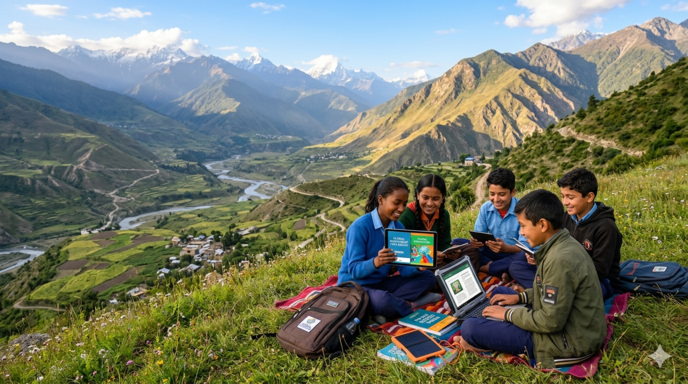
Free eBooks help close this gap. With the rise of mobile technology, learners can access entire libraries through smartphones and tablets. Even in areas with limited internet connectivity, eBooks can be downloaded once and used offline.
This flexibility is especially valuable in rural communities, disaster zones, and conflict-affected regions. Education no longer depends on physical proximity to resources it can travel with the learner.
Supporting Lifelong Learning
Education is no longer confined to classrooms or early stages of life. In a rapidly changing world, continuous learning has become essential.
Free eBooks support lifelong learning by providing flexible, on-demand access to information. Individuals can learn new skills, explore new fields, and stay updated in their professions without enrolling in formal programs.
Whether it is a student learning coding, a farmer exploring modern agricultural techniques, or a professional upgrading skills, free eBooks enable self-directed education at any stage of life.
Enabling Faster Updates and Relevant Content
Printed textbooks often become outdated quickly, especially in fast-changing fields like technology, medicine, and science. Updating them requires time, money, and distribution efforts.
Free eBooks offer a more dynamic solution. They can be updated instantly and redistributed globally without delay. This ensures that learners have access to the most current information.
Additionally, digital content can be adapted to local contexts. Materials can be translated, customized, and aligned with specific curricula, making learning more relevant and effective.
Promoting Open Educational Resources
Free eBooks are closely linked to the growth of Open Educational Resources (OER), which allow users not only to access content but also to modify and share it.
This openness encourages collaboration among educators and institutions. Teachers can adapt materials to suit their classrooms, combine resources from different sources, and contribute to shared knowledge systems.
This collaborative model fosters innovation and inclusivity. It allows education to evolve based on real-world needs rather than relying solely on centralized publishing systems.
Improving Accessibility for Diverse Learners
Digital books offer features that printed materials cannot match. They can be customized to meet the needs of diverse learners.
Students with visual impairments can enlarge text or use screen readers. Learners with reading difficulties can benefit from audio features. Language learners can access translations and dictionaries instantly.
These capabilities make education more inclusive. Free eBooks ensure that learning materials are not only available but also usable by a wide range of individuals.
Environmental Sustainability
The environmental impact of traditional book production is significant. It involves paper consumption, printing processes, transportation, and waste from outdated editions.
Free eBooks reduce the need for large-scale printing and distribution. While digital technology also has an environmental footprint, the overall impact of eBooks can be lower, especially when used at scale.
As sustainability becomes a global priority, digital learning materials offer a more environmentally responsible alternative.
Empowering Teachers and Communities
Free eBooks benefit not only students but also educators and communities. Teachers can access a wide range of materials without waiting for institutional approval or funding.
Community organizations can build digital libraries, support literacy programs, and deliver educational resources directly to learners. Individuals can share knowledge within their communities, creating a ripple effect of learning.
This empowerment strengthens grassroots education efforts and expands the reach of knowledge beyond formal institutions.
Challenges That Must Be Addressed
Despite their advantages, free eBooks are not without challenges:
- Digital Divide: Not all learners have access to devices, electricity, or reliable internet.
- Quality Control: Free content varies in quality, requiring reliable review systems.
- Language Barriers: Many resources are concentrated in a few dominant languages.
- Copyright Issues: Licensing restrictions can limit adaptation and sharing.
- Reader Preferences: Some learners still prefer printed materials or struggle with digital reading.
Addressing these challenges requires coordinated efforts from governments, institutions, and technology providers.
The Role of Key Stakeholders
To fully realize the potential of free eBooks, multiple stakeholders must act:
- Governments can invest in digital infrastructure and support open education policies.
- Educational institutions can adopt and promote digital learning resources.
- Publishers can explore sustainable models that include open access.
- Nonprofits and tech companies can fund platforms, translation efforts, and content development.
Collaboration across sectors will be essential to scale the impact of free eBooks globally.
Why the Future Is Digital and Open
The future of education is increasingly defined by accessibility, flexibility, and global reach. Free eBooks align perfectly with these trends.
They allow knowledge to flow across borders, adapt to local needs, and reach learners at every stage of life. They reduce inequality and expand opportunity in ways that traditional systems cannot easily replicate.
More importantly, they reflect a shift in how education is understood not as a limited resource, but as a shared global asset.
Conclusion
Free eBooks represent a fundamental shift in global education. They remove barriers of cost, distance, and scarcity, making learning more accessible to people everywhere.
They empower students, support teachers, enable lifelong learning, and promote a more inclusive and collaborative approach to education. While challenges remain, their potential to transform education is undeniable.
As the world becomes more digital and interconnected, free eBooks will not just complement traditional education they will become a central pillar of how knowledge is shared and accessed.
Ultimately, the rise of free eBooks is about more than technology. It is about creating a future where education is truly universal where anyone, anywhere, has the opportunity to learn, grow, and succeed.