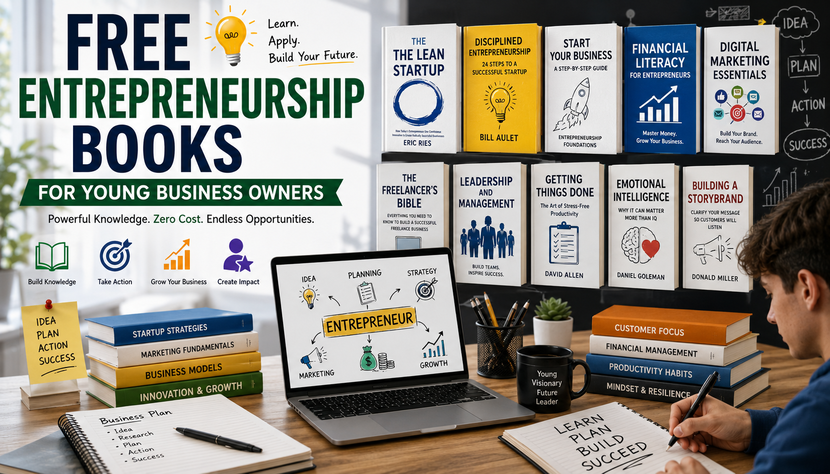
Free Entrepreneurship Books for Young Business Owners in 2026 | Complete Self-Education Guide
The entrepreneurial landscape has changed dramatically over the past decade. Today, young people are launching businesses earlier than ever before. Teenagers are building e-commerce stores, creating content brands, selling digital products, developing mobile apps, offering freelance services, and even launching AI-powered startups all from their laptops and smartphones.
In 2026, age is no longer a barrier to business success. What matters most is knowledge, adaptability, and execution.
While many aspiring entrepreneurs believe they need an expensive business degree, costly coaching programs, or premium online courses to succeed, the truth is that some of the world's most successful business owners are lifelong self-learners. They develop their skills through reading, experimentation, and continuous education.
Fortunately, young entrepreneurs now have access to a wealth of free business books through open educational resources, public libraries, university repositories, and author-approved platforms. These books cover everything from startup fundamentals and marketing to financial management, leadership, and innovation.
This guide explores the best free entrepreneurship books available for young business owners and explains how to use them to build real-world business skills.
Why Young Entrepreneurs Should Read Business Books
Entrepreneurship is often romanticized on social media. Success stories are highlighted, while failures and learning experiences are rarely discussed.
Books provide a more realistic and practical understanding of business.
The Advantage of Starting Young
Young entrepreneurs possess unique advantages:
More Time to Learn
Young founders have years to develop skills, make mistakes, and improve.
Greater Flexibility
Without significant financial obligations, younger individuals often have more freedom to experiment.
Faster Skill Development
Learning marketing, finance, sales, and leadership at an early age creates long-term advantages.
Compound Growth
Business knowledge compounds over time. Skills learned at 18 can generate opportunities for decades.
Why Books Remain Powerful Learning Tools
Business books offer benefits that many short-form videos cannot.
They provide:
- Structured learning
- Proven frameworks
- Strategic thinking models
- Real-world examples
- Detailed case studies
- Long-term business principles
Most importantly, books teach entrepreneurs how to think rather than simply what to do.
Entrepreneurship Fundamentals: The Best Place to Start
Before launching any business, it is important to understand how businesses operate.
Many startups fail because founders focus on products while ignoring business fundamentals.
Entrepreneurship – OpenStax
Why This Book Matters
This comprehensive textbook provides a college-level introduction to entrepreneurship.
It covers:
- Business opportunities
- Startup planning
- Customer discovery
- Financing options
- Growth strategies
- Business sustainability
Unlike many startup books that focus on inspiration, this resource provides practical knowledge supported by research and case studies.
Skills You Will Gain
- Opportunity identification
- Business planning
- Market analysis
- Entrepreneurial decision-making
This is one of the best free entrepreneurship textbooks available today.
Small Business Management – Saylor Academy
Why Young Entrepreneurs Love It
This resource is practical and beginner-friendly.
Topics include:
- Daily operations
- Customer service
- Business planning
- Risk management
- Small business growth
The content focuses on real-world business management rather than abstract theories.
Key Lesson
Starting a business is only the beginning. Managing it effectively is what creates long-term success.
An Introduction to Business – Open Textbook Library
This book provides a broad overview of modern business operations.
Key areas covered include:
- Marketing
- Human resources
- Accounting
- Finance
- Business ethics
- Operations management
Young entrepreneurs benefit from understanding how each function contributes to organizational success.
Startup Thinking and Innovation
Modern entrepreneurship is built on innovation.
The ability to identify problems and create solutions is often more important than having a large budget.
The Lean Startup – Eric Ries
Why It Is Essential
One of the most influential startup books ever written.
The book introduces the concept of the Minimum Viable Product (MVP), encouraging entrepreneurs to test ideas before investing significant resources.
Core Principles
- Build
- Measure
- Learn
This cycle helps entrepreneurs gather customer feedback quickly and improve products continuously.
Lessons for Young Entrepreneurs
Instead of spending months building a perfect product, launch a simple version and learn directly from customers.
Disciplined Entrepreneurship – Bill Aulet
This book provides a systematic approach to building startups.
Topics include:
- Market segmentation
- Customer profiling
- Product validation
- Revenue modeling
Young founders often have enthusiasm but lack structure. This book provides the framework needed to transform ideas into viable businesses.
Innovation and Entrepreneurship Resources
Open educational materials from universities provide excellent insights into:
- Creative problem-solving
- Competitive advantage
- Innovation management
- Business model design
Innovation is one of the most valuable skills entrepreneurs can develop.
Financial Literacy for Young Business Owners
Many businesses fail because founders misunderstand money.
A great idea cannot survive poor financial management.
Financial Accounting
Learning accounting helps entrepreneurs understand:
- Revenue
- Expenses
- Profit
- Cash flow
- Assets
- Liabilities
Understanding these concepts allows business owners to make informed decisions.
Why It Matters
A profitable business can still fail if it runs out of cash.
Accounting helps entrepreneurs avoid that mistake.
Principles of Economics
Economics teaches entrepreneurs how markets function.
Topics include:
- Supply and demand
- Consumer behavior
- Market competition
- Pricing strategies
These concepts help business owners make better strategic decisions.
Personal Finance Resources
Entrepreneurs should also understand personal money management.
Key topics include:
- Budgeting
- Saving
- Investing
- Debt management
- Financial planning
Healthy personal finances create a stronger foundation for business success.
Marketing and Branding
A great product without marketing often remains invisible.
In today's digital economy, attention is one of the most valuable business assets.
Digital Marketing Essentials
This resource introduces entrepreneurs to:
- Search Engine Optimization (SEO)
- Email marketing
- Content marketing
- Social media strategy
- Digital advertising
- Marketing analytics
These skills help entrepreneurs attract customers without massive advertising budgets.
Principles of Marketing
This book explains:
- Consumer psychology
- Branding
- Product positioning
- Customer segmentation
Successful businesses understand their customers better than their competitors do.
Building a StoryBrand
Donald Miller's framework helps entrepreneurs clarify their messaging.
Many businesses fail because potential customers do not understand what they offer.
The StoryBrand approach teaches entrepreneurs how to communicate value clearly and effectively.
Productivity and Time Management
Young entrepreneurs often balance multiple responsibilities.
Many manage:
- School
- University
- Employment
- Side businesses
- Personal commitments
Effective productivity systems become essential.
Getting Things Done
David Allen's productivity framework remains one of the most respected systems available.
Key concepts include:
- Capturing tasks
- Organizing priorities
- Reducing mental clutter
- Increasing focus
Entrepreneurs who manage their time effectively often outperform those who simply work longer hours.
Public Domain Productivity Classics
As a Man Thinketh
This classic work emphasizes the importance of mindset and personal responsibility.
Self-Reliance
Ralph Waldo Emerson's timeless essay encourages independent thinking and self-confidence.
These books continue to inspire entrepreneurs generations after publication.
Leadership and Emotional Intelligence
Business success eventually requires working with people.
Even solo entrepreneurs interact with:
- Customers
- Contractors
- Suppliers
- Partners
Leadership skills become increasingly important as businesses grow.
Leadership and Management
This textbook explores:
- Team building
- Communication
- Motivation
- Conflict resolution
- Decision-making
Strong leadership creates stronger businesses.
Emotional Intelligence
Daniel Goleman's work highlights skills such as:
- Self-awareness
- Empathy
- Emotional regulation
- Relationship management
Technical skills may start a business, but emotional intelligence often determines how far it can grow.
Freelancing and Online Business
Many young entrepreneurs begin their journey through freelancing.
It requires minimal startup capital while providing valuable business experience.
The Freelancer's Bible
This practical guide teaches:
- Pricing strategies
- Client acquisition
- Contract management
- Professional communication
Freelancing often serves as an excellent entry point into entrepreneurship.
E-Commerce and Online Business Resources
Young founders can learn:
- Online store creation
- Product sourcing
- Payment systems
- Customer acquisition
- Retention strategies
E-commerce remains one of the most accessible business models for young entrepreneurs.
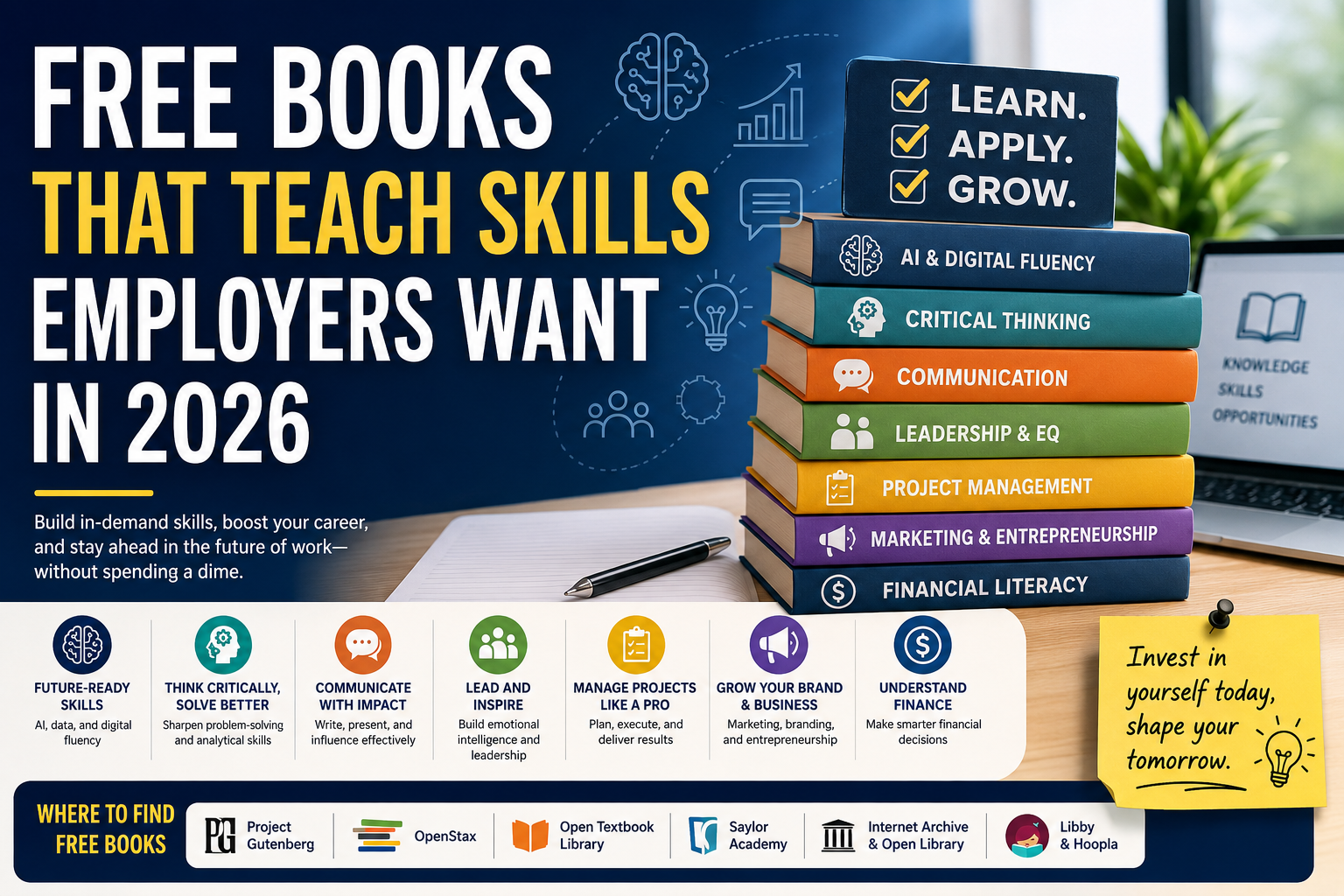
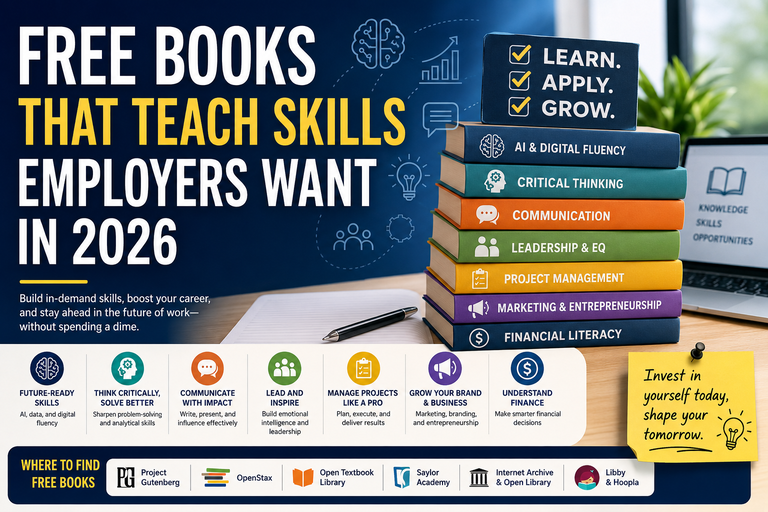
Where to Find Entrepreneurship Books for Free
Many high-quality resources are legally available online.
Trusted platforms include:
OpenStax
Free college-level textbooks.
Open Textbook Library
Peer-reviewed educational books.
Saylor Academy
Open business and entrepreneurship materials.
OER Commons
Thousands of educational resources.
Project Gutenberg
Public-domain classics.
Internet Archive
Borrow books digitally.
Libby and Hoopla
Library-based access to premium business books.
University Repositories
Research-backed educational materials.
Always use legal sources and respect intellectual property rights.
How to Learn Entrepreneurship Effectively
Reading alone will not build a successful business.
Action creates results.
Read with a Specific Goal
Ask:
"How can I apply this information to my business idea?"
This approach improves retention and relevance.
Take Action After Every Chapter
Examples include:
- Creating a business plan
- Designing a landing page
- Interviewing potential customers
- Testing a pricing strategy
Application transforms knowledge into skill.
Share What You Learn
Posting insights on social media helps:
- Reinforce learning
- Build credibility
- Grow a professional network
Teaching accelerates understanding.
Start Small
Instead of waiting for the perfect opportunity, launch a small project.
Examples include:
- Digital products
- Tutoring services
- Content creation businesses
- Freelance services
- Print-on-demand stores
Small experiments create valuable learning opportunities.
A Six-Month Entrepreneurship Self-Education Plan
Month 1: Entrepreneurship Fundamentals
Focus on:
- Business models
- Opportunity recognition
- Business planning
Goal:
Develop a simple business concept.
Month 2: Marketing and Branding
Learn:
- Customer targeting
- Brand positioning
- Digital marketing
Goal:
Create your business identity.
Month 3: Financial Literacy
Study:
- Accounting
- Cash flow
- Pricing
Goal:
Build a basic financial plan.
Month 4: Product Validation
Develop:
- MVP
- Customer surveys
- Feedback systems
Goal:
Test your business idea.
Month 5: Productivity and Operations
Improve:
- Time management
- Processes
- Systems
Goal:
Operate more efficiently.
Month 6: Growth and Optimization
Focus on:
- Scaling strategies
- Customer retention
- Continuous improvement
Goal:
Refine and expand your business.
Common Mistakes Young Entrepreneurs Make
Many avoidable failures result from the same mistakes.
Ignoring Financial Education
Money management is essential.
Following Hype Instead of Strategy
Social media trends often disappear quickly.
Avoiding Customer Feedback
Customers reveal what businesses need to improve.
Scaling Too Early
Growth without systems can create chaos.
Failing to Reinvest
Reinvestment fuels long-term business growth.
Books help entrepreneurs avoid these costly errors.
Benefits of Learning Entrepreneurship Early
Starting young provides lifelong advantages.
Benefits include:
- Stronger financial literacy
- Better communication skills
- Improved confidence
- Enhanced problem-solving abilities
- Greater independence
Even unsuccessful ventures provide valuable education.
Final Thoughts
You do not need a business degree, wealthy investors, or expensive coaching programs to begin your entrepreneurial journey.
What you need is:
- Curiosity
- Consistency
- Practical action
- Continuous learning
Free entrepreneurship books provide access to world-class business education at no cost.
Read one book.
Apply one lesson.
Launch one project.
Make one sale.
Then improve continuously.
Entrepreneurship is not a single event it is a lifelong learning process.
And for young business owners, there has never been a better time to start.