Free Online Libraries Every Student Should Know About
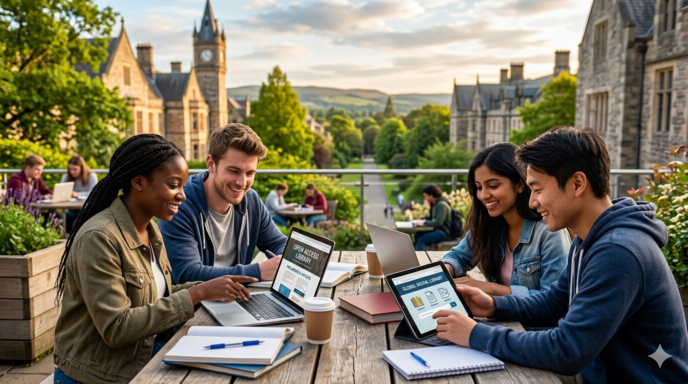
Access to knowledge has changed dramatically in the digital age. Students no longer need to spend huge amounts of money on textbooks, research papers, and academic materials just to receive a quality education. Today, thousands of free online libraries provide access to millions of books, journals, lecture notes, audiobooks, scholarly articles, and educational resources from anywhere in the world.
Whether you are:
- A high school student
- A university undergraduate
- A postgraduate researcher
- A lifelong learner
- A self-taught professional
Free online libraries can help you learn more while spending less.
From classic literature and scientific textbooks to peer-reviewed journals and university-level course materials, these digital platforms have become essential tools for modern education.
This comprehensive guide explores the best free online libraries every student should know about, what each platform offers, and how to use them effectively for studying, research, and academic success.
Why Free Online Libraries Matter
Before exploring the platforms themselves, it’s important to understand why free digital libraries are so valuable.
1. They Reduce Educational Costs
Textbooks and academic materials are expensive. Many students struggle to afford required reading materials every semester.
Free online libraries help students:
- Save money
- Access required materials
- Reduce financial stress
- Learn without barriers
In many cases, students can replace expensive textbooks entirely with open-access alternatives.
2. They Provide Global Access to Knowledge
Students can now access educational materials from:
- Top universities
- International researchers
- Government institutions
- Academic publishers
- Nonprofit educational organizations
This creates opportunities for learners worldwide, regardless of location or income.
3. They Support Independent Learning
Free online libraries encourage:
- Self-study
- Research skills
- Intellectual curiosity
- Lifelong learning
Students are no longer limited to classroom materials alone.
4. They Make Research Easier
Academic research becomes far more efficient when students can quickly access:
- Journal articles
- Historical documents
- Reference books
- Case studies
- Scholarly publications
Digital access saves enormous amounts of time.
1. Project Gutenberg
Best For:
Classic literature and public domain books
Project Gutenberg is one of the oldest and most respected free digital libraries online. Founded in 1971, it provides access to over 60,000 free public domain books.
What Students Can Find
Students can access:
- Classic novels
- Historical writings
- Philosophy texts
- Religious works
- Poetry collections
- Reference materials
Popular titles include:
- Pride and Prejudice
- Moby-Dick
- Jane Eyre
- Hamlet
Why Students Love It
Completely Free
No subscriptions or payments required.
Multiple Download Formats
Books are available in:
- EPUB
- Kindle
- Plain text
No Registration Needed
Students can download books instantly.
Project Gutenberg is especially valuable for literature, history, and philosophy students.
2. Open Library
Best For:
Borrowing digital books
Operated by Internet Archive, Open Library aims to create a webpage for every book ever published.
It functions like a digital public library where users can borrow books for free.
Key Features
Students can:
- Borrow ebooks
- Search by ISBN
- Find textbooks
- Access rare titles
- Read online
Why It’s Useful
Many books unavailable elsewhere can often be borrowed through Open Library.
This is especially useful for:
- University students
- Research projects
- Hard-to-find academic texts
3. Internet Archive
Best For:
Books, historical archives, multimedia resources
The Internet Archive is one of the largest digital archives in the world.
It contains:
- Millions of books
- Old magazines
- Newspapers
- Academic texts
- Audio recordings
- Educational videos
Valuable for Research
Students studying:
- History
- Media studies
- Cultural studies
- Journalism
- Political science
will find enormous amounts of research material here.
Unique Advantage
The platform preserves older materials that may no longer exist elsewhere online.
This makes it a goldmine for historical and archival research.
4. OpenStax
Best For:
Free college textbooks
Created by Rice University, OpenStax provides peer-reviewed textbooks used in real college classrooms.
Subjects Available
Students can study:
- Biology
- Chemistry
- Physics
- Mathematics
- Psychology
- Economics
- Business
- Sociology
- U.S. History
Why OpenStax Is Exceptional
Academic Quality
Books are written and reviewed by experts.
Free PDF Downloads
Students can download complete textbooks at no cost.
Comparable to Paid Textbooks
Many OpenStax books rival expensive commercial materials.
This platform is one of the best educational resources available online.
5. Directory of Open Access Books (DOAB)
Directory of Open Access Books
Best For:
Scholarly and academic books
DOAB provides access to thousands of peer-reviewed academic books from trusted publishers.
Ideal Users
Perfect for:
- Graduate students
- Researchers
- Thesis writers
- Academic professionals
Subjects Covered
Includes:
- Humanities
- Social sciences
- Science
- Technology
- Law
- Medicine
Major Advantage
All books are legally distributed under open-access licenses.
6. Google Books
Best For:
Book previews and research
Although not entirely free, Google Books is extremely useful for students.
What Students Can Do
Students can:
- Preview textbooks
- Search inside books
- Find citations
- Access public domain works
- Read partial chapters
Why It Matters
Google Books is excellent for:
- Quick research
- Finding quotations
- Locating academic references
- Exploring unfamiliar topics
7. National Academies Press
Best For:
Science, medicine, engineering, and policy research
This platform provides free PDFs of high-quality research publications.
Subjects Covered
Students can explore:
- Medicine
- Climate science
- Public health
- Engineering
- Education policy
- Technology
Best For Advanced Learners
Especially valuable for:
- University students
- Researchers
- Policy analysis
- Academic writing
8. MIT OpenCourseWare
Best For:
University-level learning materials
Published by Massachusetts Institute of Technology, MIT OpenCourseWare gives students free access to course content from one of the world’s top universities.
Resources Include
- Lecture notes
- Reading lists
- Assignments
- Exams
- Study materials
Subjects Available
Students can study:
- Engineering
- Computer science
- Mathematics
- Economics
- Physics
- Philosophy
Why Students Use It
It allows independent learners to experience real university-level education for free.
9. Saylor Academy
Best For:
Structured self-study courses
Saylor Academy provides free online courses that often include free textbooks and academic readings.
Popular Subjects
- Business
- Economics
- Computer science
- English
- History
Why It’s Helpful
The structured course format helps students:
- Stay organized
- Follow learning paths
- Build discipline
10. Open Research Library
Best For:
Humanities and social sciences
This library provides access to thousands of open-access scholarly books.
Subjects Include
- Sociology
- Political science
- Literature
- Philosophy
- Cultural studies
Best Feature
The platform focuses heavily on academic and research-quality materials.
11. World Digital Library
Best For:
Historical and cultural documents
Created through collaboration involving UNESCO and the Library of Congress, this project offers rare cultural and historical materials.
What Students Can Explore
- Ancient manuscripts
- Historical maps
- Rare books
- Cultural artifacts
- International archives
Excellent for Research
Especially useful for:
- History students
- Anthropology
- Archaeology
- Cultural studies
12. Libby & OverDrive
Best For:
Borrowing ebooks and audiobooks through local libraries
Students with library cards can access:
- Ebooks
- Audiobooks
- Study guides
- Academic materials
directly from their phones or tablets.
Why It’s Underrated
Many students already have access through public libraries but never use it.
This can replace many paid ebook subscriptions.
13. Directory of Open Access Journals (DOAJ)
Directory of Open Access Journals
Best For:
Peer-reviewed journal articles
DOAJ is one of the most valuable resources for academic research.
Subjects Covered
- Medicine
- Science
- Engineering
- Humanities
- Social sciences
- Technology
Why Researchers Use It
Students can access credible scholarly articles without expensive journal subscriptions.
How to Use Free Online Libraries Effectively
Simply knowing about these libraries is not enough. Students should learn how to maximize them.
1. Combine Multiple Platforms
Different libraries serve different purposes.
Example:
- Use OpenStax for textbooks
- DOAJ for journal articles
- Project Gutenberg for literature
- MIT OpenCourseWare for lectures
Combining resources creates a powerful learning system.
2. Build a Digital Study Library
Organize downloaded materials by:
- Subject
- Semester
- Topic
- Course
This improves productivity and reduces clutter.
3. Use Annotation Tools
Digital reading becomes more effective when students:
- Highlight important sections
- Add notes
- Bookmark pages
- Create summaries
4. Verify Legitimacy
Always use legal and trusted educational platforms.
Avoid pirated websites that:
- Violate copyright
- Spread malware
- Provide unreliable materials
Benefits of Free Online Libraries for Students
Students who use free digital libraries can:
✅ Save money on textbooks
✅ Access world-class educational materials
✅ Improve research quality
✅ Study independently
✅ Learn at their own pace
✅ Explore topics beyond the classroom
Are Free Online Libraries Enough?
In many cases, yes.
However, some specialized or newly published materials may still require:
- Institutional access
- Library subscriptions
- Paid textbooks
Before purchasing anything:
- Check university libraries
- Search open-access alternatives
- Ask professors for recommendations
Free options often exist.
Final Thoughts
The internet has transformed education forever. Students today have access to an extraordinary amount of knowledge that previous generations could only access through expensive institutions or physical libraries.
Free online libraries empower students to:
- Learn independently
- Reduce educational expenses
- Conduct deeper research
- Expand their intellectual horizons
The smartest students are not just those who study hard.
They are the ones who know where and how to find knowledge efficiently.
With the right online libraries, the world’s information is now available to anyone with curiosity, discipline, and an internet connection.