How Students Can Learn Freelancing Skills Through Free Books (2026 Guide)
Freelancing has transformed the way students earn money, gain professional experience, and build valuable career skills while still pursuing their education. In 2026, the global freelance economy continues to expand rapidly, creating opportunities for students in areas such as content writing, graphic design, web development, social media management, video editing, artificial intelligence support, virtual assistance, and digital marketing.
One of the greatest advantages of freelancing is that students do not need expensive certifications or premium training programs to get started. Thousands of high-quality books, open educational resources, and digital libraries provide the knowledge needed to develop professional-level skills at little or no cost.
This guide explores the freelancing skills students should learn, the best free books available for each field, where to access those resources legally, and how to transform knowledge gained from reading into real freelance income.
Why Students Should Learn Freelancing Early
Learning freelancing while in school offers benefits that extend far beyond earning extra income.
Unlike traditional part-time jobs that often have fixed schedules and limited growth opportunities, freelancing allows students to work on their own terms while developing marketable skills.
Some of the major advantages include:
- Flexible working hours
- Remote work opportunities
- Low startup costs
- Practical work experience
- Portfolio development
- Financial independence
- Improved communication skills
- Stronger resumes before graduation
- Networking opportunities
- Entrepreneurial mindset development
Students who begin freelancing early often graduate with a competitive advantage because they already possess practical experience that many employers seek.
Furthermore, freelancing encourages self-discipline, accountability, and problem-solving abilities that are valuable in virtually every career path.
Understanding What Freelancing Really Means
Many students mistakenly believe freelancing simply involves performing a skill and getting paid. In reality, freelancing is much closer to running a small business.
Successful freelancers must learn how to:
- Find and attract clients
- Deliver services professionally
- Manage deadlines
- Communicate effectively
- Set prices
- Handle negotiations
- Build a personal brand
- Manage finances
- Maintain client relationships
This means students should first understand the fundamentals of entrepreneurship before focusing solely on technical skills.
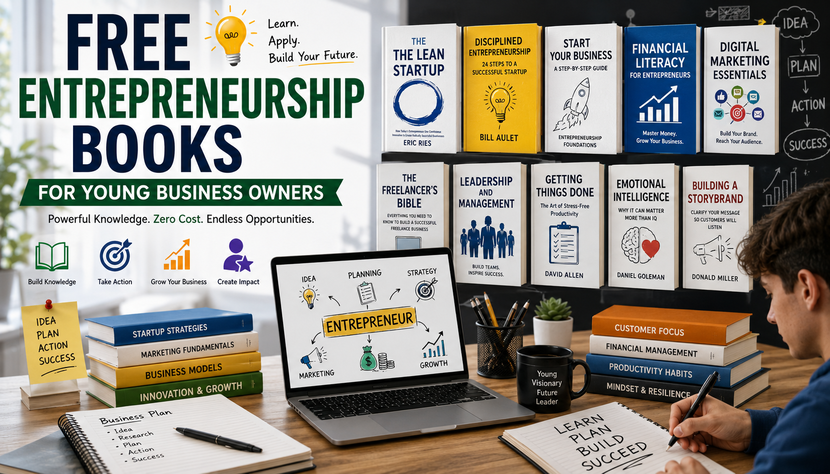
Best Free Books for Freelancing Foundations
Small Business Management – Saylor Academy
This free educational resource introduces students to the principles of running a small business.
Skills Learned
- Business planning
- Client acquisition
- Operations management
- Business strategy
- Customer service
Entrepreneurship – OpenStax
OpenStax provides a comprehensive introduction to entrepreneurial thinking and business development.
Skills Learned
- Opportunity recognition
- Business models
- Revenue generation
- Market analysis
- Growth planning
The Freelancer’s Bible – Sara Horowitz
Although typically accessed through libraries, this book remains one of the most respected guides for freelancers.
Skills Learned
- Freelance contracts
- Pricing strategies
- Client management
- Professional boundaries
- Business sustainability
Step 1: Choose a Freelancing Skill
One of the biggest mistakes beginners make is trying to learn too many skills simultaneously.
Successful freelancers usually start with one specialized service and become highly competent before expanding into additional areas.
Popular freelancing skills in 2026 include:
- Content writing
- Copywriting
- Graphic design
- Web development
- App development
- Social media management
- Search engine optimization (SEO)
- Video editing
- Virtual assistance
- AI prompt engineering
- Data analysis
- Digital marketing
- Email marketing
- Translation services
Specialization allows students to build expertise faster and attract higher-paying clients.
Learning High-Income Freelancing Skills Through Free Books
1. Freelance Writing
Freelance writing remains one of the easiest and most accessible skills for students to learn.
Many businesses need blog articles, website content, product descriptions, newsletters, and marketing materials.
Business Communication for Success – University of Minnesota
This open textbook teaches professional communication principles.
Skills Learned
- Professional writing
- Audience analysis
- Persuasive communication
- Business correspondence
The Elements of Style – William Strunk Jr. & E.B. White
A classic guide to effective writing.
Skills Learned
- Grammar fundamentals
- Writing clarity
- Sentence structure
- Concise communication
Open Content Marketing Textbooks
These resources introduce students to content creation and digital marketing.
Skills Learned
- SEO writing
- Blogging
- Content strategy
- Copywriting basics
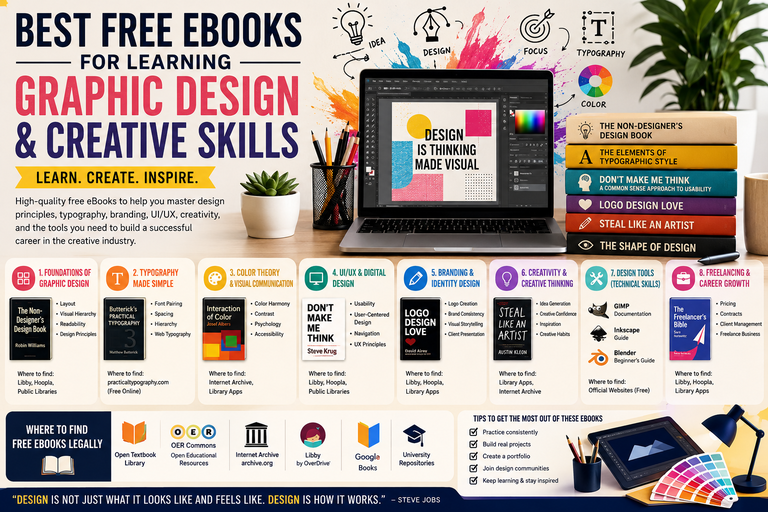
2. Graphic Design
Graphic design is among the most in-demand freelance services for businesses seeking branding and social media content.
Graphic Design and Print Production Fundamentals
Available through open textbook repositories.
Skills Learned
- Design principles
- Typography
- Layout techniques
- Visual communication
Butterick’s Practical Typography
A free online typography resource widely respected by designers.
Skills Learned
- Font selection
- Text hierarchy
- Readability improvement
- Professional document design
GIMP and Inkscape Manuals
These free software guides teach students how to use professional design tools without purchasing expensive software.
Skills Learned
- Logo design
- Image editing
- Vector graphics
- Branding materials
3. Web Development
Web development consistently ranks among the highest-paying freelance fields.
Businesses need websites, landing pages, online stores, and web applications.
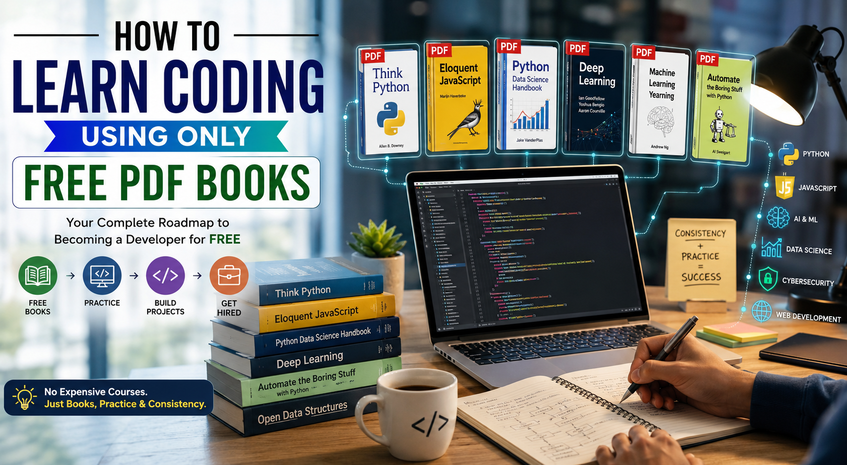
Eloquent JavaScript
One of the most popular free programming books available online.
Skills Learned
- JavaScript programming
- Interactive websites
- Problem-solving
- Modern web development
HTML and CSS Open Resources
Numerous open textbooks teach the foundations of website design.
Skills Learned
- Web page structure
- Responsive design
- Website styling
- Front-end development
Think Python – Allen Downey
A beginner-friendly programming book.
Skills Learned
- Programming logic
- Data structures
- Backend fundamentals
- Software development thinking
4. Social Media Management
Businesses increasingly outsource social media tasks to freelancers.
Students can learn social media management through free marketing books.
Principles of Marketing – OpenStax
An excellent introduction to marketing concepts.
Skills Learned
- Branding
- Consumer behavior
- Marketing strategy
- Audience targeting
Digital Marketing Essentials
Many open educational resources cover digital marketing practices.
Skills Learned
- SEO fundamentals
- Social media strategy
- Analytics
- Content planning
5. Virtual Assistance
Virtual assistants help businesses with administrative and organizational tasks.
Students can learn this skill through books covering business communication, productivity, and office management.
Key Skills Learned
- Email management
- Scheduling
- Data organization
- Customer support
- Remote collaboration
6. AI and Digital Productivity Services
Artificial intelligence has created entirely new freelance opportunities.
Students can learn:
- AI prompt writing
- Content optimization
- Research assistance
- Workflow automation
- Productivity consulting
Many free AI guides, open educational materials, and digital literacy textbooks now cover these emerging skills.
Productivity and Time Management for Student Freelancers
Balancing studies and freelancing requires strong organizational habits.
Getting Things Done – David Allen
Often available through public libraries.
Skills Learned
- Task management
- Productivity systems
- Workflow organization
- Stress reduction
As a Man Thinketh – James Allen
A public-domain classic focused on mindset and personal responsibility.
Skills Learned
- Self-discipline
- Goal setting
- Personal growth
Self-Reliance – Ralph Waldo Emerson
Another public-domain resource that encourages independent thinking.
Skills Learned
- Confidence
- Initiative
- Personal responsibility
Learning Essential Soft Skills Through Free Books
Technical expertise alone does not guarantee freelancing success.
Strong soft skills often determine whether clients return and provide referrals.
How to Win Friends and Influence People – Dale Carnegie
Available through many libraries and digital lending platforms.
Skills Learned
- Relationship building
- Communication
- Persuasion
- Networking
Emotional Intelligence – Daniel Goleman
A foundational book on understanding emotions and interpersonal interactions.
Skills Learned
- Self-awareness
- Conflict resolution
- Empathy
- Leadership
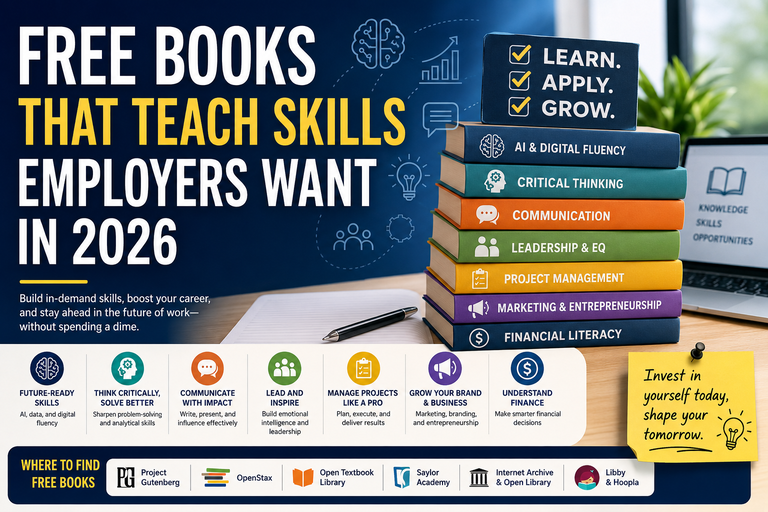
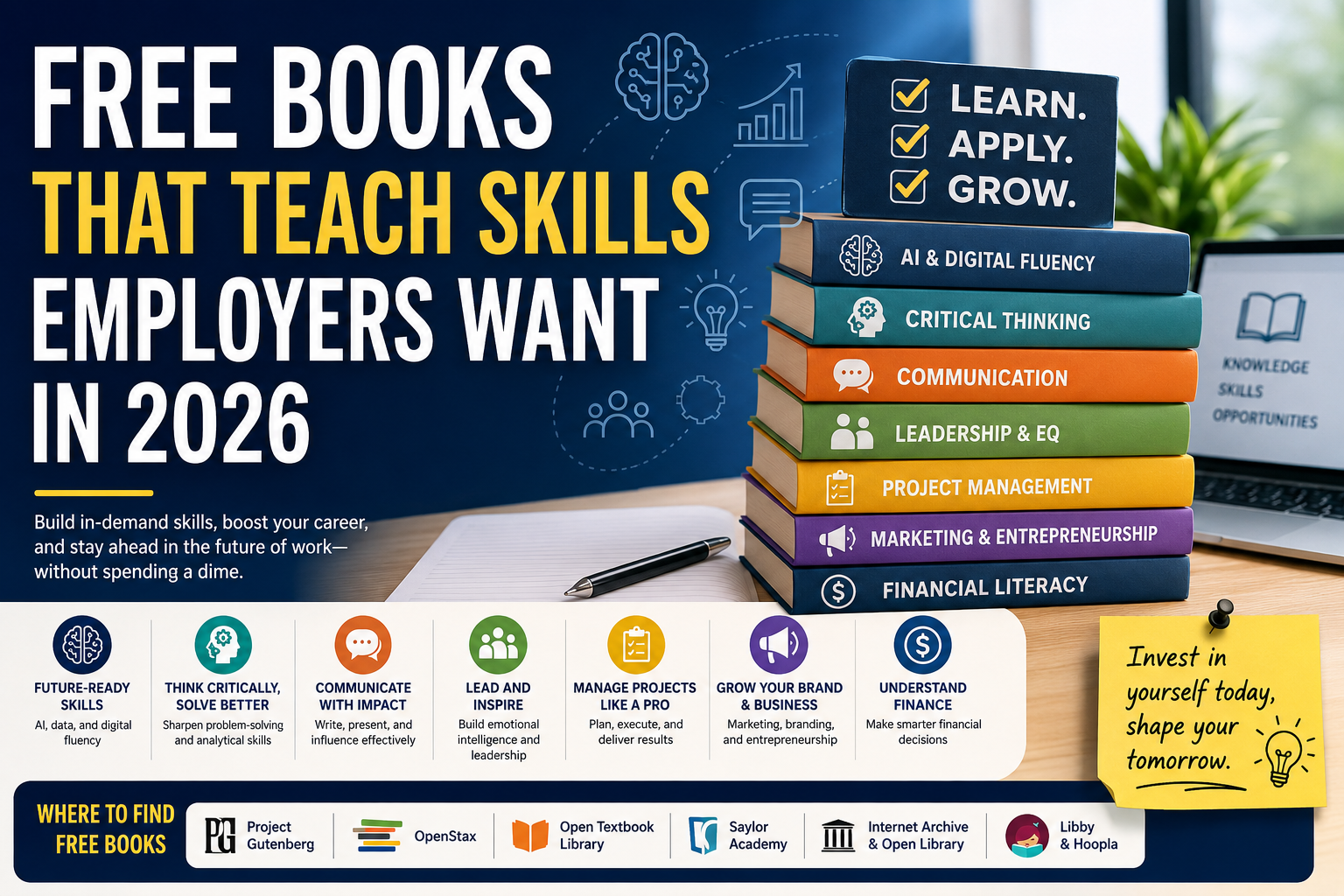
Where Students Can Access Free Books Legally
Many students are unaware of the vast number of legal and free educational resources available online.
Trusted sources include:
- OpenStax
- Saylor Academy
- Open Textbook Library
- OER Commons
- Project Gutenberg
- Internet Archive
- Libby
- Hoopla
- University repositories
- Public libraries
- Educational nonprofit platforms
Students should always use legitimate sources rather than unauthorized downloads.
Legal platforms ensure access to quality materials while supporting authors and educational institutions.
Turning Book Knowledge into Freelance Income
Reading books provides knowledge, but income comes from application.
The following steps help students convert learning into earning.
1. Practice Immediately
After completing each chapter, apply the concepts through practical exercises.
Examples include:
- Writing blog articles
- Designing social media graphics
- Creating logos
- Building websites
- Managing mock marketing campaigns
Practical experience accelerates learning dramatically.
2. Build a Portfolio
Clients hire based on evidence of ability.
A strong portfolio should include:
- Sample projects
- Case studies
- Personal projects
- Testimonials
- Professional profiles
Developers can showcase projects through GitHub repositories, while writers can create online portfolios using free website builders.
3. Gain Initial Experience
Students can begin by helping:
- Student organizations
- Campus clubs
- Local businesses
- Community groups
- Startups
- Friends and family
Even volunteer work can generate valuable portfolio pieces and testimonials.
4. Create a Professional Online Presence
Potential clients often research freelancers before hiring.
Students should develop:
- LinkedIn profiles
- Personal websites
- Professional email addresses
- Online portfolios
- Social media pages related to their services
Professional branding increases trust and visibility.
5. Join Freelance Marketplaces
Once basic skills and portfolio samples are ready, students can begin seeking paid opportunities.
Popular platforms include:
- Upwork
- Fiverr
- Freelancer
- PeoplePerHour
- Guru
- LinkedIn Services Marketplace
Beginners should focus on gaining positive reviews before significantly increasing their rates.
A Practical 6-Month Freelancing Learning Plan
Month 1
- Learn freelancing fundamentals
- Read entrepreneurship books
- Select one primary skill
Month 2
- Study skill-specific books
- Practice daily
- Complete small exercises
Month 3
- Build five portfolio projects
- Create professional profiles
Month 4
- Offer services to local clients
- Gather testimonials
Month 5
- Improve communication and pricing skills
- Refine portfolio quality
Month 6
- Apply for larger projects
- Expand professional network
- Pursue recurring clients
Consistency matters far more than speed.
Common Mistakes Students Should Avoid
Many beginner freelancers struggle because of avoidable errors.
Common mistakes include:
- Trying to learn multiple skills simultaneously
- Reading without practicing
- Underpricing services
- Missing deadlines
- Ignoring contracts
- Neglecting communication
- Avoiding feedback
- Giving up too early
Professionalism is often more important than talent.
Benefits Beyond Earning Money
Freelancing provides advantages that extend beyond immediate income.
Students who freelance often develop:
- Confidence
- Leadership abilities
- Communication skills
- Entrepreneurial thinking
- Problem-solving capabilities
- Time-management habits
- Industry experience
- Professional networks
These benefits can significantly improve career opportunities after graduation.
Final Thoughts
Students no longer need expensive training programs to build valuable freelancing skills. Through free books, open educational resources, and consistent practice, anyone can develop marketable expertise from virtually anywhere.
The path is straightforward:
Choose one skill.
Study reliable resources.
Practice consistently.
Build a portfolio.
Find your first client.
Then repeat the process until your skills and income grow.
Every successful freelancer started as a beginner. With the abundance of free learning resources available today, students have more opportunities than ever to transform knowledge into real-world experience and paid professional work.
The journey begins with a single book, a single skill, and a commitment to continuous learning.