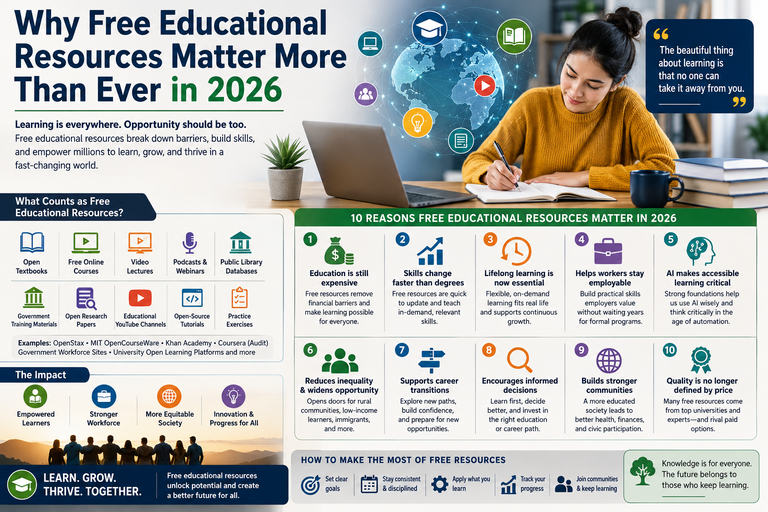
Why Free Educational Resources Matter More Than Ever in 2026
The way people learn has changed dramatically over the past decade. In 2026, education is no longer confined to classrooms, lecture halls, or expensive training centers. Learning now happens through smartphones, laptops, online platforms, digital libraries, open textbooks, educational videos, podcasts, and interactive communities that connect learners from around the world.
At the same time, rapid technological advancement particularly in artificial intelligence (AI), automation, and digital transformation is reshaping industries and redefining workforce requirements. New skills are emerging faster than traditional educational systems can adapt, making continuous learning a necessity rather than an option.
Against this backdrop, free educational resources have become one of the most important tools for personal growth, career advancement, and social mobility. They provide accessible pathways to knowledge regardless of a person's financial situation, geographic location, or educational background.
In 2026, free education is no longer simply an alternative to traditional learning it is an essential component of lifelong learning and workforce development.
Understanding Free Educational Resources
Free educational resources refer to learning materials that are available at no cost and can be accessed by anyone with an internet connection or public access to educational services.
These resources include:
- Open textbooks
- Free online courses
- Video tutorials and lectures
- Educational podcasts
- Public library databases
- Open-access research journals
- Government learning platforms
- Educational YouTube channels
- Interactive learning applications
- Open-source software documentation
- Free assessments and practice exercises
Popular examples include:
- OpenStax
- MIT OpenCourseWare
- Khan Academy
- Coursera's free audit courses
- edX free learning tracks
- Government workforce development portals
- University open-learning initiatives
These resources make high-quality education available to millions of people who may otherwise face significant barriers to learning.
The Rising Cost of Education
One of the strongest reasons free educational resources matter in 2026 is the continued rise in educational expenses.
Many learners face costs such as:
- Tuition fees
- Textbook purchases
- Certification fees
- Software subscriptions
- Transportation expenses
- Accommodation costs
- Examination fees
For many individuals and families, these expenses can create overwhelming financial pressure.
Free educational resources help bridge this gap by allowing learners to:
- Gain knowledge without debt
- Explore subjects before investing financially
- Supplement formal education
- Continue learning during economic hardship
- Access professional development opportunities
By reducing financial barriers, free learning resources expand educational access and increase opportunities for people from all economic backgrounds.
The Need for Rapid Skill Development
Technology is evolving at an unprecedented pace.
Industries are increasingly adopting:
- Artificial intelligence
- Automation systems
- Cloud computing
- Data analytics
- Cybersecurity solutions
- Digital collaboration tools
As a result, workers must continuously acquire new skills to remain competitive.
Traditional educational institutions often require years to update curricula. By contrast, free educational resources can be updated quickly to reflect current industry needs.
Learners can access up-to-date information on topics such as:
- AI prompt engineering
- Data analysis
- Digital marketing
- Cybersecurity fundamentals
- Spreadsheet automation
- Cloud technologies
- Software development
This flexibility makes free learning resources particularly valuable in fast-changing industries.
Lifelong Learning Has Become Essential
The traditional idea that education ends after graduation is increasingly outdated.
Modern careers often involve:
- Multiple job changes
- Industry transitions
- Technological adaptation
- Continuous professional development
Employees are expected to update their skills throughout their careers.
Free educational resources support lifelong learning by providing:
- Flexible study schedules
- Self-paced learning opportunities
- Continuous access to new information
- Affordable professional development
Whether someone is learning after work, during a career break, or while managing family responsibilities, free resources make ongoing education possible.
Supporting Employability in a Competitive Job Market
Employers in 2026 are placing greater emphasis on practical skills and adaptability.
Many organizations now prioritize candidates who demonstrate:
- Strong communication skills
- Problem-solving abilities
- Digital literacy
- Team collaboration
- Project management skills
- Critical thinking
- Adaptability
Free educational resources help individuals develop these competencies through structured learning materials and practical exercises.
For example:
- Communication courses improve workplace writing and presentation skills.
- Project management resources teach planning and organizational techniques.
- Technology tutorials build digital competence.
- Business courses enhance decision-making abilities.
These skills directly contribute to employability and career advancement.
The Impact of Artificial Intelligence on Learning
Artificial intelligence has transformed how people access and process information.
While AI tools can accelerate learning, they also create new challenges, including:
- Information overload
- Misinformation
- Overreliance on automated outputs
- Reduced critical thinking
To use AI effectively, learners need strong foundational knowledge.
Free educational resources help individuals develop:
- Critical thinking skills
- Research abilities
- Information evaluation techniques
- Subject matter expertise
- Ethical understanding of technology
The most successful learners in 2026 are those who combine AI tools with genuine knowledge and sound judgment.
Reducing Educational Inequality
Educational inequality remains a global challenge.
Many people face barriers related to:
- Income limitations
- Geographic isolation
- Limited educational infrastructure
- Disability accommodations
- Social and economic disadvantages
Free educational resources help reduce these disparities by providing learning opportunities regardless of location or financial status.
Beneficiaries include:
- Rural learners
- Low-income families
- First-generation students
- Career changers
- Immigrants
- People with disabilities
- Adult learners returning to education
Although access to technology remains a challenge in some areas, free learning resources significantly expand educational opportunities worldwide.
Supporting Career Transitions
Career changes have become increasingly common.
Workers often need to adapt due to:
- Industry disruption
- Economic shifts
- Technological advancement
- Personal interests
- Layoffs or restructuring
Free educational resources provide low-risk pathways for exploring new careers.
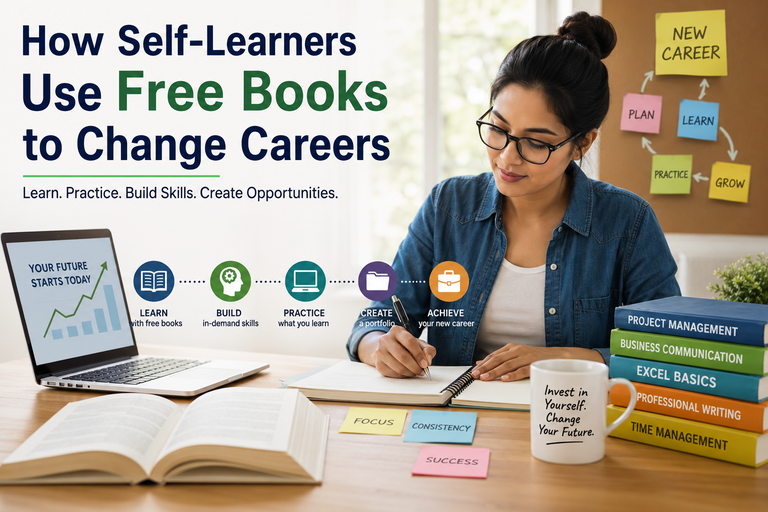
Individuals can use them to:
- Learn foundational skills
- Test new career interests
- Build confidence
- Create portfolios
- Prepare for certifications
This flexibility allows learners to explore opportunities before committing significant financial resources.
Encouraging Informed Educational Decisions
Many people invest in expensive programs without fully understanding whether a subject aligns with their goals.
Free resources allow learners to evaluate:
- Interest in a field
- Difficulty level
- Career relevance
- Required commitment
- Potential return on investment
This exploratory learning helps individuals make more informed decisions regarding higher education, certifications, and professional development.
Strengthening Civic and Social Knowledge
Education extends beyond career preparation.
Free educational resources contribute to informed citizenship by providing knowledge about:
- Financial literacy
- Health literacy
- Scientific understanding
- Media literacy
- Public policy
- History
- Technology
- Environmental issues
In an era of misinformation and rapid information sharing, these competencies are increasingly important.
An informed population is better equipped to participate in society, make responsible decisions, and engage constructively in public discourse.
Quality Is No Longer Defined by Price
A common misconception is that free educational resources are inferior to paid alternatives.
In reality, many are developed by:
- Leading universities
- Educational nonprofits
- Government agencies
- Industry experts
- Professional educators
Many open textbooks and courses undergo rigorous review processes and are frequently updated.
In some cases, free resources outperform paid options due to their accessibility, transparency, and collaborative development.
The challenge is often finding high-quality resources rather than questioning their quality.
Personalized Learning for Modern Learners
One of the greatest advantages of free educational resources is flexibility.
Learners can:
- Study at their own pace
- Skip familiar material
- Review difficult concepts repeatedly
- Focus on specific skills
- Learn from multiple sources
- Create customized learning paths
This adaptability is particularly valuable for individuals balancing education with work, family responsibilities, or other commitments.
Building Stackable Skills
Modern employers increasingly value combinations of practical skills rather than relying solely on a single credential.
Free educational resources allow learners to build skill portfolios that combine:
- Communication
- Digital literacy
- Data analysis
- Project management
- Industry knowledge
- Technical expertise
For example, a learner may combine:
- A free writing course
- Spreadsheet training
- Project management lessons
- Industry webinars
- Practical projects
Together, these experiences create a powerful and marketable skill set.
Best Practices for Using Free Educational Resources
To maximize learning outcomes, individuals should:
Set Clear Goals
Identify specific objectives before beginning.
Examples include:
- Learning a new software tool
- Improving communication skills
- Preparing for a certification
- Changing careers
Focus on Completion
Avoid starting multiple courses simultaneously.
Completing one quality resource often delivers more value than partially completing several.
Apply Knowledge Immediately
Practice reinforces learning.
After studying:
- Write reports
- Create projects
- Build portfolios
- Solve real-world problems
Track Progress
Maintain records of:
- Completed courses
- Projects developed
- Skills acquired
- Lessons learned
Continue Learning Consistently
Small, consistent learning efforts often produce greater results than occasional intensive study sessions.
The Future of Free Education
The importance of free educational resources will likely continue to grow beyond 2026.
Future learning environments will increasingly prioritize:
- Accessibility
- Flexibility
- Affordability
- Personalization
- Continuous skill development
Rather than replacing traditional education, free resources will complement formal institutions and expand opportunities for learners worldwide.
The most successful individuals will be those who combine:
- Free educational resources
- Practical experience
- Mentorship
- Professional certifications
- Lifelong learning habits
Conclusion
Free educational resources matter more than ever in 2026 because they address some of the most significant challenges facing modern learners: rising educational costs, rapidly changing skill requirements, technological disruption, and unequal access to opportunity.
They empower individuals to learn continuously, adapt to evolving industries, explore new career paths, and build valuable skills without financial barriers. In a world where knowledge drives opportunity, free access to quality education is no longer merely beneficial it is essential.
As technology continues to reshape society and the workforce, free educational resources will remain a cornerstone of personal growth, professional success, and educational equity.