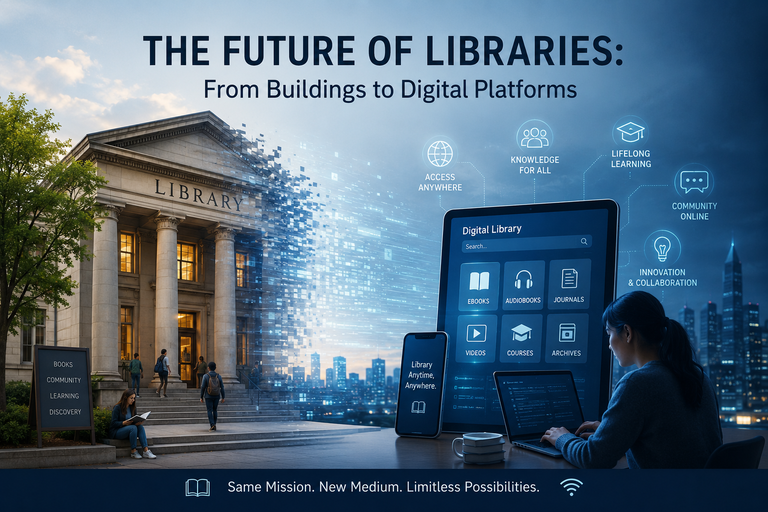
The Future of Libraries: From Buildings to Digital Platforms
For centuries, libraries have been among society’s most important institutions. They have preserved knowledge, supported education, encouraged literacy, and provided communities with free access to information. Traditionally, libraries were defined by their physical spaces quiet reading rooms, shelves lined with books, and librarians who helped visitors locate resources.
Today, however, libraries are undergoing one of the most significant transformations in their history.
The future of libraries is no longer confined to physical buildings. Modern libraries increasingly operate as digital platforms that provide access to e-books, online databases, virtual learning programs, digital archives, multimedia resources, research tools, and remote support services. Rather than replacing traditional libraries, technology is expanding their reach and redefining how they serve communities.
As society becomes more connected through digital technologies, libraries are evolving into hybrid institutions that combine physical spaces with powerful online services. This transformation represents not the decline of libraries, but their reinvention for a new era.
Why Libraries Are Changing
Several major trends are driving the evolution of libraries from physical repositories into digital knowledge platforms.
Changing User Expectations
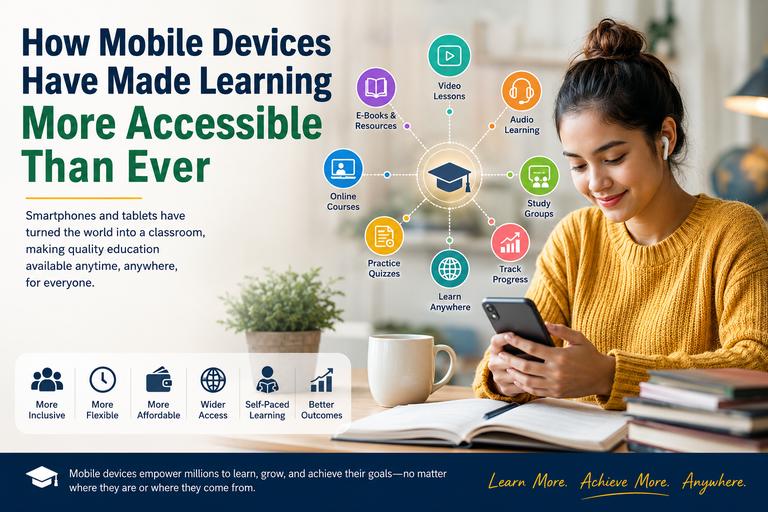
Modern users expect information to be available instantly. Whether accessing news, educational materials, or entertainment, people increasingly rely on smartphones, tablets, and computers.
As a result, library users now expect:
- Remote access to resources
- Mobile-friendly services
- Digital borrowing options
- Online account management
- Immediate information retrieval
Libraries must adapt to these expectations to remain relevant and accessible.
Growth of Online Learning
Education has become increasingly digital. Students participate in virtual classrooms, researchers access online journals, and professionals pursue remote training and certifications.
Libraries have responded by expanding their digital offerings and supporting learners wherever they are located.
Technological Advancement
Emerging technologies such as cloud computing, artificial intelligence, digital archives, and data analytics have transformed how information is stored, organized, and delivered.
Libraries are incorporating these technologies to improve services and reach broader audiences.
Increased Demand for Remote Access
Events such as global pandemics demonstrated the importance of providing uninterrupted access to information. Libraries that offered digital services were able to continue supporting communities even when buildings were temporarily closed.
Remote accessibility has become an essential component of modern library operations.
The Rise of the Hybrid Library
Contrary to popular belief, the future of libraries is unlikely to be entirely digital.
Instead, most experts envision a hybrid model where physical and digital services complement each other.
A future library may offer:
- Comfortable study areas
- Community meeting spaces
- Children's learning programs
- Makerspaces and innovation labs
- Digital lending platforms
- Virtual reference assistance
- Online educational programs
- Research databases accessible worldwide
This blended approach allows libraries to preserve the strengths of physical spaces while leveraging the advantages of technology.
The future is not a choice between buildings and platforms it is a combination of both.
From Ownership to Access
Historically, libraries were valued for the materials they owned.
Their collections included:
- Books
- Newspapers
- Journals
- Maps
- Government records
- Historical documents
Today, access has become more important than ownership.
Users increasingly care about whether they can reach information quickly, regardless of where it is stored.
Modern libraries provide access to:
- Digital books
- Online journals
- Academic databases
- Multimedia content
- Educational courses
- Technology tools
- Community services
This shift represents a fundamental change in the library's mission.
Rather than simply storing information, libraries now focus on connecting people with information.
Digital Libraries and Expanded Accessibility
One of the greatest advantages of digital library services is their ability to reach users beyond physical walls.
Traditional libraries can only serve individuals who visit the building.
Digital platforms can serve:
- Rural communities
- People with disabilities
- Busy professionals
- Parents and caregivers
- Distance learners
- International researchers
Digital access allows users to borrow books, conduct research, and attend educational programs without traveling.
Benefits include:
24/7 Availability
Users can access materials whenever they need them.
Geographic Freedom
Resources can be accessed from virtually anywhere with an internet connection.
Increased Inclusion
Digital services reduce barriers related to mobility, transportation, and scheduling.
Personalized Access
Users can customize reading experiences through adjustable fonts, text-to-speech tools, and accessibility features.
This increased accessibility is one of the strongest arguments for continued digital library expansion.
Libraries as Learning Platforms
Modern libraries are evolving into comprehensive learning environments.
Rather than simply providing resources, they actively support education and skill development.
Many libraries already offer:
- Literacy programs
- Homework assistance
- Language-learning resources
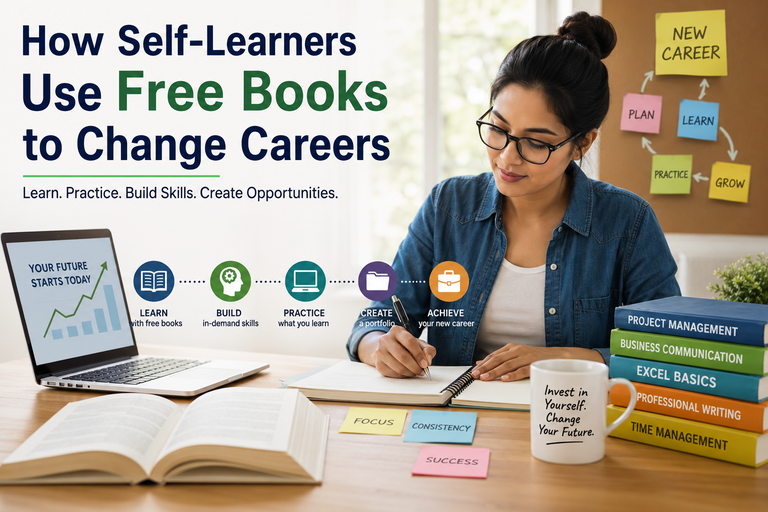
- Career training workshops
- Technology classes
- Coding programs
- Test preparation services
- Resume and job search support
As lifelong learning becomes increasingly important, libraries are becoming critical educational partners.
Supporting Workforce Development
Rapid technological change requires workers to continually update their skills.
Libraries help by offering:
- Professional development resources
- Career guidance
- Digital literacy training
- Online certification support
- Entrepreneurial education
In many communities, libraries function as free learning centers for individuals seeking economic advancement.
The Expansion of Digital Collections
Digital collections have become a cornerstone of modern library services.
These collections often include:
- E-books
- Audiobooks
- Academic journals
- Newspapers
- Magazines
- Music archives
- Video collections
- Historical documents
- Research datasets
- Government publications
Advantages of Digital Collections
Digital resources provide several important benefits:
Unlimited Physical Capacity
Digital collections are not constrained by shelf space.
Improved Searchability
Users can locate information quickly using keywords and advanced search tools.
Simultaneous Access
Multiple users can often access materials at the same time.
Preservation of Fragile Materials
Rare and historical documents can be digitized and protected from physical deterioration.
Global Reach
Collections can serve users far beyond local communities.
As digitization efforts continue, digital collections will play an increasingly important role in preserving and sharing knowledge.
Libraries as Community Technology Centers
The digital transformation of society has increased demand for technology access and support.
For many individuals, libraries remain essential technology providers.
Libraries frequently offer:
- Public computers
- High-speed internet access
- Printing services
- Scanning facilities
- Software access
- Device charging stations
- Technical assistance
Future services may include:
- AI literacy programs
- Cybersecurity training
- Telehealth support
- Digital coaching
- Equipment lending programs
- Remote work facilities
By providing these services, libraries help bridge technological inequalities within communities.
The Growing Importance of Digital Literacy
Access to technology alone is not enough.
People must also understand how to use technology effectively and responsibly.
Digital literacy includes:
- Evaluating online information
- Using productivity software
- Managing digital identities
- Protecting personal privacy
- Recognizing misinformation
- Communicating safely online
- Understanding artificial intelligence tools
Libraries are uniquely positioned to teach these skills because they are trusted educational institutions.
In the future, digital literacy instruction may become one of the most important services libraries provide.
Libraries and the Fight Against Misinformation
The internet has made information more accessible than ever before.
Unfortunately, it has also increased the spread of misinformation and disinformation.
Libraries play a vital role in helping users:
- Evaluate sources
- Verify facts
- Identify bias
- Understand context
- Conduct reliable research
As artificial intelligence and social media generate increasing amounts of content, the need for trustworthy information guidance will continue to grow.
Libraries are likely to become even more important as guardians of information quality.
Artificial Intelligence and Library Services
Artificial intelligence is expected to significantly influence the future of libraries.
Potential applications include:
Intelligent Search Systems
AI can improve search results by understanding user intent and context.
Personalized Recommendations
Users may receive customized suggestions based on reading interests and learning goals.
Automated Cataloging
AI can assist librarians in organizing and classifying materials more efficiently.
Translation and Accessibility
AI tools can help translate content and improve accessibility for users with disabilities.
Research Assistance
Virtual assistants may help users navigate large collections and discover relevant resources.
Challenges of AI Adoption
Despite its benefits, AI introduces concerns regarding:
- Privacy
- Data security
- Algorithmic bias
- Transparency
- Reliability
Libraries must ensure that AI supports human expertise rather than replacing it.
The Evolving Role of Librarians
Technology is changing the work of librarians, but it is not eliminating the profession.
In fact, librarians may become more important than ever.
Modern librarians serve as:
- Educators
- Information specialists
- Digital navigators
- Research consultants
- Technology trainers
- Community advocates
- Archivists
- Literacy leaders
Future librarians will increasingly focus on helping users understand, evaluate, and apply information effectively.
Their role will shift from managing collections to facilitating knowledge access and learning experiences.
Digital Preservation Challenges
While digital platforms improve access, they also introduce preservation challenges.
Digital resources face risks such as:
- Obsolete file formats
- Platform shutdowns
- Data corruption
- Licensing restrictions
- Vendor dependency
- Technological incompatibility
Libraries must invest in long-term digital preservation strategies to ensure that future generations can access today's knowledge.
Digital preservation may become one of the defining responsibilities of twenty-first-century libraries.
Equity and the Digital Divide
Not everyone has equal access to technology.
Many individuals still face barriers such as:
- Limited internet connectivity
- Lack of devices
- Insufficient digital skills
- Accessibility challenges
- Financial constraints
Libraries play a crucial role in addressing these disparities.
Future libraries must balance digital innovation with equitable access to ensure that no community is left behind.
Physical library locations will continue to serve as essential access points for underserved populations.
Libraries as Centers of Creation and Innovation
Modern libraries are increasingly becoming places where people create knowledge rather than simply consume it.
Many libraries now offer:
- Makerspaces
- Podcast studios
- Recording equipment
- 3D printers
- Video production tools
- Design software
- Coding labs
These resources empower users to:
- Develop new skills
- Launch creative projects
- Build portfolios
- Start businesses
- Produce educational content
This shift reflects a broader transformation in the purpose of libraries—from information consumption to knowledge creation.
Libraries and Lifelong Learning
One of the most significant trends shaping the future of libraries is the rise of lifelong learning.
People continuously acquire new skills throughout their lives as they:
- Change careers
- Learn new technologies
- Pursue hobbies
- Adapt to workplace changes
- Support family members
- Engage with their communities
Libraries provide accessible learning opportunities for individuals at every stage of life.
Their commitment to open access and community education makes them uniquely valuable in a rapidly changing world.
What the Library of the Future Might Look Like
Imagine entering a library ten years from now.
A student studies quietly in a collaborative learning space.
A remote learner accesses digital textbooks through a mobile app.
A researcher searches historical archives using AI-powered tools.
A small business owner attends an online entrepreneurship workshop.
Teenagers use a makerspace to develop innovative projects.
A librarian assists users in evaluating AI-generated content.
This vision is not science fiction.
Many elements already exist today.
The future library will be a connected ecosystem of physical spaces, digital services, and community-centered learning opportunities.
Key Challenges Ahead
To fully realize their digital future, libraries must address several challenges:
Funding and Sustainability
Maintaining digital platforms requires significant investment.
Privacy Protection
Libraries must safeguard user data while expanding digital services.
Digital Equity
Access must remain inclusive and affordable.
Staff Training
Library professionals need ongoing technology education.
Preservation
Digital collections require long-term management strategies.
Vendor Dependence
Libraries must maintain control over access to knowledge and avoid excessive reliance on external platforms.
Successfully addressing these challenges will determine how effectively libraries serve future generations.
Why Physical Libraries Still Matter
Despite digital transformation, physical libraries remain indispensable.
People continue to need:
- Quiet study environments
- Community gathering spaces
- Face-to-face assistance
- Children's programs
- Public technology access
- Cultural events
- Local history resources
Rather than disappearing, library buildings are evolving into flexible, multifunctional community centers.
The most successful libraries will integrate physical and digital experiences seamlessly.
Conclusion
The future of libraries is not about replacing bookshelves with computer screens. It is about expanding access to knowledge through new tools and technologies.
Libraries are becoming:
- Digital learning hubs
- Community technology centers
- Innovation spaces
- Research support platforms
- Digital literacy educators
- Trusted guides in an age of information overload
While the methods of delivering knowledge are changing, the mission of libraries remains constant.
Libraries exist to connect people with information, opportunity, education, and community.
As society continues to evolve, libraries will continue evolving with it—bridging the gap between traditional knowledge institutions and the digital future.
Far from becoming obsolete, libraries are positioning themselves to become more relevant, inclusive, and impactful than ever before.