The Growth of Mobile Learning Through Free Digital Books
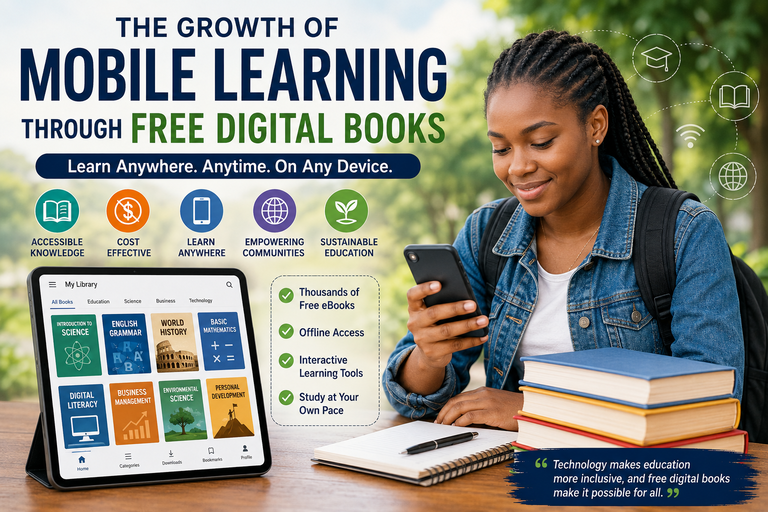
The way people learn has undergone a dramatic transformation over the past two decades. Advances in digital technology, widespread internet access, and the rapid adoption of mobile devices have fundamentally changed how educational content is delivered and consumed. Among the most influential developments in this transformation is the rise of mobile learning, commonly known as m-learning, which enables learners to access educational resources through smartphones, tablets, and other portable devices.
At the center of this educational revolution are free digital books. These electronic resources have removed many of the traditional barriers associated with learning, such as expensive textbooks, limited library access, and geographic restrictions. Today, millions of students, professionals, and lifelong learners use mobile devices to read academic materials, develop new skills, prepare for examinations, and pursue personal growth.
The combination of mobile technology and free digital books has created unprecedented opportunities for inclusive, flexible, and affordable education. Whether in urban centers with high-speed internet or remote communities with limited educational infrastructure, learners can access vast libraries of knowledge with just a few taps on their screens.
This article examines the growth of mobile learning through free digital books, explores the factors driving its adoption, highlights its benefits, discusses current challenges, and analyzes the future of this rapidly evolving educational model.
Understanding Mobile Learning
Mobile learning refers to the use of portable digital devices to access educational content and participate in learning activities. Unlike traditional education, which often requires learners to be present in a classroom or use desktop computers, mobile learning allows individuals to study anytime and anywhere.
The concept emerged alongside advancements in wireless communication and mobile computing technologies. As smartphones became more powerful and affordable, educational institutions, publishers, and technology companies began creating content specifically designed for mobile devices.
Key Characteristics of Mobile Learning
Mobile learning offers several distinctive features:
- Anytime, anywhere access to educational content
- Flexible learning schedules
- Personalized learning experiences
- Interactive educational resources
- Multimedia integration
- Self-paced study options
- Real-time communication and collaboration
These characteristics make mobile learning particularly attractive for modern learners who seek flexibility and convenience.
The Rise of Free Digital Books
Free digital books, commonly known as eBooks, are electronic publications available at no cost to readers. They can be downloaded, stored, and accessed through various devices and reading applications.
The availability of free digital books has expanded significantly due to several factors:
Open Educational Resources (OER)
Educational institutions and organizations increasingly publish learning materials under open licenses, allowing free use, adaptation, and distribution.
Public Domain Collections
Thousands of books whose copyrights have expired are now freely available online, creating extensive digital libraries.
Academic Open Access Initiatives
Universities and research institutions have embraced open-access publishing models that provide free access to textbooks, journals, and scholarly publications.
Nonprofit Educational Projects
Numerous organizations create and distribute free educational books aimed at improving literacy and expanding educational opportunities globally.
These developments have created a vast ecosystem of freely accessible educational content that supports mobile learning.
Smartphone Penetration as a Catalyst for Growth
One of the primary drivers behind the growth of mobile learning is the widespread adoption of smartphones.
According to global technology trends, smartphone ownership continues to increase across both developed and developing regions. For many individuals, particularly in emerging economies, smartphones represent their first and only connection to the internet.
Why Smartphones Matter
Smartphones provide:
- Affordable access to educational resources
- Portability and convenience
- Internet connectivity
- Storage for digital books
- Multimedia capabilities
- Interactive learning experiences
Because smartphones are more accessible than laptops or desktop computers, they have become the preferred learning device for millions of users worldwide.
In many regions, students rely entirely on smartphones to access educational materials, making mobile learning an essential component of modern education.
The Importance of Affordable Connectivity
The expansion of internet infrastructure has played a critical role in enabling mobile learning.
Several factors have contributed to increased accessibility:
Lower Data Costs
Competition among telecommunications providers has reduced internet costs in many markets, making educational content more affordable.
Public Wi-Fi Access
Educational institutions, libraries, and community centers increasingly provide free internet access.
Zero-Rated Educational Platforms
Some telecommunications companies allow users to access educational websites and resources without consuming mobile data.
Expanded Network Coverage
Improvements in mobile broadband infrastructure have extended connectivity to previously underserved areas.
These developments have significantly increased access to free digital books and educational resources.
Offline Access: A Game Changer
While internet connectivity is expanding, many learners still experience inconsistent access.
To address this challenge, educational platforms increasingly offer offline functionality.
Benefits of Offline Reading
Users can:
- Download books for future access
- Study without internet connectivity
- Save mobile data
- Access content during travel
- Continue learning in remote locations
Offline reading capabilities have made mobile learning more practical and accessible, particularly in regions where internet service remains unreliable.
Educational Benefits of Free Digital Books
The integration of free digital books into mobile learning environments provides numerous advantages.
Accessibility
Learners can access educational resources from virtually any location.
Whether commuting, traveling, or studying at home, educational materials remain available at all times.
Cost Reduction
Traditional textbooks often represent a significant financial burden.
Free digital books eliminate:
- Purchase costs
- Shipping expenses
- Printing fees
- Replacement costs
This makes education more affordable for students and institutions alike.
Instant Distribution
Digital books can be distributed globally within seconds, allowing learners immediate access to educational content.
Continuous Updates
Publishers can update digital books quickly, ensuring that learners receive accurate and current information.
Scalability
A single digital resource can serve millions of users simultaneously without additional production costs.
Supporting Inclusive Education
One of the greatest strengths of mobile learning through free digital books is its ability to support diverse learners.
Accessibility Features
Many digital reading platforms include:
- Adjustable font sizes
- Screen reader compatibility
- Text-to-speech functions
- High-contrast viewing modes
- Language translation options
These features help individuals with disabilities and language barriers participate more fully in education.
Supporting Diverse Learning Needs
Mobile learning accommodates:
- Visual learners
- Auditory learners
- Independent learners
- Adult learners
- Working professionals
This flexibility contributes to greater educational inclusion.
Applications Across Educational Levels
Primary Education
Children use digital storybooks, literacy materials, and interactive educational content to develop foundational skills.
Secondary Education
Students access digital textbooks, exam preparation guides, and supplementary learning resources.
Higher Education
University students rely on free academic textbooks, open-access journals, and research publications.
Professional Development
Professionals use mobile learning to stay updated on industry trends and acquire new skills.
Lifelong Learning
Individuals pursuing personal interests and self-improvement can access educational content without enrolling in formal programs.
This versatility demonstrates the broad impact of mobile learning across society.
Educational Apps and Learning Platforms
The growth of mobile learning has been accelerated by sophisticated educational applications.
Many platforms combine free digital books with advanced features such as:
- Note-taking tools
- Highlighting functions
- Reading progress tracking
- Interactive assessments
- Personalized recommendations
- Collaborative learning spaces
These features create engaging and effective learning environments.
The integration of educational technology with digital books has transformed passive reading into an interactive learning experience.
Impact on Global Educational Equity
Historically, access to educational resources has been influenced by geographic location, economic status, and institutional funding.
Free digital books delivered through mobile devices are helping reduce these disparities.
Expanding Access
Learners in remote areas can access the same resources as students in major cities.
Supporting Vulnerable Populations
Mobile learning benefits:
- Refugees
- Displaced individuals
- Rural communities
- Low-income families
- Working adults
Democratizing Knowledge
The ability to access quality educational materials regardless of location promotes greater educational equity.
As a result, mobile learning contributes to broader social and economic development goals.
Challenges Facing Mobile Learning
Despite its rapid growth, mobile learning faces several important challenges.
Digital Divide
Not all individuals have access to smartphones, tablets, or internet services.
Device Limitations
Reading lengthy texts on small screens may be uncomfortable for some users.
Digital Fatigue
Extended screen time can contribute to eye strain and reduced concentration.
Information Quality
The abundance of free content makes it difficult to ensure accuracy and credibility.
Data Privacy Concerns
Educational platforms collect user data that must be managed responsibly.
Technical Skills Gaps
Some learners and educators require additional training to effectively utilize digital tools.
Addressing these challenges remains critical for sustainable growth.
Emerging Trends Shaping the Future
The future of mobile learning is being influenced by several technological innovations.
Artificial Intelligence
AI is increasingly used to:
- Recommend relevant reading materials
- Personalize learning experiences
- Generate summaries
- Provide tutoring support
Multimedia eBooks
Digital books now incorporate:
- Videos
- Audio narration
- Interactive graphics
- Embedded assessments
These features enhance engagement and comprehension.
Gamification
Educational platforms use rewards, badges, and achievement systems to motivate learners.
Voice Technology
Voice-controlled navigation improves accessibility and user convenience.
Augmented Reality (AR)
AR technologies may soon allow readers to interact with educational content in immersive ways.
5G Connectivity
Faster networks will support richer educational experiences and seamless access to multimedia content.
The Future of Mobile Learning Through Free Digital Books
The future of education will likely be increasingly mobile, personalized, and digitally connected.
Several factors suggest continued growth:
- Rising smartphone adoption
- Improved internet infrastructure
- Expansion of open educational resources
- Greater investment in digital education
- Advances in artificial intelligence
- Growing demand for lifelong learning
Governments, universities, publishers, and technology companies are expected to continue investing in mobile learning ecosystems that prioritize accessibility and affordability.
As educational technologies mature, learners will benefit from increasingly sophisticated tools that support flexible and effective learning experiences.
Conclusion
The growth of mobile learning through free digital books represents one of the most significant educational developments of the digital age. By combining the portability of mobile devices with the accessibility of free educational content, this model has expanded learning opportunities for millions of people around the world.
Free digital books have reduced financial barriers, increased educational accessibility, supported inclusive learning, and helped democratize access to knowledge. From primary school students and university learners to professionals and lifelong learners, individuals across all stages of education are benefiting from mobile learning technologies.
Although challenges such as the digital divide, device limitations, and content quality concerns remain, the overall trajectory is clear. Mobile learning continues to evolve, becoming more interactive, personalized, and accessible.
As technology advances and access to free digital content expands, mobile learning will play an increasingly important role in shaping the future of global education, ensuring that knowledge remains available to anyone, anywhere, at any time.