How Free Books Help Reduce Educational Inequality Worldwide
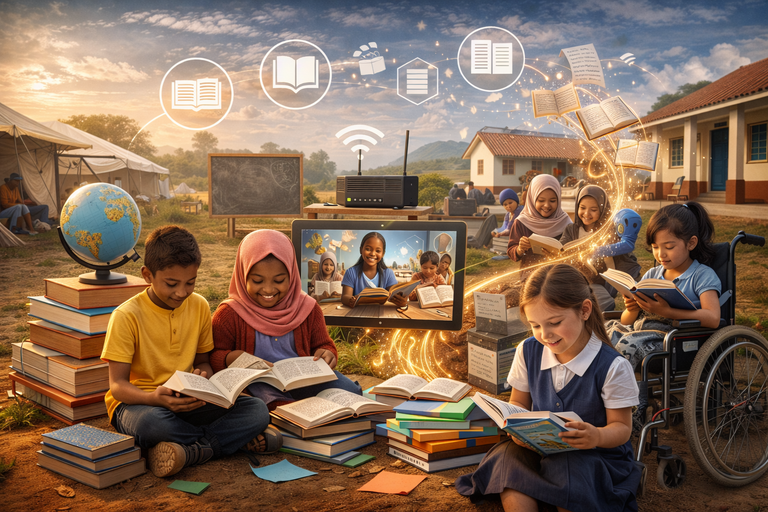
Educational inequality is fueled by unequal access to essentials: qualified teachers, safe schools, stable internet, time to study and fundamentally, learning materials. In many parts of the world, the cost of textbooks and supplementary reading can be a decisive barrier. When families must choose between food, transport, and school supplies, books become a luxury. Even where schools exist, classrooms may have outdated or insufficient texts, and libraries may be understocked or nonexistent.
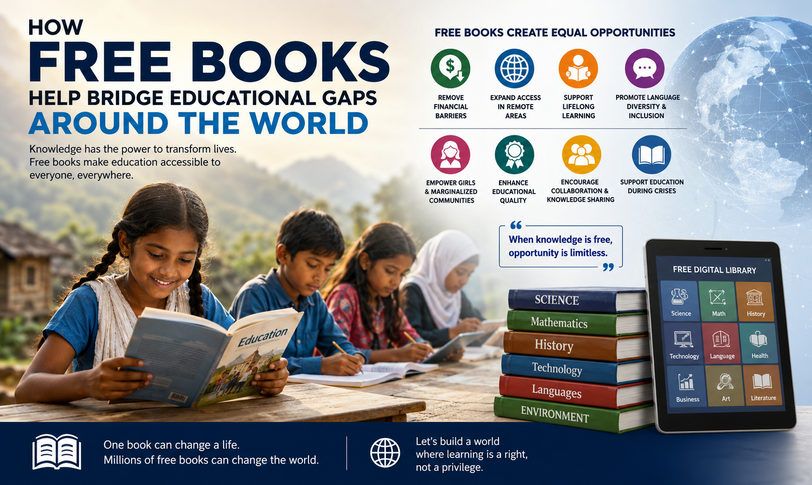
Free books whether printed, digital, or openly licensed can dramatically reduce these barriers. They do not solve inequality alone, but they are among the most cost-effective tools available to improve learning outcomes, expand opportunity, and strengthen education systems.
This article explains how free books reduce educational inequality worldwide, the different models of “free” access, the mechanisms through which they create impact, the challenges involved, and what stakeholders can do to ensure sustainable and equitable access.
1) What “Free Books” Means (and Why the Distinction Matters)
“Free books” is an umbrella term that includes several distinct models. The differences matter because each has unique implications for access, sustainability, and equity.
A. Free-to-Read (Access-Based)
These books are available to read at no cost, usually online or via library platforms. Examples include:
-
Public domain books
-
Open-access books funded by institutions
-
Library e-lending systems
Equity upside: Removes the immediate price barrier for readers.
Limitation: May still require internet access, devices, or membership credentials.
B. Openly Licensed Books (Permission-Based, Often OER)
Books released under licenses such as Creative Commons allow legal copying, sharing, translation, adaptation, and printing (depending on license terms).
Equity upside: Enables localization, translation, and low-cost printing.
Limitation: Requires local capacity to adapt, print, and distribute effectively.
Open Educational Resources (OER) are particularly powerful because they remove not just price barriers, but permission barriers.
C. Free Printed Book Distribution (Ownership-Based)
Programs distribute physical books directly to students, schools, or communities.
Equity upside: Works without internet; critical for early literacy.
Limitation: Printing and shipping costs; logistics and supply chain challenges.
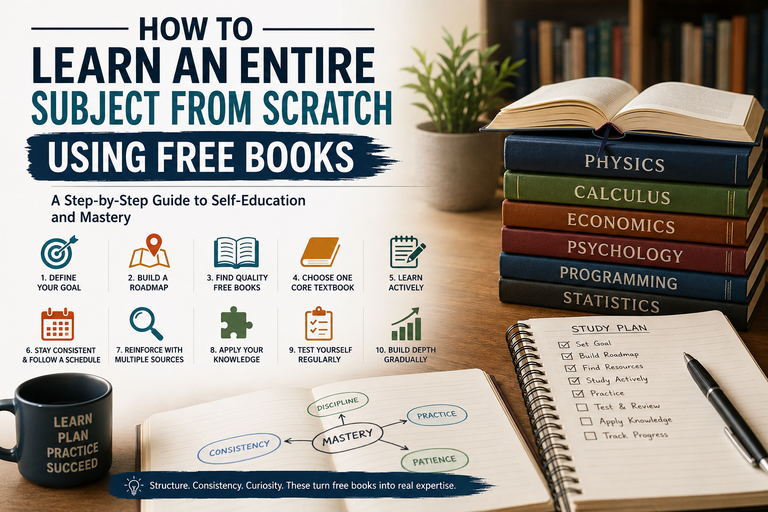
A strong equity strategy typically blends all three models digital where possible, print where necessary, and open licensing to enable adaptation.
2) Why Books Are Central to Educational Inequality
A. Textbook Affordability Is a Real Barrier
In many countries, a full set of textbooks can cost a substantial portion of monthly household income. When students must share one book among several classmates or go without entirely learning quality declines.
B. Book Scarcity Weakens Instruction
Teachers depend on textbooks for:
-
Structured lesson progression
-
Practice exercises
-
Curriculum alignment
-
Homework and revision support
Without reliable materials, teaching becomes improvisational and inconsistent, especially in overcrowded classrooms.
C. Reading Volume Builds Foundational Skills
Children need access to many age-appropriate books to develop:
-
Literacy fluency
-
Vocabulary growth
-
Reading comprehension
-
Background knowledge
When only affluent households have home libraries, learning gaps begin early and compound over time.
3) The Main Ways Free Books Reduce Inequality
Pathway 1: Lowering the Direct Cost of Learning
Free books:
-
Reduce financial burden on families
-
Lower hidden costs (photocopies, tutoring due to lack of materials)
-
Enable continued learning during economic shocks or displacement
For low-income households, removing textbook expenses can determine whether a child stays in school.
Pathway 2: Increasing Access to High-Quality Content
Many free book initiatives prioritize quality through:
-
Peer-reviewed open textbooks
-
Curated children’s literature collections
-
Open-access academic publications
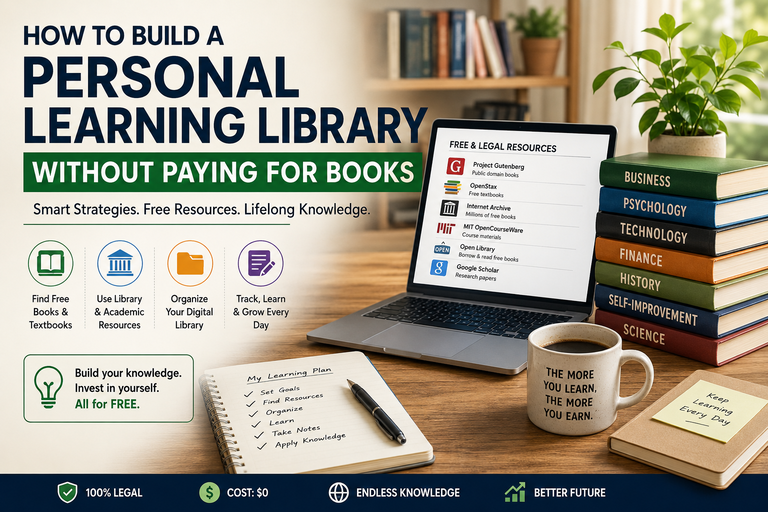
For example, platforms like OpenStax provide high-quality, peer-reviewed textbooks used globally, reducing cost without sacrificing academic rigor.
Free access democratizes materials once limited to elite institutions.
Pathway 3: Supporting Early-Grade Literacy
Inequality often begins in the earliest years of education. Free children’s books help by:
-
Encouraging caregiver-child reading
-
Providing leveled readers
-
Increasing book ownership or borrowing at home
Programs such as Worldreader distribute digital and print reading materials to underserved communities, demonstrating how targeted access can improve reading engagement.
Even modest increases in reading exposure can produce long-term educational gains.
Pathway 4: Enabling Learning Beyond the Classroom
Free books support:
-
Self-study
-
Community learning centers
-
After-school programs
-
Homeschooling and informal education
-
Continuing education for adults
In crisis contexts, initiatives like Room to Read combine book distribution with literacy programming to sustain learning where formal systems are strained.
Pathway 5: Promoting Equity for Girls and Marginalized Groups
When resources are scarce, access may be unevenly distributed. Free books can:
-
Reduce dependence on gatekeepers
-
Support flexible learning schedules
-
Provide culturally responsive content
-
Establish safe reading spaces
Targeted distribution programs can help counteract structural inequalities affecting girls and marginalized communities.
Pathway 6: Improving Accessibility for Learners with Disabilities
Digital and open formats enable:
-
Large print editions
-
Audio versions
-
Screen-reader compatibility
-
Dyslexia-friendly typography
-
Braille-ready files
Accessible formats significantly reduce exclusion for learners with disabilities.
Pathway 7: Allowing Translation and Localization
Open licensing enables:
-
Translation into local languages
-
Cultural adaptation
-
Alignment to national curricula
-
Locally relevant examples and contexts
Without localization, “free” content may remain inaccessible due to language barriers.
Pathway 8: Supporting Teachers
Free books benefit educators by providing:
-
Open teacher guides
-
Lesson plans
-
Assessment banks
-
Supplementary reading materials
This reduces inequality between well-resourced and under-resourced schools.
4) Free Books in Different Contexts
A. Low-Connectivity Regions
Best approaches include:
-
Physical book distribution
-
Offline digital libraries (local Wi-Fi servers, preloaded devices)
Blended solutions prevent digital exclusion.
B. Middle-Income Countries
Governments can:
-
Adopt open textbooks
-
Host national repositories
-
Integrate materials into teacher training
National OER policies reduce recurring textbook procurement costs.
C. Higher Education
Open textbooks reduce student debt and expand participation. Open-access academic monographs widen global research engagement and lifelong learning opportunities.
5) Digital Free Books: Benefits and Limitations
Benefits
-
Scalability
-
Searchability
-
Easy updates
-
Portability
-
Multimedia integration
Limitations
-
Device ownership gaps
-
Data costs
-
Electricity constraints
-
Accessibility issues
-
Platform restrictions
True equity requires addressing the entire access ecosystem: device + connectivity + power + usability.
6) Challenges and Risks
A. Quality Control
Not all free materials are aligned or accurate.
Solution: Curation, peer review, curriculum alignment.
B. Language Dominance
Much free content exists only in major global languages.
Solution: Fund translation and local author development.
C. Sustainability
Books cost money to create and maintain even if free to users.
Solution: Public funding, partnerships, open publishing models.
D. Copyright Confusion
Unauthorized sharing exposes institutions to risk.
Solution: Promote license literacy and clear attribution practices.
E. Intra-Community Inequality
Access may still vary due to:
-
Gender norms
-
Disability
-
Time poverty
-
Safety concerns
Solution: Targeted outreach and inclusive program design.
7) What Makes Free Book Programs Effective?
Successful programs share these traits:
-
Curriculum alignment
-
Multilingual availability
-
Multi-format delivery (print + digital + audio)
-
Strong distribution strategies
-
Teacher integration
-
Home access support
-
Monitoring and evaluation
-
Open licensing
-
Targeted equity focus
-
Long-term sustainability planning
A free book unused is not an equity solution. Impact requires integration into daily learning practices.
8) Key Stakeholders and Their Roles
Governments
-
Establish OER policies
-
Fund repositories and translation
-
Support public and school libraries
-
Procure open textbooks at scale
NGOs and Humanitarian Organizations
-
Deliver books in emergencies
-
Build offline libraries
-
Train educators
-
Curate inclusive collections
Schools and Teachers
-
Integrate free books into instruction
-
Foster reading culture
-
Guide material selection
Publishers and Authors
-
Experiment with open licensing models
-
Collaborate with public institutions
-
Explore sustainable open-access frameworks
Libraries and Community Centers
-
Provide safe access and device lending
-
Support adult learners
-
Host literacy programs
Technology Providers
-
Improve offline functionality
-
Enhance accessibility features
-
Reduce bandwidth requirements
-
Protect privacy
9) The Future of Free Books and Educational Equity
Strategic support for free book ecosystems could enable:
-
National open textbook adoption
-
Massive multilingual children’s libraries
-
Accessible-by-default publishing
-
Offline-first distribution models
-
Stronger local author ecosystems
The goal is not merely universal “free content,” but universal reliable access to high-quality materials in appropriate languages and formats.
Conclusion
Free books reduce educational inequality by lowering financial barriers, expanding access to quality materials, strengthening early literacy, enabling self-directed learning, supporting teachers, and increasing inclusion for marginalized communities and learners with disabilities.
Their impact is greatest when books are openly licensed, localized, available in multiple formats, integrated into teaching practices, and supported by sustainable funding and distribution systems.
Educational inequality is complex but access to books is one of the most solvable components. When societies treat books as a public good rather than a private privilege, opportunity becomes less dependent on wealth and more connected to effort, curiosity, and human potential.