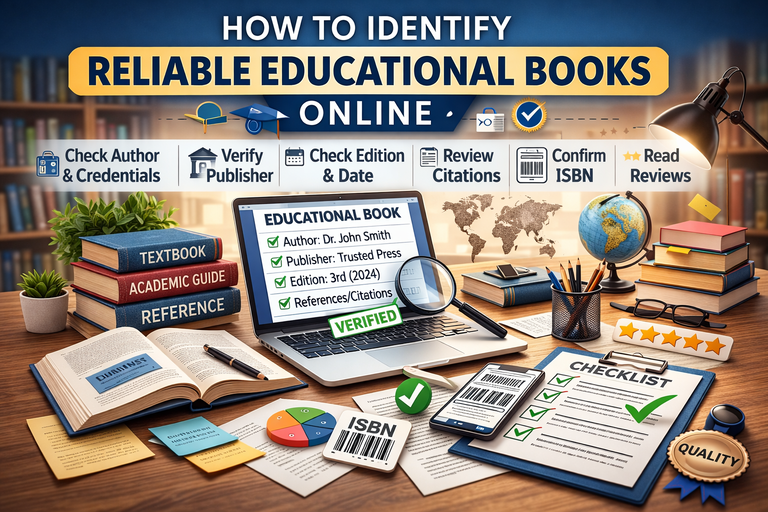
How to Identify Reliable Educational Books Online
The internet has made learning more accessible than ever. In seconds, you can find textbooks, workbooks, exam guides, and professional manuals on virtually any subject. Yet, with this ease comes a challenge not every educational book available online is accurate, up-to-date, or legally distributed. Some are outdated scans, low-quality self-published compilations, or content created more to sell quickly than to educate effectively.
Identifying reliable educational books online is essential. It protects your time, ensures you’re learning correct information, and improves your results particularly important for exam preparation, professional certifications, healthcare, engineering, law, finance, and other high-stakes fields.
This article provides a practical, step-by-step framework for evaluating educational books online.
1. Start with the Source: Where Is the Book Coming From?
The origin of a book often determines its reliability. Trusted sources tend to maintain rigorous standards, while unknown platforms may provide low-quality or pirated content.
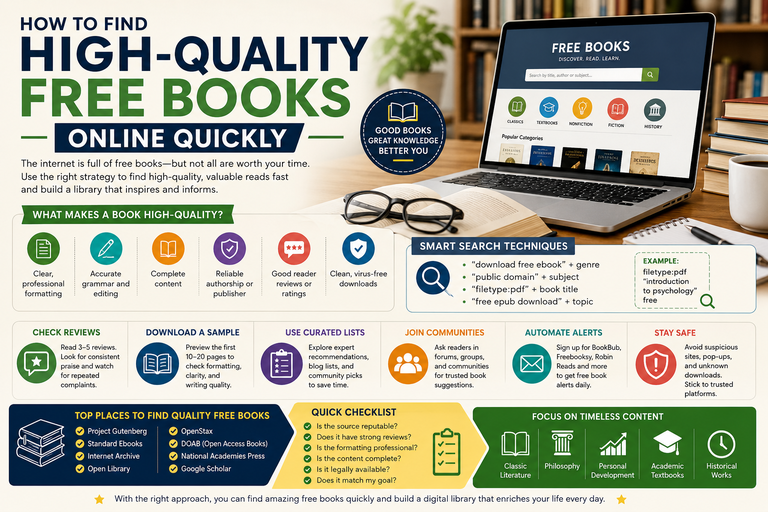
Generally trustworthy sources include:
-
Established academic publishers: Pearson, McGraw Hill, Oxford, Cambridge, Wiley, Springer (depending on your field)
-
University presses: MIT Press, Oxford University Press, Cambridge University Press
-
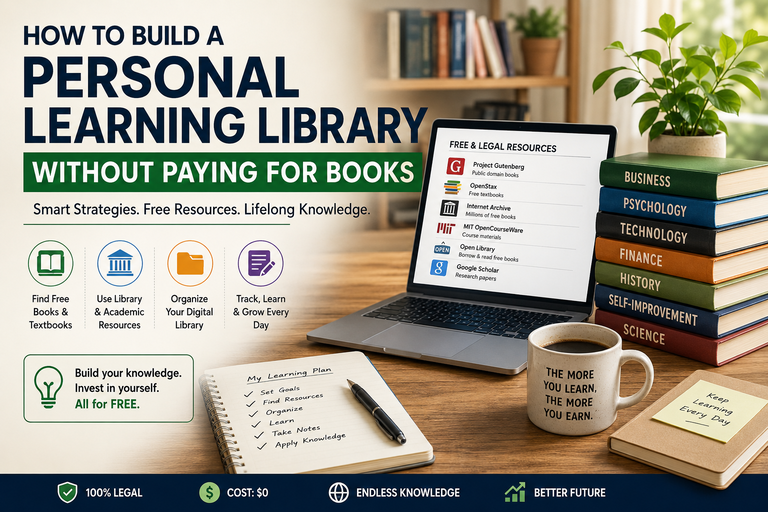
Open Educational Resource (OER) platforms: OpenStax, BCcampus OpenEd, Open Textbook Library, MIT OpenCourseWare
-
Public library collections: via Libby, OverDrive, or local library portals
-
University repositories: institutional repositories for legitimate open-access books
Sources requiring extra caution:
-
Random PDF sites offering “free downloads” of paid textbooks (often pirated)
-
Unknown education websites with no publisher details
-
Social media links to “free textbook” drives
-
Marketplaces where anyone can upload books without quality checks
Tip: Sites that hide their operators, push aggressive ads, or force suspicious downloads are high-risk.
2. Verify the Author: Credentials, Expertise, and Track Record
Reliable educational books are written or reviewed by experts.
Check for:
-
Academic degrees, professional experience, or teaching background
-
Relevant publications, research, or recognized contributions
-
Affiliations with universities, professional bodies, or recognized companies
Where to verify:
-
University staff pages
-
Google Scholar for academic authors
-
Professional association directories
-
Publisher author bios
Red flag: No author bio, or vague claims like “world-renowned expert” with no evidence.
3. Check the Publisher and Editorial Standards
Legitimate publishers provide editing, fact-checking, and quality control.
Look for:
-
Publisher name and contact information
-
Edition number (e.g., 3rd edition)
-
Editorial or reviewer acknowledgments
-
Preface explaining scope and learning objectives
-
References and permissions for figures
Red flag: A textbook with no references, edition, or publication details.
4. Look for Evidence Inside the Book: Citations, References, and Method
Quality educational books show their sources.
Reliable signs:
-
Citations from reputable journals, standards, or foundational books
-
Clear definitions and logically structured chapters
-
Worked examples and practice problems with solutions
-
Balanced tone distinguishing facts from opinions
Red flag: Grand claims with no sources, or a book that reads like a motivational blog post.
5. Confirm the Publication Date and Version
For fast-changing fields like technology, medicine, law, business, and test prep, outdated material can be harmful.
Actions:
-
Check the publication year and edition
-
Compare the table of contents with current curricula or certification objectives
-
Search for newer editions
Red flag: A “2025 edition” that is a recycled older book with no substantive updates.
6. Use External Validation: ISBN, Library Catalogs, and Reviews
a) ISBN verification: Most legitimate textbooks have ISBNs. Search on:
-
Publisher websites
-
WorldCat (global library catalog)
-
Google Books
-
Major bookstores
Mismatch between ISBN and title/author/edition is a warning sign.
b) Library listings: Inclusion in reputable library catalogs is a positive indicator.
c) Academic or professional reviews: Look for instructor reviews, course adoption lists, or journal reviews.
Note: Star ratings on marketplaces are weak evidence and can be manipulated.
7. Evaluate Fit: Right Level and Purpose
Accuracy alone doesn’t ensure a book is suitable. Consider:
-
Level: introductory, intermediate, or advanced
-
Purpose: textbook, reference, or exam prep
-
Alignment with your syllabus, learning objectives, or certification blueprint
-
Inclusion of exercises, case studies, or labs
Tip: Preview the table of contents and sample chapters when available.
8. Watch for Red Flags
Be cautious if you notice:
-
No author credentials, publisher, or references
-
Grammar errors, inconsistent formatting, or watermarked/copied images
-
“Too good to be true” claims (guaranteed results, miracle methods)
-
Content stitched together from Wikipedia or random web pages
-
Generic AI-like text with no examples or citations
-
Fake editions, suspicious covers, or mismatched chapter titles
-
Pirated PDFs with missing pages or blurred scans
9. Confirm Legality and Ethics
Legally distributed materials are more reliable:
Prefer:
-
Library e-book lending
-
Official publisher e-books
-
OER/open textbooks with clear licenses (Creative Commons)
-
Public domain sources (e.g., Project Gutenberg for classics)
Avoid:
-
Unauthorized “free PDF” copies of paid books
-
Shady download links requiring software installation
10. A Practical Checklist
Before relying on an online educational book, confirm:
-
✅ Author is qualified
-
✅ Publisher/platform is reputable
-
✅ Edition & date are current
-
✅ References/citations exist
-
✅ Structure supports learning (objectives, examples, exercises)
-
✅ ISBN/library listing matches the book
-
✅ Reviews are detailed and credible
-
✅ Preview shows clear, accurate writing
-
✅ Legal access is clear
-
✅ Alignment with syllabus/certification objectives is confirmed
If you cannot verify several of these, keep searching.
Conclusion
Identifying reliable educational books online requires careful evaluation of the source, author, publisher, content, currency, external validation, and legality. By following a systematic approach checking publisher reputation, author credentials, citations, edition, ISBN, and licensing you can avoid misinformation and confidently select resources that genuinely enhance your learning