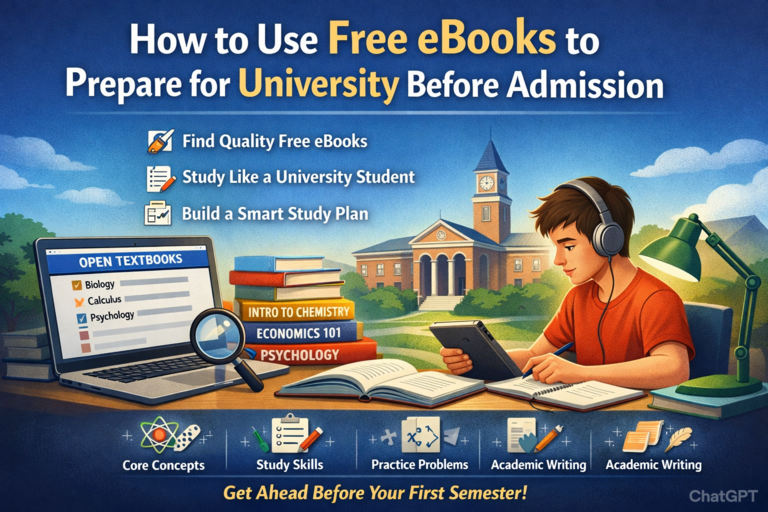
How to Use Free eBooks to Prepare for University Before Admission
Preparing for university doesn’t have to wait until you receive an acceptance letter and it doesn’t have to be expensive. Free eBooks and open textbooks can help you build subject knowledge, sharpen academic skills, and feel confident walking into your first semester.
The key is strategy: choosing the right materials, studying actively, and aligning your preparation with the degree you plan to pursue.
This guide shows you where to find high-quality free eBooks and exactly how to use them to prepare for university-level study before admission.
1) Why Free eBooks Are a Powerful Pre-University Tool
Free eBooks especially Open Educational Resources (OER) can simulate the university experience in powerful ways:
University-Style Content
Many open textbooks are written to match undergraduate course standards. They include structured chapters, learning objectives, examples, and end-of-chapter questions just like paid textbooks.
Independent Learning
University demands self-directed study. Using free eBooks trains you to:
-
Plan your study time
-
Extract key ideas from dense texts
-
Solve problems without step-by-step guidance
Low-Risk Exploration
Not sure whether to study economics or psychology? Free textbooks let you “test drive” a major before committing.
Better First-Semester Performance
Students often struggle not because they lack ability but because they’re unfamiliar with university expectations. Early exposure reduces “workload shock.”
If used correctly, free eBooks help you build:
-
Foundational subject knowledge
-
Academic reading stamina
-
Strong note-taking habits
-
Discipline-specific vocabulary
-
Independent problem-solving skills
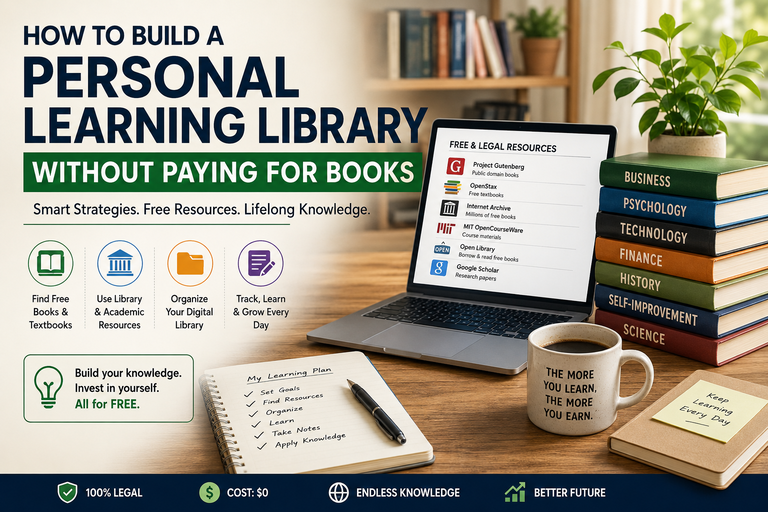
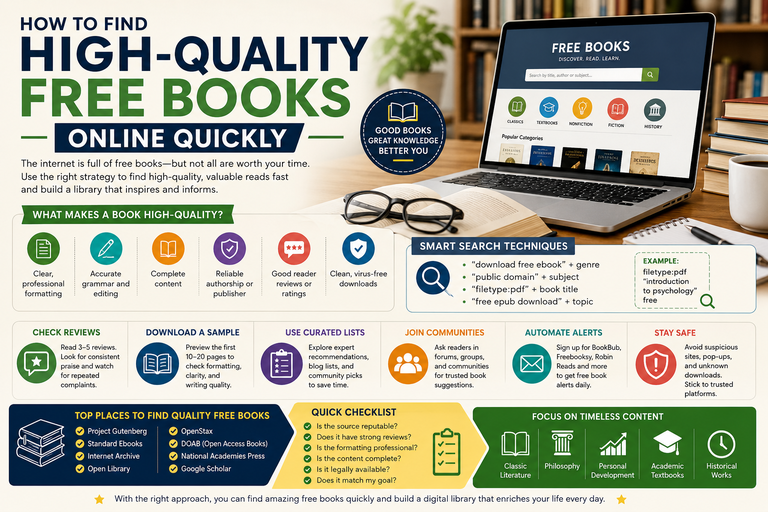
2) Where to Find High-Quality Free eBooks (Legally)
Avoid random PDFs. Prioritize reputable platforms.
Open Textbook & OER Libraries (Best for University Prep)
-
OpenStax (openstax.org)
Peer-reviewed textbooks for biology, chemistry, calculus, economics, psychology, sociology, and more. -
LibreTexts (libretexts.org)
Massive library, especially strong in chemistry and STEM subjects. -
Open Textbook Library (open.umn.edu/opentextbooks)
Curated collection searchable by subject. -
OER Commons (oercommons.org)
Broad selection of textbooks, study guides, and lesson materials. -
BCcampus OpenEd (open.bccampus.ca)
Excellent first-year course resources.
Public Domain & Classic Works (Great for Humanities)
-
Project Gutenberg (gutenberg.org)
Literature, philosophy, and classic works. -
Internet Archive / Open Library (archive.org)
Borrowable books and older editions. -
Google Books (books.google.com)
Full texts (some) and extensive previews.
University-Hosted Course Materials
-
MIT OpenCourseWare (ocw.mit.edu)
Free syllabi, lecture notes, and problem sets.
Tip: Find a syllabus from your target university or a similar one and match your reading to real first-year course outlines.
3) Step One: Prepare With a Target in Mind (Don’t Read Randomly)
Random reading wastes time. Define your goal.
A. Identify Your Intended Program
Examples:
-
Computer Science
-
Business/Economics
-
Engineering
-
Psychology
-
Biology/Pre-med
-
English/Law/International Relations
B. Research First-Year Courses
Look up:
-
Degree requirements
-
Sample study plans
-
First-year course sequences
-
Course descriptions (e.g., “Calculus I,” “General Chemistry,” “Intro to Microeconomics”)
C. Build a Focused Reading List
Per subject, choose:
-
1 main textbook
-
1 skills book (study skills or academic writing)
-
1 supplementary primer or workbook
This prevents overwhelm and increases completion.
4) How to Choose the Right Free eBooks (Quality Checklist)
Choose books that:
✔ Are written for undergraduates
✔ Include learning objectives and exercises
✔ Are recently updated (especially STEM fields)
✔ Come from credible platforms
Avoid:
✘ Random PDFs with no author credentials
✘ “Summary-only” guides
✘ Outdated editions in fast-moving fields
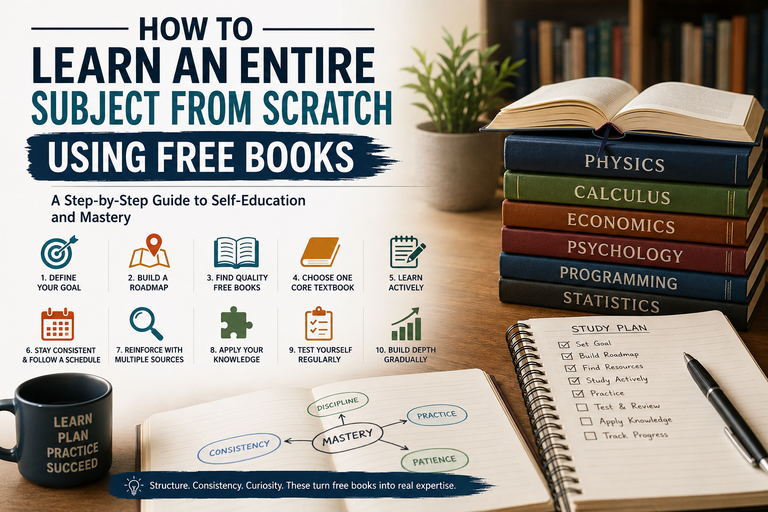
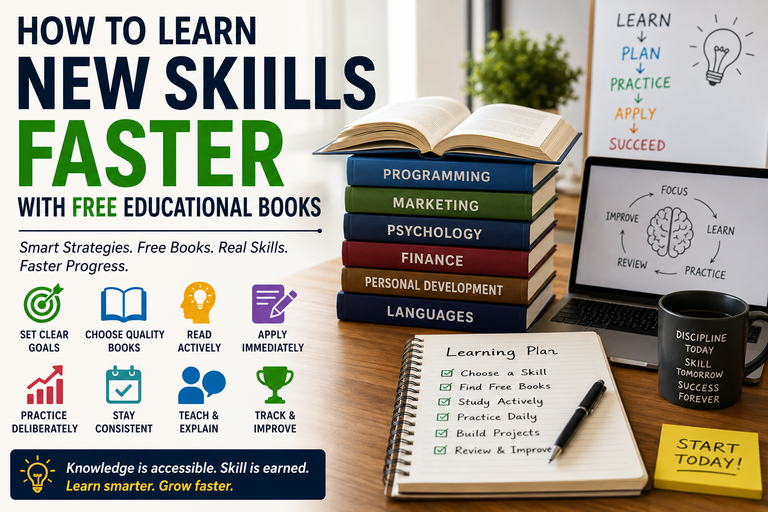
5) Step Two: Study Like a University Student (Active Reading Method)
University success isn’t about reading more it’s about processing better.
Use the SQ3R Method
-
Survey – Skim headings and summaries.
-
Question – Turn headings into questions.
-
Read – Read to answer your questions.
-
Recite – Explain the concept from memory.
-
Review – Revisit notes and test yourself.
Take Notes for Recall (Not Transcripts)
Use:
-
Cornell notes
-
Structured outlines
-
Concept maps
Avoid copying entire paragraphs. Write explanations in your own words.
Turn Reading Into Results (Especially for STEM)
Use this pattern:
-
Read 5–10 pages
-
Solve 5–15 problems
-
Review mistakes immediately
-
Redo difficult problems a week later
Practice not passive reading builds competence.
6) Step Three: Build a 4–8 Week Pre-Admission Study Plan
A realistic plan beats an ambitious one.
Weekly Template (6–10 Hours)
-
2 sessions: Core reading + notes
-
2 sessions: Practice problems
-
1 session: Review + flashcards
-
Optional: Watch a university lecture for reinforcement
Weekly Outputs (Outputs Matter)
Each week produce:
-
1–2 chapter summaries
-
Flashcards (formulas, definitions, key ideas)
-
Completed problem sets
-
A “muddiest points” list
These become powerful revision tools later.
7) What to Read by Major
Computer Science / IT
Focus on:
-
Intro programming (Python or Java)
-
Discrete math basics
-
Computational thinking
Practice:
-
Writing small programs weekly
-
Explaining code logic
Engineering
Focus on:
-
Calculus readiness
-
Physics fundamentals
-
Algebra fluency
Practice:
-
Multi-step problems
-
Clear, structured solutions
Business / Economics
Focus on:
-
Microeconomics basics
-
Intro accounting
-
Statistics foundations
Practice:
-
Graph interpretation
-
Short analytical explanations
Psychology / Social Sciences
Focus on:
-
Research methods
-
Statistics literacy
-
Core theories
Practice:
-
Study summaries
-
Correlation vs causation distinctions
Biology / Pre-Med
Focus on:
-
Cell biology
-
Genetics basics
-
Chemistry foundations
Practice:
-
Diagram labeling
-
Explaining processes clearly
Humanities
Focus on:
-
Reading complex texts
-
Argument structure
-
Academic writing
Practice:
-
1–2 page analytical essays
-
Thesis development
-
Evidence-based argumentation
8) Build Core University Skills (Not Just Subject Knowledge)
Many students struggle due to weak academic skills not intelligence.
Academic Writing
Learn:
-
Claim → evidence → explanation structure
-
Formal tone
-
Citation basics
Practice:
-
One short essay every two weeks
-
Editing for clarity and precision
Research Literacy
Learn:
-
How to evaluate sources
-
What peer review means
-
How to read academic papers
Practice:
-
Create a mini bibliography (5–10 sources)
Time Management & Study Systems
Learn:
-
Spaced repetition
-
Retrieval practice
-
Weekly planning
Practice:
-
Recall-based revision sessions
-
Progress tracking
9) Make eBooks Easier to Use: Tools & Workflow
Organization Tools
-
Zotero – Free citation manager
-
Google Drive – Organize folders
-
Microsoft OneDrive – Sync notes across devices
Simple Folder Structure
University Prep
 ├── Calculus
 │    ├── Ch01_Notes
 │    ├── Ch02_Notes
 │    └── Mistakes_Log
 ├── Economics
 └── Writing Skills
Maintain a “Mistakes & Fixes” document per subject. Reviewing mistakes accelerates improvement.
10) Avoid Common Mistakes
Mistake 1: Downloading too many books
Fix: One primary text per subject.
Mistake 2: Passive reading
Fix: Always test recall.
Mistake 3: Studying irrelevant topics
Fix: Align with first-year syllabi.
Mistake 4: Using pirated textbooks
Fix: Stick to legal OER platforms.
11) A Simple Plan You Can Start Today
-
Choose your intended program.
-
Identify 3–5 first-year courses.
-
Find one open textbook per course.
-
Set a schedule (1–2 chapters per week).
-
Complete all exercises.
-
Produce weekly summaries and flashcards.
-
Test recall regularly.
-
Adjust based on difficulty.
Conclusion
Free eBooks can prepare you for university more effectively than many paid resources if you use them strategically. Focus on high-quality open textbooks, align your reading with real course outlines, and measure progress through outputs: solved problems, written summaries, and recall-based review.
By the time admission decisions arrive, you won’t just be hoping you’re ready you’ll already be thinking, studying, and performing like a university student