Scholarship Application Guide: How to Write a Winning Personal Statement
A personal statement is often the most decisive part of a scholarship application. While grades, test scores, and certificates show what you have achieved academically, your personal statement explains who you are, why your goals matter, and how you will use the opportunity if selected.
In highly competitive scholarship pools, many applicants look identical on paper. What sets successful candidates apart is a personal statement that feels authentic, focused, and forward-looking. This guide explains what scholarship committees look for, how to structure a compelling essay, and proven strategies to help you write a statement that is both memorable and persuasive.
Why the Personal Statement Matters
Scholarship reviewers often evaluate hundreds or even thousands of applications under tight time constraints. Your personal statement gives them insight that numbers alone cannot provide. Through your essay, they want answers to questions such as:
-
What truly motivates this student?
-
Do they understand the purpose of this scholarship?
-
Are their goals realistic and well thought out?
-
How have they grown from challenges or setbacks?
-
Will they use this opportunity to create positive impact?
A winning personal statement does not aim to sound flawless. Instead, it demonstrates clarity, character, resilience, and direction. Reviewers remember students who can reflect honestly on their journey and articulate where they are headed.
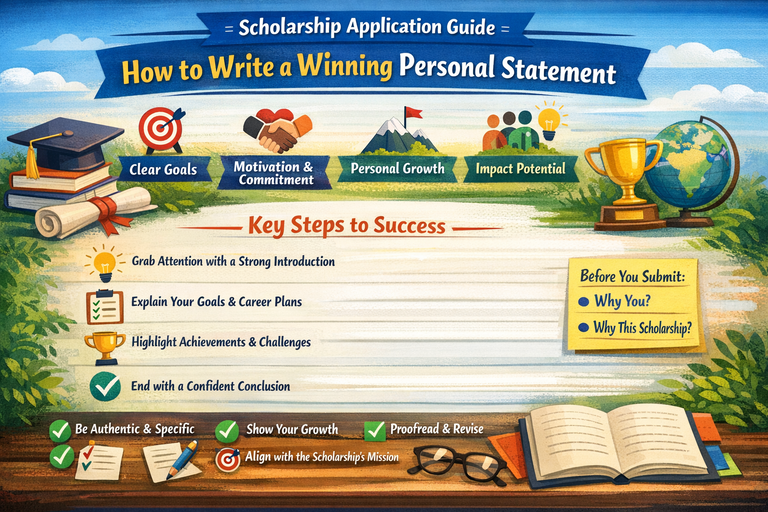
What Scholarship Committees Look For
1. Clear and Specific Goals
Committees want to invest in students with a defined plan—not vague aspirations. While saying “I want to help people” shows good intentions, it lacks focus. A stronger goal sounds like:
“I aim to become a clinical psychologist specializing in adolescent trauma within underserved school communities.”
Strong goal-setting includes:
-
A defined academic path (major, degree, or certification)
-
A realistic timeline and next steps
-
Awareness of the skills, training, or licensing required in your field
Specific goals signal seriousness and long-term commitment.
2. Motivation and Commitment
Scholarships are investments. Reviewers look for evidence that you will persist even when challenges arise.
They often look for:
-
Long-term involvement in activities (clubs, work, volunteering, caregiving)
-
Sustained interest in your field (projects, internships, reading, research)
-
Personal motivations that logically connect to your goals
Consistency matters more than perfection.
3. Personal Growth
Growth reflects maturity. Many applicants describe hardships, but the strongest statements explain how those experiences changed their thinking or behavior.
Examples of growth include:
-
Learning from failure and adapting
-
Shifts in perspective or values
-
Developing leadership, discipline, or collaboration skills
-
Balancing responsibilities and academics
Growth shows readiness—not just struggle.
4. Potential for Impact
Scholarship providers want to support students who will use education to benefit others.
Impact can be demonstrated through:
-
Community service with measurable outcomes
-
Peer mentoring or leadership roles
-
Initiatives that solved real problems
-
Future career contributions in education, healthcare, research, business, or public service
Your impact does not need to be global—meaningful local change counts.
The Two Questions Every Strong Personal Statement Must Answer
Before writing, ensure your essay clearly answers:
-
Why you?
What experiences shaped you and prove you are prepared for this opportunity? -
Why this scholarship?
How does the scholarship’s mission align with your goals and values?
If either answer is missing, your essay may feel generic—even if the writing is strong.
Step-by-Step Guide to Writing a Strong Personal Statement
Step 1: Understand the Scholarship’s Purpose
Read the scholarship description as if it were a job posting. Identify:
-
Who the scholarship supports (first-generation students, STEM majors, community leaders, etc.)
-
Core values (service, leadership, equity, innovation, academic excellence)
-
Required themes (financial need, career goals, social impact)
Highly effective exercise:
Create two lists:
-
Scholarship values
-
Your evidence (one real example for each value)
This ensures alignment and prevents off-topic essays.
Step 2: Write a Strong Introduction
Your opening paragraph should make the reader want to continue.
Effective introductions often include:
-
A defining moment or turning point
-
A personal challenge that shaped your direction
-
A vivid experience that reveals your values
Avoid:
-
“My name is…”
-
Overused quotes without personal relevance
-
Leading with financial need alone
Start with a moment that shows your character in action, then connect it to your larger goals.
Step 3: Explain Your Academic and Career Goals
Demonstrate focus and seriousness by explaining:
-
What you plan to study and why
-
The problem you want to solve or career you aim to pursue
-
Skills you need to develop (research, leadership, technical skills)
-
How the scholarship directly supports your progress
Make it concrete. Replace vague ambition with specific intent and action.
Step 4: Highlight Achievements and Challenges (Focus on Growth)
Writing About Achievements
Go beyond listing accomplishments. Explain:
-
What you did
-
Why it mattered
-
What skills you gained
-
The outcome or impact
Whenever possible, use numbers to add credibility.
Writing About Challenges
Challenges strengthen your essay when written strategically:
-
Briefly describe the obstacle
-
Focus on your response and actions
-
Explain what changed in your mindset or habits
-
Connect the lesson to your future goals
The challenge should support your story—not dominate it.
Step 5: End with a Confident Conclusion
A strong conclusion:
-
Reinforces your goals and commitment
-
Shows alignment with the scholarship’s mission
-
Emphasizes future contribution and impact
-
Ends with confidence, not desperation
Gratitude is appropriate, but your final note should highlight purpose and momentum.
Suggested Structure (Simple and Effective)
Most winning personal statements follow this arc:
-
Hook (specific moment or insight)
-
Brief background or context
-
Growth and values
-
Clear academic and career goals
-
Scholarship fit
-
Future impact
-
Confident closing
Pro Tips: What Separates Good from Exceptional
-
Be authentic: Real stories outperform exaggerated ones.
-
Avoid generic language: Replace claims with evidence.
-
Revise strategically: Focus on clarity, structure, and polish.
-
Match tone to the scholarship: Leadership-focused programs differ from service-oriented ones.
-
Show follow-through: Mention actions you’ve already taken toward your goals.
Common Mistakes to Avoid
-
Writing a biography instead of a persuasive argument
-
Listing achievements without reflection
-
Over-emphasizing hardship without growth
-
Using generic templates
-
Ignoring word limits or formatting rules
-
Failing to connect your story to the scholarship’s mission
Final Submission Checklist
Before submitting, confirm that your essay clearly explains:
-
Your motivation
-
Your specific goals
-
Evidence of commitment
-
Personal growth or turning points
-
Alignment with the scholarship’s values
-
Your intended impact if selected
Using Free Books and Resources to Strengthen Your Statement
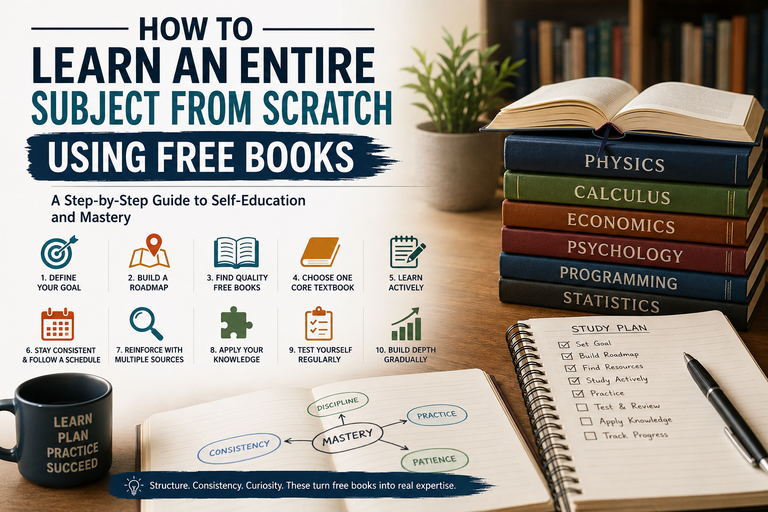
You do not need paid coaching to write a strong personal statement. Free books and scholarship-prep resources available on platforms like JunkyBooks and other open learning sites can help you:
-
Study effective essay structures
-
Improve storytelling and clarity
-
Review sample prompts and essays
-
Strengthen grammar and editing skills
The most important factor is revision. Start early, revise in stages, and ensure every paragraph supports your central message.
A thoughtful, well-structured personal statement does more than win scholarships—it clarifies your purpose and direction. Write honestly, revise carefully, and let your story show not just where you’ve been, but where you are going.
If you want, I can also:
-
Shorten this for a blog post
-
Adapt it for students vs. graduate applicants
-
Create a checklist or downloadable PDF version
-
Write sample personal statement excerpts