The Impact of Free Educational Resources on Small Businesses and Entrepreneurs
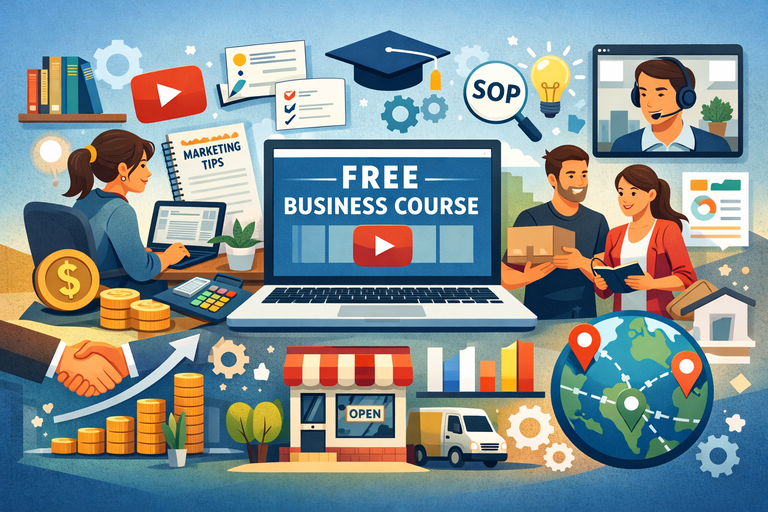
Free educational resources ranging from open online courses and YouTube tutorials to open textbooks, templates, webinars, and community forums have quietly become a major force shaping how small businesses are started, managed, and scaled. They reduce the cost of acquiring essential business skills, accelerate experimentation, and help entrepreneurs compete in markets that once favored firms with larger training budgets, insider networks, or access to elite institutions.
This article explores what counts as “free education” in the business context, how it changes outcomes for entrepreneurs and small firms, where its limits are, and how to use it strategically.
1) What “Free Educational Resources” Really Include
When people hear “free education,” they often imagine full-length online courses. In practice, entrepreneurs learn from a broad and dynamic ecosystem.
A. Structured Learning
Structured resources provide sequenced knowledge and foundational understanding:
-
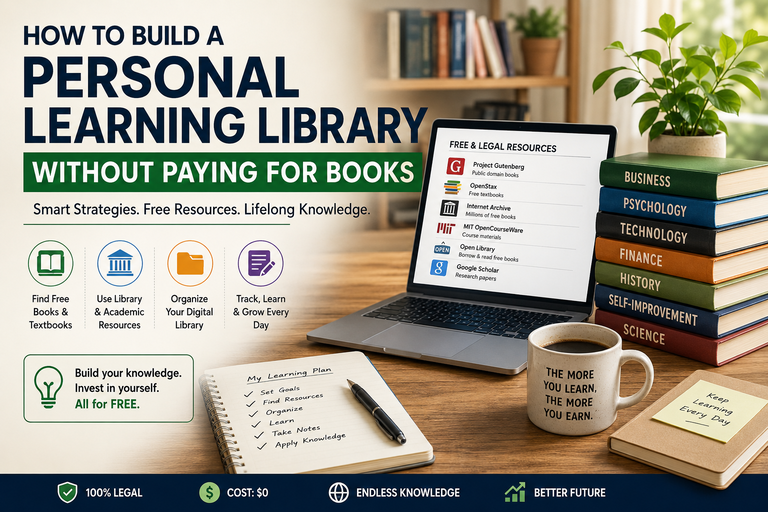
Massive Open Online Courses (MOOCs) from platforms like Coursera, edX, and FutureLearn (often free to audit)
-
Open courseware such as MIT OpenCourseWare
-
Public university lecture series on YouTube
-
Government or nonprofit small-business development programs
These resources are especially useful for building foundational literacy in finance, marketing, operations, and entrepreneurship.
B. Just-in-Time Learning (Most Common for Founders)
For many entrepreneurs, learning is reactive and problem-driven:
-
YouTube walkthroughs and podcasts
-
Blogs, case studies, and vendor documentation
-
Platform academies such as Google Digital Garage or HubSpot Academy
-
Webinars hosted by accounting, e-commerce, and marketing software providers
This model allows founders to solve immediate problems—launching a landing page, configuring payment systems, or improving conversion rates—without enrolling in long programs.
C. Tools That Teach While You Work
Modern tools increasingly embed learning into workflows:
-
Interactive tutorials and sandbox environments
-
Open-source documentation and community discussions
-
AI-assisted platforms like ChatGPT for drafting, debugging, and explaining business concepts
In these cases, education is not separate from work—it happens inside it.
D. Peer Learning
Entrepreneurs also learn from each other:
-
Founder communities and online forums
-
Slack and Discord groups
-
Local meetups and coworking events
-
Public accelerator content and mentorship sessions
The key insight: for small businesses, education is often integrated into daily operations. Founders learn a skill when it becomes necessary—and apply it immediately.
2) Why Free Education Has Outsized Impact on Small Businesses
Large firms have HR departments, corporate trainers, and internal experts. Small businesses usually don’t. As a result, the marginal value of free education is significantly higher for them.
A. Lowering the Cost of Competence
Free resources reduce or eliminate spending on:
-
Basic bookkeeping and tax literacy
-
Marketing fundamentals (SEO, email campaigns, paid ads)
-
Technical skills (website setup, no-code tools, analytics)
-
Sales processes (CRM setup, pitch structure, negotiation basics)
-
Operational design (SOP writing, hiring workflows)
For early-stage businesses, where cash flow is tight, lowering learning costs directly improves survival odds.
B. Faster Iteration and Problem-Solving
A common failure mode in small businesses is slow response to challenges. Without access to consultants, founders can stall.
Free resources shorten the “time to next action” by enabling:
-
Rapid troubleshooting of underperforming campaigns
-
Faster tool adoption (inventory, CRM, accounting systems)
-
Quicker compliance awareness (licenses, tax basics, privacy policies)
Speed often determines whether a business adapts or disappears.
C. Democratizing Access to Best Practices
In the past, certain growth frameworks circulated mainly in elite business schools or private networks. Today, many are widely accessible:
-
Product–market fit methodologies
-
Unit economics and pricing frameworks
-
Customer discovery techniques
-
Conversion rate optimization principles
-
Financial modeling templates
This doesn’t eliminate competitive advantage—but it narrows the knowledge gap.
3) Measurable Benefits: What Changes for Entrepreneurs
A. Increased Business Formation
Free education lowers psychological and practical barriers:
-
Individuals learn how to register businesses and validate demand
-
Skills become “tryable” without major financial commitment
-
Side hustles transition into formal enterprises
When knowledge is accessible, experimentation increases.
B. Improved Marketing Effectiveness
Micro-businesses rely heavily on organic growth. Free training helps them:
-
Compete for local search visibility
-
Improve positioning and messaging
-
Build repeatable outreach systems
-
Reduce waste in paid advertising
Better marketing literacy often means higher ROI per dollar spent.
C. Better Financial Resilience
Financial misunderstanding is a common cause of failure. Free resources teach:
-
Contribution margin and break-even analysis
-
Cash flow management
-
Separation of personal and business finances
-
Pricing strategies aligned with profitability
The difference between being “busy” and being profitable becomes clearer.
D. Workforce Upskilling
Small firms can train employees without corporate budgets:
-
Onboarding via curated free courses
-
Cross-training for operational flexibility
-
Skill expansion in CRM systems, analytics, and digital tools
This raises productivity while controlling costs.
E. Innovation and Specialization
When learning is inexpensive, specialization increases:
-
Local businesses adopt automation and analytics
-
Creators learn international shipping and digital distribution
-
Freelancers productize services into scalable offerings
Low-cost knowledge enables strategic pivots.
4) Where Free Resources Help Most—and Least
High-Impact Domains
Free learning is especially effective in:
-
Digital marketing and content strategy
-
Tool adoption and SaaS implementation
-
Basic bookkeeping and financial literacy
-
Sales fundamentals
-
Operations and process design
-
Analytics and spreadsheet skills
Higher-Risk Domains
Free content is less reliable for:
-
Complex legal or tax structuring
-
Regulated industries (healthcare, childcare, finance, food safety)
-
Data protection and cybersecurity compliance
-
High-stakes scaling decisions (debt financing, acquisitions, international expansion)
In these cases, free education is excellent for understanding concepts but professional advice is often essential.
5) The Hidden Costs and Risks
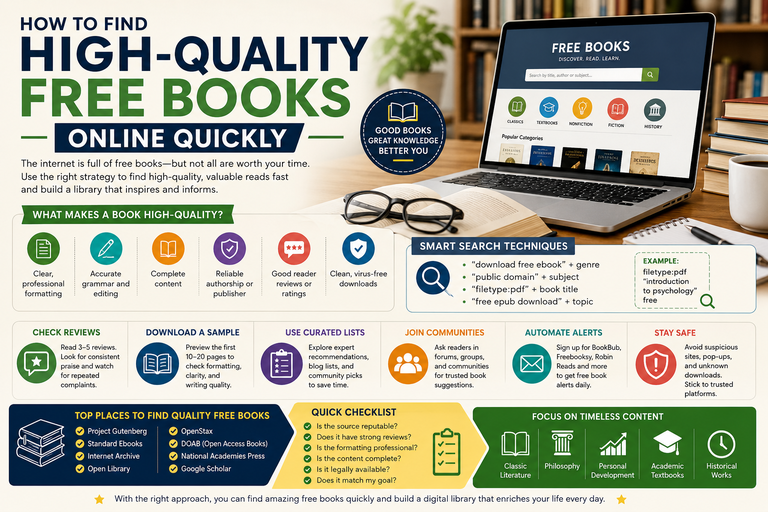
Free education is powerful but not automatically reliable.
A. Quality Variance and Misinformation
Risks include:
-
Outdated tactics
-
Oversimplified “growth hacks”
-
Survivorship bias in influencer content
Mitigation: prioritize sources that present data, trade-offs, and context.
B. Tutorial Debt
Entrepreneurs may confuse learning with progress:
-
Watching branding tutorials instead of validating demand
-
Perfecting websites before acquiring customers
-
Studying ads before clarifying offers
Solution: pair every learning session with a deliverable.
C. Vendor Bias
Platform-produced education may promote specific tools.
Mitigation: learn principles first; choose tools second.
D. Lack of Personalized Feedback
Free content rarely diagnoses specific problems.
Mitigation: use communities, mentorship office hours, and small experiments to create feedback loops.
6) How Free Education Changes Competition
A. Lower Barriers to Entry
More people can start businesses, increasing competition:
-
More freelancers in similar niches
-
More direct-to-consumer brands
-
More local businesses using identical digital tactics
This pushes differentiation toward:
-
Stronger positioning
-
Superior customer experience
-
Operational excellence
-
Relationship-driven retention
B. Faster Strategy Diffusion
Tactical advantages fade quickly when knowledge spreads.
Long-term advantage shifts to:
-
Brand and trust
-
Customer relationships
-
Execution consistency
-
Proprietary insights and partnerships
C. Geographic Equalization (with Limits)
Founders in smaller cities can access global knowledge. However, infrastructure gaps payments, logistics, internet reliability still matter.
Free education reduces knowledge inequality more than infrastructure inequality.
7) Strategic Use of Free Resources
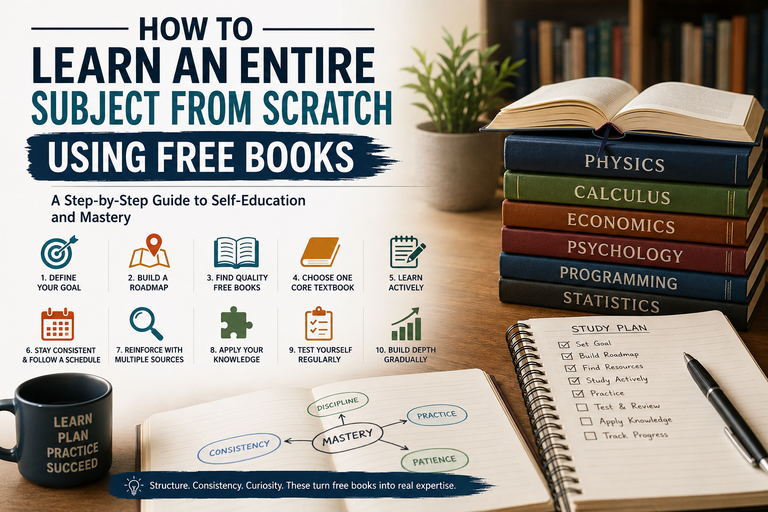
A. Build a Just-in-Time Learning System
-
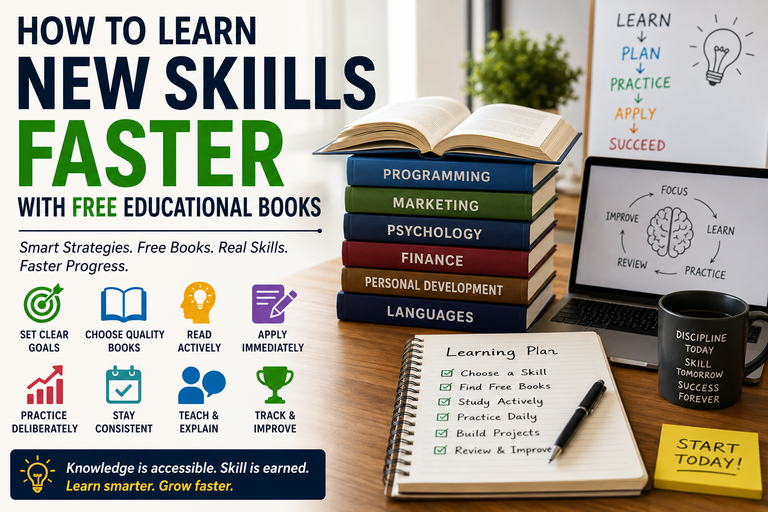
Identify the bottleneck (leads, retention, cash flow).
-
Select targeted resources.
-
Apply within 48 hours.
-
Measure results and iterate.
Learning must connect directly to execution.
B. Create Internal Micro-Curricula
Small businesses can turn free resources into structured onboarding:
-
Curated learning paths for customer support
-
Refund and escalation checklists
-
Analytics basics for managers
-
Sales scripts and review systems
This transforms free content into organizational capability.
C. Reduce External Dependency Selectively
Entrepreneurs can learn enough to:
-
Manage bookkeeping setups (with accountant review)
-
Build simple websites
-
Launch email marketing systems
-
Handle basic product photography
The goal is informed oversight not permanent DIY everything.
D. Combine Free Learning with Paid “Surgical” Help
High-leverage approach:
-
Learn fundamentals for free
-
Pay experts for audits, compliance, or high-risk decisions
Examples: tax review, legal contract drafting, cybersecurity assessments, ad account audits.
8) The Role of Public Institutions
Governments, libraries, and nonprofits amplify impact through:
-
Small business development centers
-
Library workshops and maker spaces
-
Free legal and accounting clinics
-
Digital skills initiatives
-
Workforce upskilling grants
Supporting entrepreneurial learning is an economic development strategy, especially in regions where small businesses drive employment.
9) The Future: AI and Learning Embedded in Work
The next phase of free educational impact will likely include:
AI Copilots
Entrepreneurs increasingly learn while executing:
-
Drafting proposals and SOPs
-
Explaining accounting data in context
-
Generating marketing experiments
-
Debugging analytics and spreadsheets
AI reduces friction between confusion and action.
Competency-Based Hiring
Small businesses may shift toward:
-
Portfolio-based recruitment
-
Skills-first evaluation
-
Continuous internal upskilling via open resources
Open Playbooks
Transparent case studies and public templates will continue spreading operational knowledge especially in e-commerce, SaaS, and creator-led businesses.
Conclusion
Free educational resources have become a foundational input to modern entrepreneurship. They lower the cost of starting and running a business, accelerate experimentation, improve marketing and financial literacy, and allow small teams to train themselves without corporate budgets.
However, they also increase competition, require strong judgment to filter quality, and cannot fully replace tailored advice in high-risk domains.
For small businesses and entrepreneurs, the winning approach is not to consume more content it is to build a system that connects learning to execution: identify the bottleneck, learn the minimum necessary, ship improvements quickly, and seek selective professional support when stakes are high.
In today’s economy, knowledge is no longer scarce. The real advantage lies in disciplined application