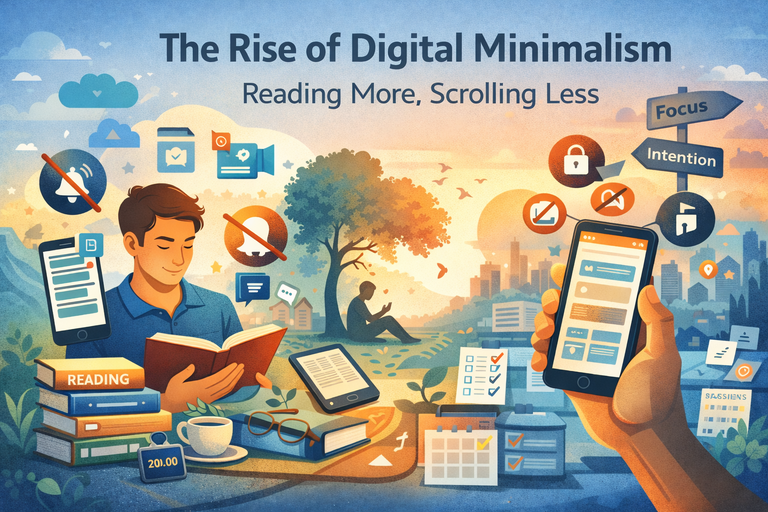
The Rise of Digital Minimalism: Reading More, Scrolling Less
In an era dominated by constant notifications, endless feeds, and algorithmically optimized content, attention has become a scarce resource. Many people are beginning to recognize the toll this digital saturation takes on focus, creativity, and mental well-being. This recognition has given rise to a new philosophy: digital minimalism. Unlike radical tech avoidance, digital minimalism is about using technology deliberately and intentionally, prioritizing activities that add value to life rather than those that hijack attention. One of its most notable outcomes is a simple but profound trade-off: reading more, scrolling less.
This article explores the principles behind digital minimalism, why it matters, how reading fits into this lifestyle, the obstacles people face, and practical strategies for cultivating a more thoughtful, reading-centered digital life.
1) What Digital Minimalism Really Means
Digital minimalism is the art of curating your digital tools so that they serve your goals and values instead of distracting you. It is built on three key principles:
-
Intentionality: Every tool or app should serve a purpose. You don’t use a tool just because it exists; you use it because it aligns with your priorities.
-
Optimization: Reduce distractions through settings, limits, and workflow adjustments.
-
Substitution: Replace low-value, mindless digital habits with higher-value offline or calmer online activities, like reading, walking, or hobbies.
Scrolling isn’t inherently harmful it often arises from boredom, stress, or the desire for connection. Digital minimalism encourages asking: Is this the best use of my time right now?
2) Why “Scrolling Less” Is a Cultural Priority
A. Engagement design is more persuasive than ever
Modern feeds are engineered to capture attention:
-
Variable rewards: Unpredictable “hits” of content keep users hooked.
-
Social validation loops: Likes, replies, and views reinforce compulsive checking.
-
Endless supply: Infinite scroll removes natural stopping cues.
-
Frictionless switching: One tap and your attention moves to the next stimulus.
Even brief usage often stretches into hours.
B. Cognitive costs accumulate
People increasingly notice the negative effects of shallow, fragmented attention:
-
Shortened attention spans
-
Difficulty reading long texts
-
Poor memory retention
-
“Time confetti” days fragmented into unproductive moments
-
Anxiety and compulsive checking
C. Depth over information overload
Being constantly up-to-date no longer confers real advantage. Long-form reading and deliberate study provide durable knowledge and skills, offering a competitive edge in a world where deep understanding is rare.
3) Why Reading Wins Against Scrolling
A. Depth vs. breadth
Books provide coherent narratives, cause-and-effect reasoning, and cumulative understanding. Social feeds and rapid content consumption offer breadth without structure awareness without mastery.
B. Calmer cognition
Deep reading improves focus, reduces cognitive jitter, and provides closure, which scrolling rarely does.
C. Better decision-making
Reading develops patience, critical thinking, empathy, and vocabulary all essential for complex personal and professional decisions.
4) The New Minimalism: Not “No Phone,” But “Phone With Rules”
Digital minimalism is about designing constraints, not abandoning technology:
-
Remove default pathways: Home screen icons, autoplay, notifications, and algorithmic feeds are all engineered to capture attention.
-
Shift from willpower to environment: Adjusting your phone setup is more effective than relying on self-discipline alone.
5) Practical Toolkit: How to Read More and Scroll Less
A. Make reading the easiest option
-
Keep books in visible, accessible locations.
-
Carry a “waiting book” for idle moments.
-
Use e-readers as deliberate calm devices.
B. Rebuild your home screen
-
Remove social apps from the front page.
-
Replace them with reading, note-taking, and productivity apps.
-
Increase friction for low-value apps.
C. Turn off attention hooks
-
Disable non-essential notifications.
-
Avoid autoplay, suggested posts, and push email.
-
Use Focus modes for work, reading, and evening routines.
D. Time-box scrolling
-
Limit social media to specific windows.
-
Set timers and stick to intentional usage.
E. Replace the urge, don’t just remove it
-
Identify what scrolling fulfills: stress relief, social connection, or boredom.
-
Substitute with reading, journaling, walks, or phone-free hobbies.
6) Building a Reading Habit That Sticks
A. Choose suitable books
Select books that align with your interests and life stage: fiction, short reads, practical nonfiction, or essay collections.
B. Minimum viable reading
Start small: 10 minutes a day or one chapter per session. Consistency matters more than volume.
C. Use anchors
Tie reading to existing routines: morning coffee, commute, or bedtime.
D. Track progress
Keep a simple reading log to maintain visibility and reinforce habit formation.
7) Digital Minimalism at Work: Professional Benefits
Reading more and scrolling less improves workplace performance by:
-
Enabling deeper focus and longer work sessions
-
Strengthening reasoning and synthesis skills
-
Improving communication and writing clarity
-
Boosting creativity and innovation
-
Reducing burnout and cognitive fatigue
Concentration becomes a form of leverage in attention-driven industries.
8) Obstacles and How to Overcome Them
-
Work reliance on social media: Schedule posts, separate creation from consumption, and use desktop platforms.
-
Reading feels hard: Start with engaging fiction or audiobooks; progress gradually.
-
Scrolling as stress relief: Replace with low-stakes, calming alternatives.
-
Social expectations: Set clear response windows and use “Do Not Disturb” strategically.
9) A 14-Day Minimalism Plan
Days 1–2: Audit your phone usage and identify top time-sink apps.
Days 3–6: Reduce notifications, remove non-essential apps, create one daily scrolling window.
Days 7–10: Add reading infrastructure, place a book in visible locations, establish a reading anchor.
Days 11–14: Increase reading time, add a phone-free block, and reflect on improvements in sleep, focus, and mood.
By day 14, many notice a natural reduction in scrolling and an easier habit of reading.
10) Why Digital Minimalism Will Keep Growing
-
Attention economy incentives continue to intensify.
-
Long-form newsletters, e-books, and audiobooks are more popular.
-
Deep work and slow productivity gain social legitimacy.
-
Offline hobbies and reading signal value in a distracted culture.
Digital minimalism isn’t a retreat it’s a proactive response to scarcity of attention. Reading becomes a natural outcome of a carefully designed environment.
Conclusion
The rise of digital minimalism reflects a growing understanding that attention is finite and valuable. Scrolling offers entertainment and connection but fragments focus and disrupts deep thinking. Reading, by contrast, builds durable understanding, trains concentration, and restores calm completion. Digital minimalism doesn’t require abandoning technology it requires making technology obey your priorities. When practiced intentionally, reading more and scrolling less becomes both natural and deeply rewarding.