The Future of Self-Education: Learning Without Borders or Tuition Fees
For most of modern history, education has been gated by geography, admission rules, and the ability to pay. If you did not live near a university, meet its entry criteria, or afford tuition, your options were narrow. That model is weakening.
Today, a motivated learner can study machine learning from world-class researchers, learn a new language from native speakers across continents, master accounting with interactive problem sets, and build a portfolio that convincingly demonstrates skill often without paying tuition.
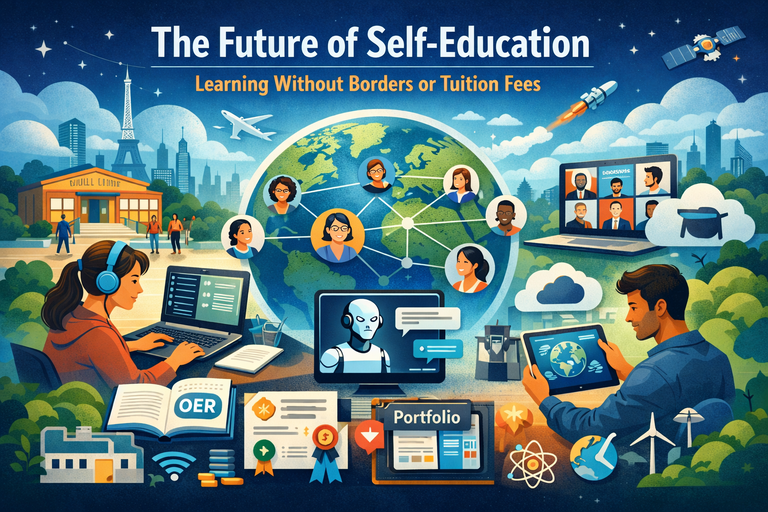
This shift isn’t just about “free courses.” It represents a new learning ecosystem: open resources, global communities, AI-guided tutoring, project-based proof of competence, and employers that increasingly care about what you can do rather than where you studied. The future of self-education is not a single platform replacing schools; it’s the unbundling of education into flexible components that can be mixed and matched across borders.
What follows is a detailed look at what’s changing, what’s coming next, and what it will take for learning without borders or tuition fees to become mainstream rather than exceptional.
1) From Institutions to Ecosystems: What’s Really Changing
Traditional education bundles together multiple functions:
-
Curriculum design (what to learn and in what order)
-
Instruction (lectures, explanations, guided practice)
-
Assessment (tests, grading, feedback)
-
Credentialing (degrees, transcripts)
-
Community and networking
-
Access to resources (labs, libraries, software)
-
Employer signaling (a trusted stamp of competence)
Historically, self-education struggled because learners could access information but not the rest of the bundle. Guidance, credible assessment, structured pathways, and trusted signaling were missing.
Now, each function is being replaced or reimagined:
-
Open curricula and structured online pathways substitute for formal syllabi.
-
AI tutors and interactive platforms replicate instruction and feedback.
-
Peer review, competitions, and project portfolios replace some forms of assessment.
-
Industry micro-credentials and skills-based hiring substitute for degree-based signaling.
-
Online communities replicate aspects of campus networking.
-
Cloud labs, simulators, and open-source software substitute for physical facilities.
In effect, the “school” is becoming a modular stack. Learners assemble their own educational architecture.
2) The Building Blocks of Tuition-Free Learning
Open Educational Resources (OER) as the Default Textbook
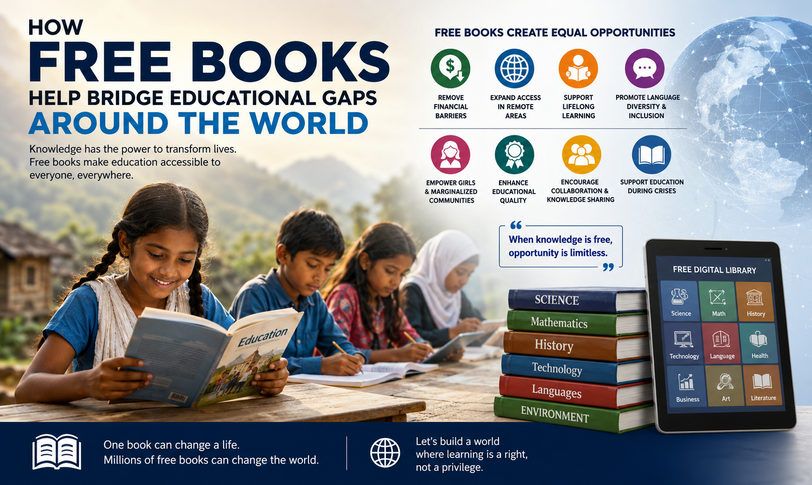
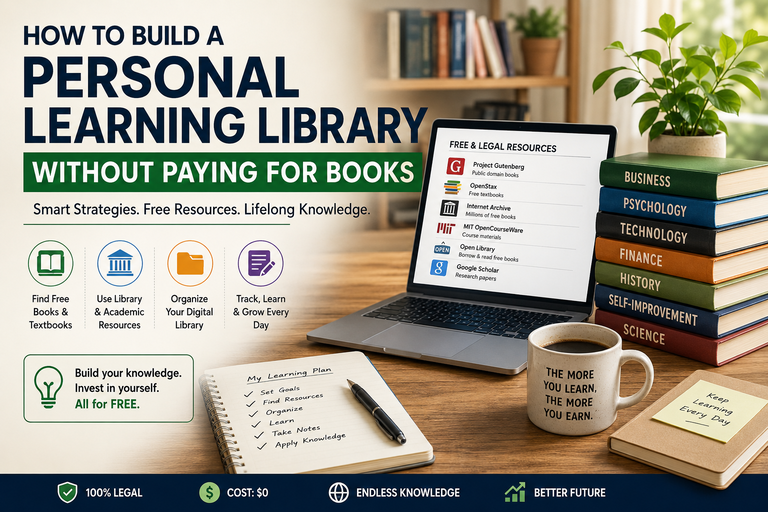
Freely accessible textbooks, lecture notes, videos, and problem sets are expanding rapidly. Institutions like MIT OpenCourseWare and OpenStax have demonstrated that high-quality academic content can be made freely available at scale.
When content becomes abundant and free, differentiation shifts to:
-
Guided practice
-
Feedback quality
-
Skill verification
-
Community and mentorship
The expensive textbook market is already under sustained pressure from open alternatives.
MOOCs Evolve from Courses into Pathways
Massive open online courses (MOOCs) once mirrored traditional lectures in digital form. Platforms such as Coursera and edX now increasingly offer:
-
Sequenced learning tracks
-
Capstone projects
-
Peer cohorts
-
Stackable credentials
While certificates may require payment, knowledge access is often free through audits or sponsored tracks. The model is shifting from isolated courses to structured pathways aligned with job roles.
Libraries and Civic Institutions as Learning Hubs
Public libraries are uniquely positioned to become the “campus” of tuition-free education. They provide:
-
Internet access and devices
-
Quiet study spaces
-
Workshops and tutoring
-
Access to research databases
-
Career services
As learning becomes lifelong, local institutions offering continuity and physical space will grow in importance.
Open-Source Software and Cloud Labs
In technical fields, practice is everything. Open-source ecosystems and browser-based tools reduce barriers dramatically:
-
Cloud-based coding environments
-
Free data science notebooks
-
Community design tools
-
Cybersecurity and networking simulators
Learners can now build production-grade skills without ever stepping into a university lab.
3) AI as the Great Accelerator (and the New Literacy)
The biggest transformation ahead is not more content it is personalized instruction at scale.
From Search to Dialogue
AI tutoring shifts learning from hunting for answers to engaging in conversation. Learners can ask:
-
“Explain this concept in simpler terms.”
-
“Give me harder problems.”
-
“Review my essay.”
-
“Quiz me until I master this.”
This converts static content into interactive learning and lowers intimidation barriers for beginners.
Personalized Feedback at Scale
Self-study often fails when learners cannot diagnose mistakes. AI tools can:
-
Identify misconceptions
-
Provide targeted exercises
-
Offer instant corrections in coding, math, and writing
-
Track progress longitudinally
In many domains, rapid feedback is more powerful than access to lectures.
The Critical Caveat: AI Can Mislead
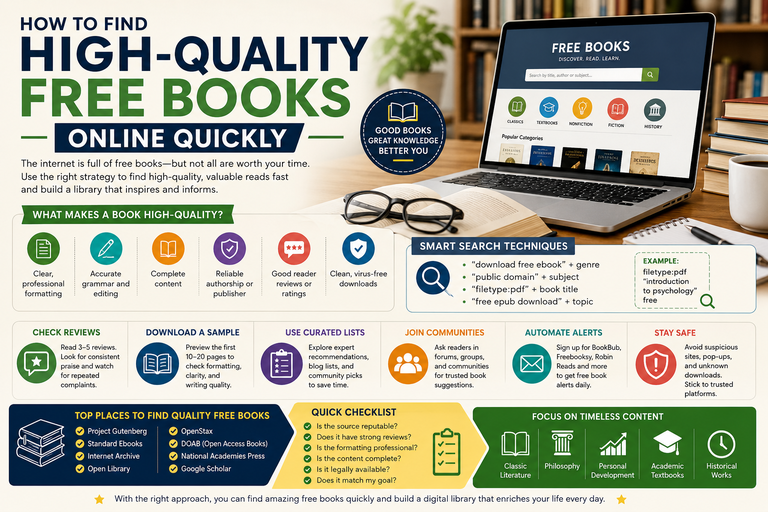
AI systems can hallucinate or oversimplify. Learners must develop verification habits:
-
Cross-checking sources
-
Testing claims
-
Consulting primary materials
-
Comparing explanations
AI literacy knowing how to prompt, verify, and collaborate will become a foundational skill comparable to internet literacy.
4) Credentials After Degrees: How Proof of Learning Will Work
Free learning alone is insufficient. Careers require credible proof.
Portfolios as Primary Currency
In many industries, portfolios already outweigh degrees:
-
Software: repositories, deployed apps, technical documentation
-
Design: case studies and prototypes
-
Marketing: campaigns and analytics dashboards
-
Writing: published articles and research
-
Data: reproducible analyses and visualizations
Portfolios are inherently borderless.
Skills-Based Hiring
Employers increasingly use:
-
Work-sample tests
-
Project-based interviews
-
Apprenticeship trials
As degree inflation rises in cost, companies have incentive to hire based on capability rather than pedigree.
Micro-Credentials and Independent Assessments
Short credentials are useful when they are:
-
Competency-mapped
-
Rigorously assessed
-
Issued by trusted institutions
-
Verifiable
A likely future model separates learning from certification: learn anywhere (often free), then take a standardized assessment administered independently.
5) Learning Without Borders: Global Peer Networks
Borderless education is not just about access; it is about collaboration.
Peer Learning at Scale
Communities enable:
-
Study groups
-
Accountability cohorts
-
Open-source mentorship
-
Discussion forums
Teaching others reinforces mastery. The future will formalize peer matching and structured collaboration.
Translation and Localization
True global access requires:
-
High-quality translation
-
Cultural context adaptation
-
Accessibility features
AI translation accelerates reach, but local quality control remains vital.
Global Classrooms Mirror Global Work
Project-based teams spanning time zones resemble modern remote workplaces. Education increasingly mirrors professional reality.
6) What Happens to Universities?
Universities will not disappear but their value will concentrate in areas that are difficult to replicate freely:
-
Regulated professions (medicine, law, engineering)
-
Research labs and clinical environments
-
Selective networks
-
Deep mentorship
-
Highly trusted credentials
At the same time, institutions may:
-
Offer modular certificates
-
Provide assessment-only pathways
-
Publish more open materials
-
Partner directly with employers
The future is hybrid: universities as one route among many.
7) The Hard Problems
The Digital Divide
Free learning is not truly free without:
-
Reliable internet
-
Capable devices
-
Quiet study space
-
Time
Infrastructure and community investment remain essential.
Motivation and Structure
Content abundance does not equal completion. Effective systems require:
-
Cohorts and accountability
-
Mentorship
-
Clear roadmaps
-
Emotional support
Human scaffolding matters as much as technology.
Quality Control and Trust
The open web contains brilliance and misinformation. Learners need:
-
Curated pathways
-
Transparent outcomes data
-
Alignment with recognized standards
Without trust rails, self-education risks fragmentation.
Privacy and Surveillance
AI-driven personalization depends on data. Safeguards must prevent:
-
Exploitative tracking
-
Biased evaluations
-
Opaque profiling
Ethical design and regulation are critical.
8) A 5–15 Year Roadmap
Plausible developments include:
-
Personal learning agents that track long-term goals
-
Competency passports portable skill records
-
Independent assessment marketplaces
-
Employer-linked learning pathways
-
Community campuses for devices and proctored exams
-
Global apprenticeship networks
-
Open-degree equivalents built from validated skill bundles
These systems may collectively function as alternatives to traditional degrees.
9) A Practical Framework for Borderless Self-Education
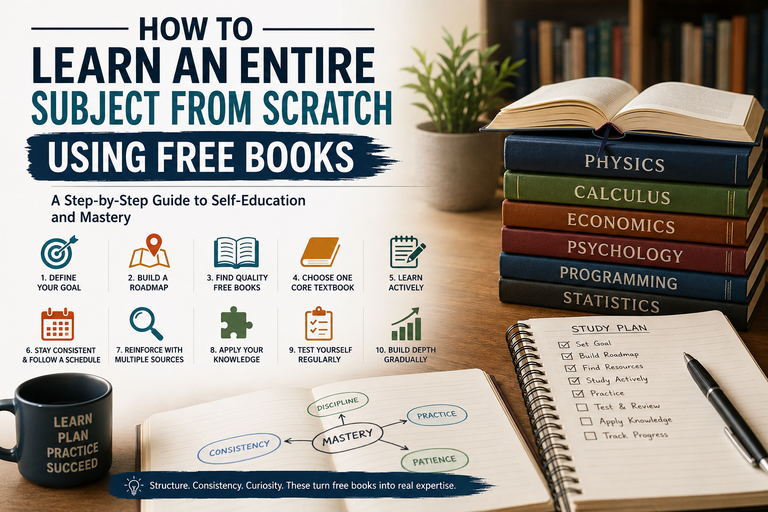
To succeed, treat self-education as a designed system.
Step 1: Define an Outcome
Examples:
-
“Junior data analyst role”
-
“Build and deploy a business website”
-
“Pass a B2 language exam”
-
“Complete 12 foundational philosophy texts”
Outcomes clarify what to ignore.
Step 2: Follow a Structured Roadmap
Include:
-
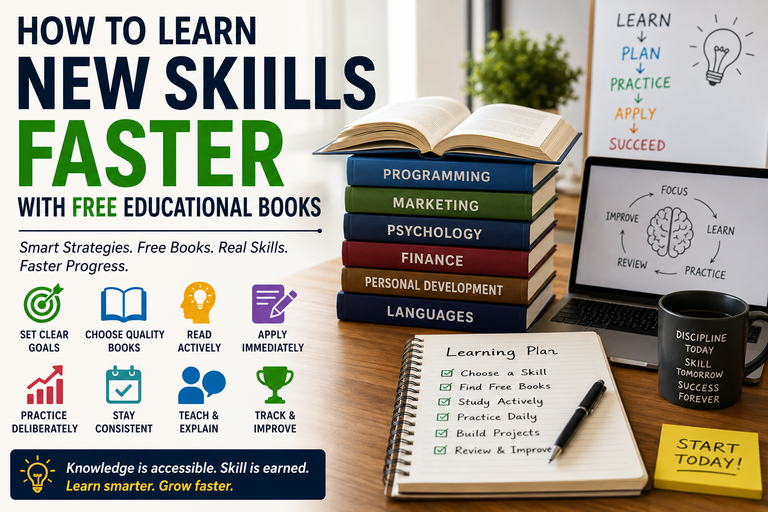
Concepts → exercises → projects → review
-
Increasing difficulty
-
Retrieval practice (self-quizzing)
Add practice if it’s missing.
Step 3: Build Proof Continuously
Publish:
-
Notes and summaries
-
Small projects
-
Case studies
-
Iterative improvements
Proof grows alongside skill.
Step 4: Seek Feedback
Use:
-
Peer communities
-
Mentors
-
Mock interviews
-
AI tools (verified)
Feedback accelerates mastery.
Step 5: Convert Skill into Credibility
Choose:
-
Portfolio aligned to job descriptions
-
Standardized credential
-
Public contributions
-
Real-world capstone project
Learning must translate into signal.
10) The Broader Impact: Education as a Public Good
If the trend holds, tuition-free, borderless self-education could:
-
Increase economic mobility
-
Accelerate workforce reskilling
-
Expand global competition
-
Diversify innovation
-
Pressure institutions to justify costs
But access alone is insufficient. Infrastructure, mentoring, trusted assessments, and community support determine whether opportunity becomes outcome.
Conclusion: Borderless Learning Needs Scaffolding
Learning without borders is no longer theoretical. The expensive components of education content delivery and basic instruction are becoming abundant. The scarce components structure, mentorship, assessment credibility, and time are the new differentiators.
As AI tutoring improves, open ecosystems expand, and skills-based hiring spreads, tuition-free self-education will become a viable path for millions. The future belongs not to platforms with the largest libraries, but to ecosystems that provide the strongest scaffolding: clear pathways, meaningful practice, credible proof, and real human support.
Learning without borders is here. The next challenge is building the support systems that make it work for everyone