
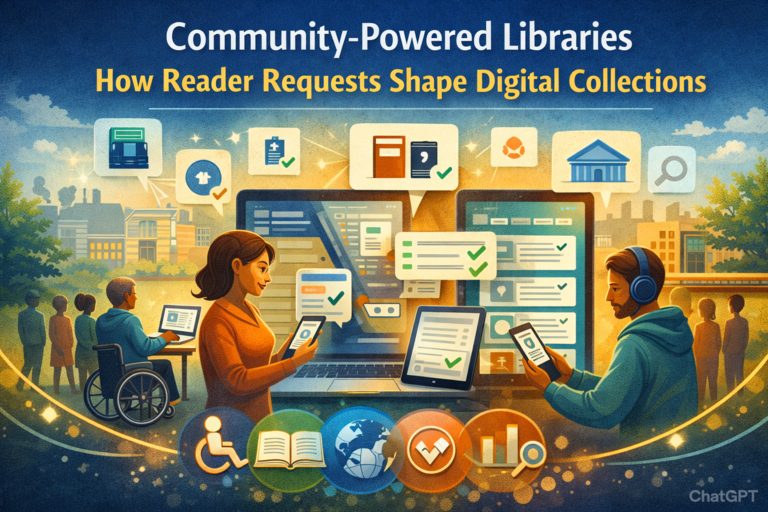
Community-Powered Libraries: How Reader Requests Shape Digital Collections
Digital libraries were once built primarily through top-down decisions: librarians selected titles based on professional reviews, publisher catalogs, and collection policies, and users discovered what was available. That model still matters especially for stewardship, quality control, and long-term preservation.
But a new approach is reshaping digital collection development: community-powered libraries, where readers actively influence what gets acquired, digitized, licensed, translated, and surfaced.
In this model, collections are curated not only for the community, but increasingly with the community. Reader requests submitted through library portals, apps, and patron-driven acquisition systems have become real-time signals that shape digital collections.
This article explores how reader requests work, why they’re transforming collection development, and what libraries must do to make community-powered digital collections sustainable, equitable, and trustworthy.
1) What Is a Community-Powered Library?
A community-powered library is a public, academic, school, or special library that systematically incorporates user input into decisions about:
-
Which ebooks, audiobooks, and databases to license
-
Which physical materials to digitize
-
Which languages and accessibility formats to prioritize
-
Which subject areas need stronger representation
-
Which resources should be promoted or made easier to find
Reader requests are the most visible component but community power extends beyond suggestion forms. It includes:
-
Advisory boards and listening sessions
-
Participatory budgeting
-
Data-informed circulation analysis
-
User tagging, reviews, and public reading lists
-
Partnerships with schools, nonprofits, and cultural institutions
In digital environments where content can be acquired quickly and demand shifts rapidly requests serve as dynamic feedback mechanisms.
2) Why Reader Requests Matter More in Digital Collections
Speed and Responsiveness
Digital materials can be licensed and added within days. If a community suddenly needs resources on job searching, immigration law, grief counseling, or a new programming language, libraries can respond far faster than in traditional print acquisition cycles.
Discoverability Gaps Create Feedback Loops
Digital abundance often hides in poor search design. A request sometimes signals not “we don’t own it,” but “we can’t find it.” These signals help libraries improve metadata, keywords, subject headings, and user interface design.
Licensing Constraints Increase the Value of Demand Signals
Unlike print, digital titles are frequently licensed with restrictions limited checkouts, expiration dates, and simultaneous-use caps. Reader requests help justify:
-
Purchasing additional licenses
-
Switching access models
-
Reallocating budget
-
Negotiating better vendor terms
Diverse and Remote Communities Become Visible
Digital platforms serve homebound patrons, multilingual communities, remote learners, and people requiring accessibility formats. Reader requests surface needs traditional engagement may overlook.
3) How Reader Requests Shape Digital Collections
A) “Suggest a Purchase” Systems
Most libraries offer request forms for:
-
Ebooks and audiobooks
-
Streaming films
-
Magazine subscriptions
-
Databases or online courses
Collection staff evaluate requests based on:
-
Community relevance
-
Budget constraints
-
Licensing terms
-
Anticipated demand
-
Duplication
-
Publication date and reviews
-
Policy requirements
Approved items are often automatically reserved for the requester, creating visible responsiveness and trust.
B) Patron-Driven Acquisition (PDA/DDA)
In Demand-Driven Acquisition models, commonly used in academic libraries:
-
A large pool of titles is made discoverable.
-
Libraries pay only after usage thresholds are met.
-
Purchases are triggered by page views, downloads, or short-term loans.
Patrons effectively “vote with use,” shaping the collection through engagement.
Tradeoff: Without guardrails, high-traffic subjects may overshadow niche but important works.
C) Holds and Waitlists as Data Signals
Long ebook and audiobook queues act as aggregate requests. Libraries monitor hold-to-copy ratios to decide whether to:
-
Purchase additional licenses
-
Upgrade to simultaneous-use access
-
Rebalance format spending
This data-driven approach reduces frustration and improves service equity.
D) Digitization-on-Demand
In archives and local history collections, reader requests often determine digitization priorities:
-
Scanning newspapers, photos, and oral histories
-
Creating searchable OCR files
-
Enhancing metadata
This ensures digitization efforts reflect community interest not solely institutional priorities.
However, digitization must still balance preservation standards, copyright, and staffing capacity.
E) Metadata and Search Improvements
Sometimes requested items already exist in the catalog but are hard to locate. Requests reveal:
-
Missing keywords
-
Outdated subject headings
-
Cultural terminology gaps
-
Language labeling issues
Improving discoverability strengthens the entire collection not just new acquisitions.
F) Program-Driven Collection Needs
Community programs generate targeted demand:
-
Spanish-language job-search guides for employment fairs
-
Autism-friendly parenting materials
-
Curriculum-aligned graphic novels
-
Works by local or Indigenous authors
Programming and collection development become integrated rather than siloed operations.
4) What Libraries Gain
More Relevant Collections
Requests reduce guesswork. Budgets stretch further when purchases reflect demonstrated need.
Stronger Community Trust
When patrons see tangible outcomes from their suggestions, the library becomes a responsive civic institution rather than a distant gatekeeper.
Improved Equity
Requests often surface overlooked needs:
-
Multilingual materials
-
Accessible formats (audio, large print, dyslexia-friendly)
-
Culturally specific resources
-
Practical information on housing, legal aid, or healthcare
A Living, Evolving Collection
Digital interests shift quickly. Community input keeps collections aligned with real-time needs.
5) Challenges and Risks
Popularity Bias
Over-reliance on requests can privilege mainstream demand at the expense of:
-
Minority languages
-
Specialized scholarship
-
Long-term cultural preservation
Balanced policies must reserve funding for foundational and underrepresented materials.
Budget Volatility
Patron-driven acquisition can trigger unexpected spending spikes.
Libraries mitigate this with:
-
Spending caps
-
Mediated purchase triggers
-
Curated title pools
Licensing Restrictions
Publishers may:
-
Withhold digital titles
-
Impose limited-loan models
-
Set high audiobook pricing
-
Enforce restrictive DRM
Libraries respond by diversifying vendors and investing in open-access alternatives.
Coordinated Manipulation
In polarized climates, coordinated campaigns may flood request systems. Clear policies and review criteria protect mission integrity.
Privacy Concerns
Usage and request data must be anonymized and minimized to protect patron confidentiality.
Staff Workload
Managing requests, negotiating licenses, and tracking data requires staffing and workflow design. Without resourcing, community-powered models risk burnout.
6) Best Practices for Sustainable Reader-Driven Collections
Make Requests Easy and Accessible
-
Multilingual forms
-
Mobile-friendly interfaces
-
Clear accessibility options
Be Transparent
Publish:
-
Selection criteria
-
Budget constraints
-
Typical timelines
-
Reasons for declines
Provide Status Updates
Automated tracking improves patron trust:
-
Received
-
Under review
-
Ordered
-
Available
Balance Demand and Stewardship
Use budget allocation models that reserve funds for:
-
Patron requests
-
Librarian-curated essentials
-
Equity and local priorities
Treat Requests as Data Intelligence
Analyze trends to identify:
-
Repeated topic gaps
-
Language needs
-
Accessibility patterns
-
Discovery problems
Build Community Partnerships
Collaborate with:
-
Schools and adult education programs
-
Cultural organizations
-
Disability advocates
-
Local historians
Partnership-driven insights often reveal systemic needs beyond individual requests.
7) The Future of Community-Powered Digital Libraries
Reader requests are redefining libraries as adaptive knowledge services.
Emerging possibilities include:
-
Participatory governance in collection priorities
-
Increased investment in open-access materials
-
Stronger emphasis on local authors and community archives
-
Smarter recommendation systems informed by ethical analytics
The strongest model will likely remain hybrid: professional expertise ensuring quality, preservation, and equity combined with community signals ensuring relevance.
Conclusion
Community-powered libraries transform collection development from a one-way process into an ongoing conversation. Reader requests shape digital collections by guiding acquisitions, triggering demand-driven purchases, prioritizing digitization, improving metadata, and revealing overlooked needs.
When managed thoughtfully with transparency, privacy protections, and equity safeguards reader-driven models make digital libraries more responsive, inclusive, and aligned with the communities they serve.
In a digital age defined by rapid change, the libraries that thrive will be those that listen and adapt.