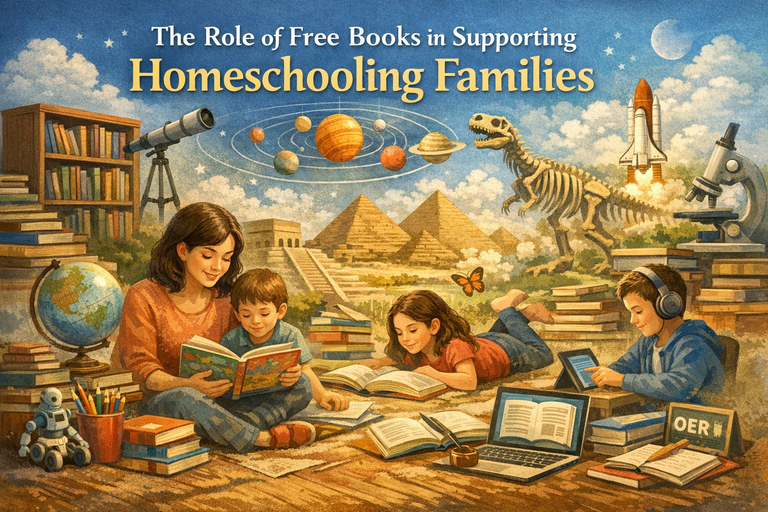
The Role of Free Books in Supporting Homeschooling Families
Homeschooling offers flexibility, individualized pacing, and the freedom to shape education around a child’s interests, strengths, and needs. Families can design schedules that fit their lifestyle, adjust lessons when concepts need reinforcement, and explore topics in depth without the pressure of standardized timelines.
However, homeschooling also shifts a major responsibility onto parents and caregivers: selecting, organizing, and often financing learning materials. Curriculum packages, textbooks, manipulatives, literature sets, science kits, and supplemental readers can quickly become expensive—especially for families homeschooling multiple children, supporting special learning needs, or relying on a single income.
Free books—both print and digital—play a vital role in making homeschooling more affordable, equitable, and often more effective. When used strategically, they help families build rich home libraries, diversify instruction, encourage independent reading, and strengthen subject mastery without constant financial strain. For many households, free books are not just supplements—they are foundational tools.
1) Why Free Books Matter in Homeschooling
Reducing the Financial Barrier
While homeschooling can be cost-effective compared to private schooling, expenses accumulate quickly. Families may face costs such as:
-
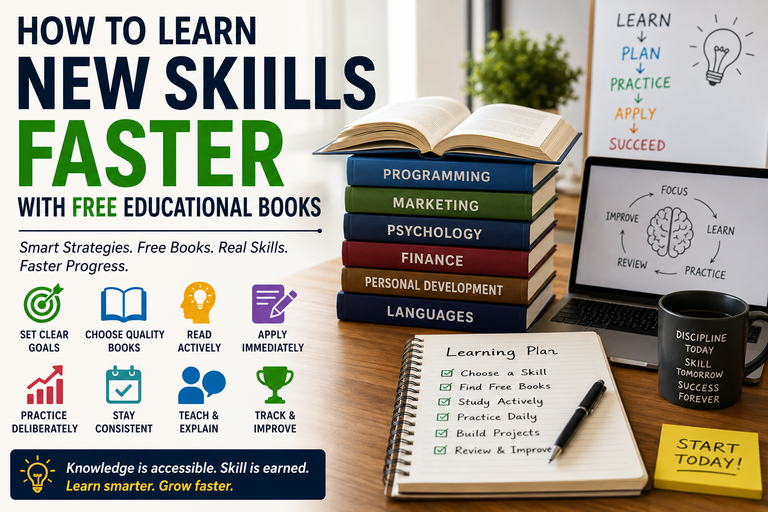
Core curriculum packages
-
Leveled readers
-
Workbooks and teacher guides
-
Science lab supplies
-
History texts and literature sets
-
Enrichment materials
Free books help families:
-
Allocate funds to essential supplies and extracurricular activities
-
Avoid choosing between affordability and quality
-
Offer a wide range of reading materials without repeated purchases
-
Replace or supplement expensive boxed curricula
For families navigating economic uncertainty, free books provide stability. Education can continue—even when budgets tighten.
Expanding Educational Opportunity
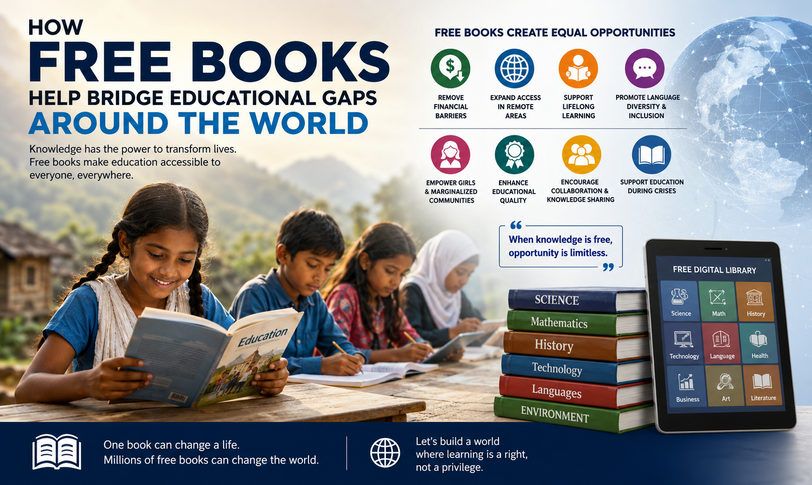
Not every family lives near well-stocked bookstores or homeschool co-ops. Rural, remote, and underserved communities often face limited access to diverse materials. Free books—especially through public libraries and legitimate digital platforms—bridge this gap.
They allow:
-
First-time homeschoolers to experiment before committing financially
-
Children to explore subjects beyond a single curriculum’s scope
-
Families to access materials they might not otherwise afford
-
Broader representation in reading choices
Access transforms possibility. When cost is removed, curiosity expands.
Supporting Lifelong Reading Habits
Homeschooling thrives when reading is frequent and joyful rather than transactional. When books are free and plentiful, children can:
-
Explore topics without pressure to “justify the purchase”
-
Abandon books that don’t resonate
-
Take risks on new genres
-
Develop autonomy by selecting their own reading
The absence of financial pressure often leads to more authentic reading habits—and more authentic learning.
2) How Free Books Strengthen the Core of Homeschool Learning
A. Building a Literature-Rich Curriculum
Many homeschool philosophies rely heavily on books. Approaches such as classical education, Charlotte Mason, unit studies, and even unschooling emphasize living texts over dry summaries.
Free books support:
-
Daily read-aloud routines
-
Independent reading time
-
Narration and copywork exercises
-
Literature discussions
-
Exposure to classics and myths
Public-domain works and library collections can fulfill substantial portions of literature requirements, especially in middle and high school. Classic novels, speeches, poetry, and historical documents are often freely available and academically rigorous.
B. Teaching Subjects Through Context
Free books allow families to teach subjects beyond workbook exercises.
For example:
-
Biographies bring history and character education to life.
-
Nature guides turn science into observation and exploration.
-
Math storybooks introduce concepts visually and narratively.
-
Primary source documents deepen civics education.
-
Art and music appreciation books enrich creative learning.
Children often understand ideas more deeply when concepts appear in context rather than isolated practice drills.
C. Enabling Differentiated Learning
Homeschooling frequently involves multiple grade levels or uneven skill development across subjects. Free books make differentiation easier.
Families can:
-
Provide simpler texts on complex topics
-
Offer advanced reading for gifted learners
-
Present multiple explanations of challenging concepts
-
Match reading level without limiting intellectual curiosity
For instance, one child may benefit from a visual story-based explanation of fractions, while another prefers formal mathematical proofs. Free access allows both approaches simultaneously.
3) Free Books as Tools for Customization and Child-Led Learning
One of homeschooling’s greatest strengths is adaptability. Free books allow families to respond immediately when interests shift.
If a child becomes fascinated by:
-
Space exploration
-
Ancient civilizations
-
Marine biology
-
Coding
-
Insects
-
Architecture
Parents can quickly assemble a topic “stack” of library books or public-domain texts without financial risk.
This supports:
-
Project-based learning
-
Cross-disciplinary unit studies
-
Motivation-driven reading
-
Deep dives into emerging passions
Removing cost reduces the fear of “wasted investment” when interests evolve.
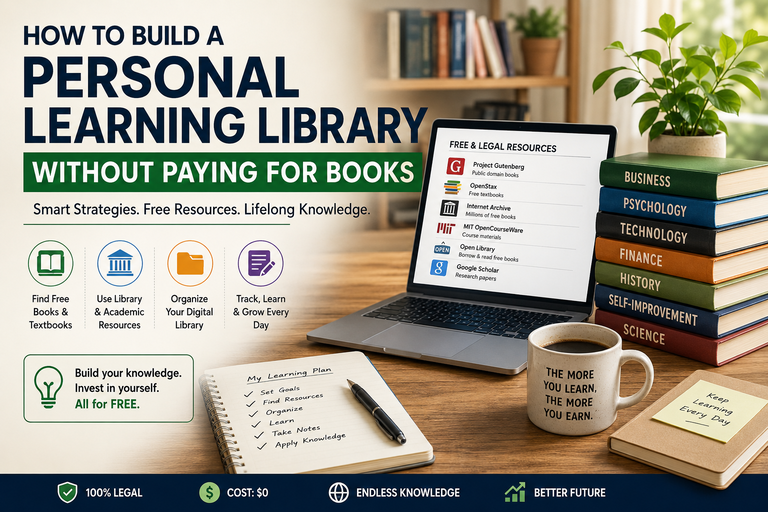
4) Key Sources of Legitimate Free Books for Homeschoolers
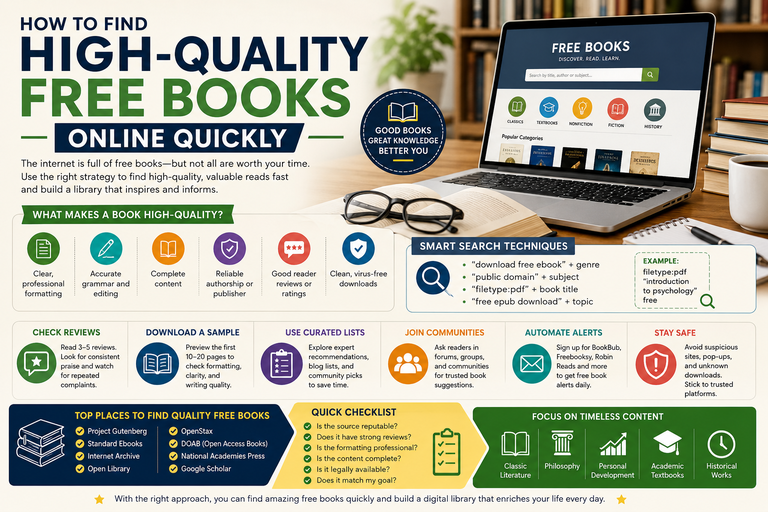
A. Public Libraries (Physical and Digital)
Libraries are often the most powerful homeschool resource available.
They provide:
-
Children’s literature and nonfiction
-
Reference materials
-
Audiobooks
-
Ebooks (availability varies by region)
-
Research databases
Many libraries also host:
-
Homeschool days
-
STEM workshops
-
Reading challenges
-
Book clubs
Regular library visits create both structure and inspiration.
B. Public-Domain Libraries
Public-domain collections offer works whose copyrights have expired. These are especially useful for:
-
Classic novels
-
Poetry
-
Historical speeches
-
Foundational philosophy and science texts
They are ideal for literature-heavy homeschooling but should be balanced with modern perspectives for social and historical context.
C. Open Educational Resources (OER)
OER materials are openly licensed educational materials that may include:
-
Full textbooks
-
Workbooks
-
Teacher guides
-
Structured courses
They are particularly useful for systematic subjects like math, science, and economics—especially at the middle and high school levels.
D. Publisher and Author Free Offerings
Reputable publishers sometimes provide:
-
Free sample chapters
-
Short stories or novellas
-
Seasonal learning packs
-
Printable readers
These materials help families explore new authors and supplement existing plans.
E. Community Sharing (Within Legal Boundaries)
Homeschool communities often exchange:
-
Book recommendations
-
Library strategies
-
Locations of free little libraries
-
Public-domain resources
Families should avoid pirated PDFs or unauthorized copies of copyrighted textbooks. Legal access protects authors and ensures quality.
5) Practical Ways Homeschool Families Use Free Books
Daily Read-Alouds
Consistent read-aloud time supports:
-
Vocabulary growth
-
Listening comprehension
-
Family discussion
-
Cross-age engagement
Research and Writing Practice
Free nonfiction texts provide excellent material for:
-
Essays
-
Narrations
-
Summaries
-
Book reports
-
Project presentations
In upper grades, this strengthens academic writing and research skills.
Thematic Unit Studies
Families often build deep thematic units using:
-
One “spine” book
-
Supplementary picture books
-
Biographies
-
Reference texts
-
Historical fiction
This layered approach promotes richer understanding without purchasing boxed curriculum.
Supporting Reluctant Readers
Because cost pressure is removed, families can experiment with:
-
Graphic novels
-
Humor
-
High-interest/low-reading-level books
-
Audiobook and print pairings
-
Short nonfiction
The goal is reading confidence and consistency—not prestige titles.
6) Accessibility and Special Learning Needs
Free books support diverse learning needs when chosen strategically.
Options include:
-
Audiobooks for dyslexia or attention challenges
-
Large print and adjustable fonts for visual strain
-
Decodable readers for phonics instruction
-
High-interest materials for motivation
-
Bilingual books for multilingual households
For students requiring highly structured instruction, free books often function best as supplements to a systematic core program.
7) Challenges—and Solutions
Inconsistent Availability
Library holds can delay plans.
Solutions:
-
Place holds early
-
Rotate multiple books on the same topic
-
Keep public-domain backups
Gaps in Structure
Subjects like math and grammar require sequence.
Solutions:
-
Pair enrichment books with structured OER curricula
-
Create a simple scope-and-sequence checklist
-
Use free materials to reinforce rather than replace progression
Quality Variability
Not all free resources are reliable.
Solutions:
-
Prioritize reputable sources
-
Preview before assigning
-
Cross-check factual information
Screen Fatigue
Digital reading can cause strain.
Solutions:
-
Balance print and digital
-
Use dedicated e-readers instead of phones
-
Print limited OER materials when permitted
8) Curating Free Books Into a Coherent Plan
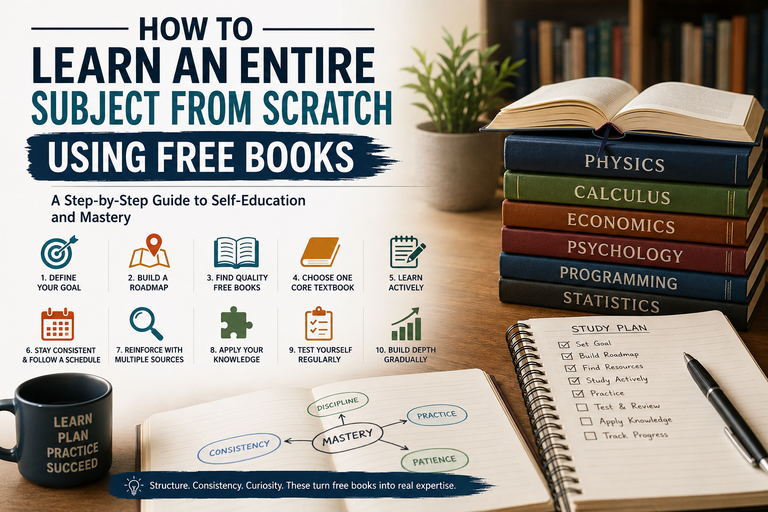
Many successful homeschool families follow this method:
-
Start with goals – Define skills and knowledge targets.
-
Choose core “spines” – Establish structure.
-
Add branch books – Enrich and diversify learning.
-
Track usage – Maintain a reading log.
-
Build routines – Daily reading time, weekly library visits, monthly themes.
Consistency often matters more than complexity.
9) The Bigger Impact: Culture and Community
Free books do more than reduce costs—they shape the learning environment.
A home filled with accessible books encourages:
-
Curiosity
-
Self-directed exploration
-
Intergenerational discussion
-
Educational resilience
For homeschooling families, this culture of learning becomes the foundation of academic and personal growth.
Conclusion
Free books are a cornerstone resource for homeschooling families. They reduce financial pressure, broaden educational access, enrich subject instruction, support diverse learning needs, and foster a vibrant reading culture at home.
The most effective approach is strategic: combine free books with structured goals, balance enrichment with sequence where necessary, and curate a flexible home library that evolves alongside your child.
Over time, free books become more than a budget solution—they become a pathway to a deeply personalized, resilient, and meaningful education