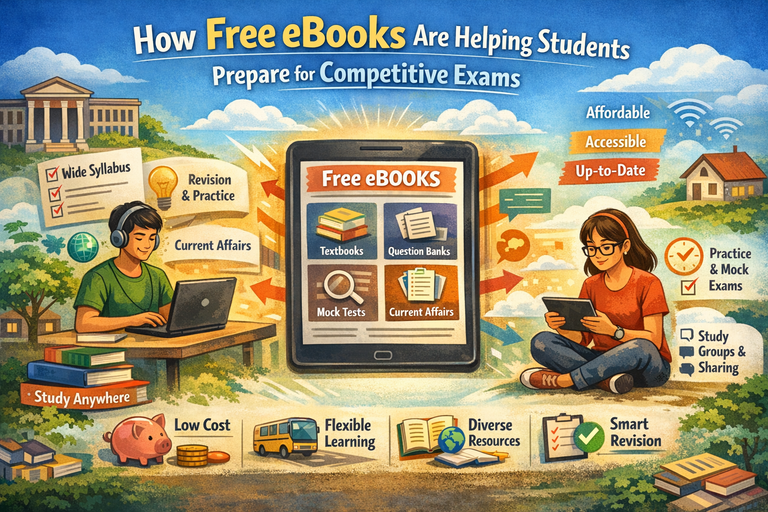
How Free eBooks Are Helping Students Prepare for Competitive Exams
Competitive exams whether for university admissions, government jobs, scholarships, or professional certifications are designed to filter candidates through rigorous assessment. They test not just knowledge, but clarity of concepts, speed, analytical ability, and consistency under pressure. For many students, the greatest obstacle is not a lack of ambition or intelligence—it is limited access to quality study materials.
In recent years, free eBooks have emerged as a powerful equalizer. Through open educational resources, public-domain works, official PDFs, digital libraries, and nonprofit initiatives, students now have unprecedented access to learning materials. What once required expensive textbooks and coaching modules can now be accessed through a smartphone or laptop.
This article explores why free eBooks matter, how they support exam preparation, where students find them, and how to use them strategically for maximum impact.
1) The High Stakes and High Costs of Competitive Exams
Preparing for competitive exams typically involves:
-
Wide syllabus coverage across multiple subjects
-
Repeated revision and structured note-making
-
Large volumes of practice questions
-
Exposure to multiple explanations to master difficult topics
-
Up-to-date content, especially for current affairs and evolving policies
Traditional preparation can be costly. Printed textbooks, coaching materials, test series, and supplementary guides quickly accumulate expenses. For students in low-income households or remote areas, access to bookstores and coaching centers may be limited or nonexistent.
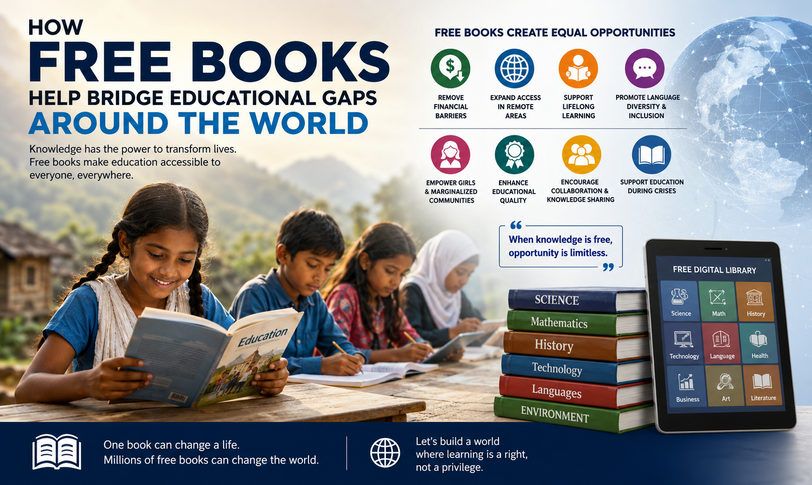
Free eBooks significantly reduce these barriers by placing essential learning resources directly on digital devices making preparation more accessible and affordable.
2) Improving Access and Educational Equity
A. Removing the Financial Barrier
The most immediate advantage of free eBooks is cost elimination. Students can:
-
Begin preparation earlier without waiting to purchase books
-
Explore multiple resources before investing in paid materials
-
Allocate limited funds to exam fees, internet access, or mock tests
This financial flexibility is especially crucial for aspirants preparing for multiple attempts over several years.
B. Supporting Students in Remote or Underserved Areas
In many regions, quality educational resources are unevenly distributed. Free eBooks allow students to:
-
Study standard materials regardless of location
-
Download content for offline access
-
Bridge infrastructure gaps
Digital resources reduce dependency on physical availability.
C. Empowering First-Generation Learners
Students without academic guidance often need clearer explanations and varied teaching styles. Free eBooks provide:
-
Introductory texts for foundational understanding
-
Solved examples for step-by-step clarity
-
Simplified guides that break down complex ideas
Access to multiple explanations builds confidence and strengthens conceptual understanding.
3) Expanding Breadth: More Material, More Perspectives
Competitive exams reward deep understanding not just memorization. Free eBooks expand learning possibilities through:
-
Standard textbooks for strong fundamentals
-
Topic-specific revision notes
-
Previous-year question papers
-
Advanced subject deep-dives for optional or high-scoring sections
For example, a candidate preparing for quantitative aptitude can compare solution methods across authors. Similarly, aspirants for essay-based exams benefit from reading free collections of editorials, essays, and classic literature to improve vocabulary and analytical reasoning.
Exposure to varied perspectives strengthens adaptability an essential exam skill.
4) Portability: A Library in Your Pocket
Digital resources bring unmatched convenience:
-
Study during commutes or short breaks
-
Carry hundreds of books without physical burden
-
Switch instantly between subjects
This flexibility is particularly beneficial for working professionals preparing alongside full-time jobs. Time windows may be irregular but digital access ensures no moment is wasted.
5) Smarter Revision Through Digital Features
Free eBooks offer practical tools that enhance exam performance:
-
Search functions to quickly locate definitions or formulas
-
Highlighting and bookmarking for focused revision
-
In-book notes for mnemonics and clarifications
-
Extracting key excerpts (when permitted) for personal revision sheets
For exams with extensive syllabi, these features save time and streamline repeated revision cycles.
6) Faster Updates for Dynamic Syllabi
Many competitive exams evolve over time. Patterns shift. New sections are introduced. Policies change.
Digital resources often respond faster than printed books by offering:
-
Monthly current affairs compilations
-
Updated syllabus summaries
-
Trend-aligned practice questions
While caution is needed to verify accuracy, credible open platforms and reputable publishers update digital editions more quickly than traditional print cycles.
7) Practice-Driven Learning: Question Banks and Mock Sets
Reading alone is insufficient. Practice is essential.
Free eBooks frequently include:
-
Topic-wise practice sets
-
Detailed solved examples
-
Shortcut techniques for aptitude
-
Previous-year question papers
-
Sectional mock tests in PDF format
Students can simulate exam conditions, identify weak areas, and track improvement all without purchasing multiple printed workbooks.
Practice transforms passive reading into measurable progress.
8) Accessibility for Diverse Learners
Digital reading platforms enhance inclusivity through:
-
Adjustable fonts and line spacing
-
Dark or sepia modes for eye comfort
-
Text-to-speech options for auditory learners
-
Built-in dictionary and translation tools
These features support students with visual challenges, reading difficulties, or limited proficiency in the exam language making exam preparation more inclusive.
9) Community and Peer Learning
Free eBooks are often shared within study groups, forums, and peer networks. This collaborative ecosystem enables:
-
Collective identification of the best resources
-
Shared notes and summaries
-
Faster doubt resolution
-
Accountability partnerships
When used legally and responsibly, shared learning environments increase motivation and reduce isolation.
10) Common Challenges and How to Overcome Them
While powerful, free resources must be used wisely.
A. Variable Quality
Not all free materials are reliable. Some may contain errors or outdated content.
Solution:
-
Prefer official or reputed sources
-
Cross-check with standard textbooks
-
Test resources by solving sample questions
B. Copyright Concerns
Some “free” PDFs are unauthorized copies.
Solution:
-
Use open-licensed, public-domain, or library-provided resources
-
Avoid pirated content
C. Information Overload
Too many resources can lead to collecting instead of studying.
Solution:
-
Limit to one core text + one practice source per subject
-
Follow the syllabus strictly
-
Set weekly completion goals
D. Screen Fatigue and Distractions
Studying on phones may cause eye strain and interruptions.
Solution:
-
Use focus modes and reading apps
-
Study in structured time blocks
-
Print essential summaries if possible
E. The Digital Divide
Not all students have stable internet or devices.
Solution:
-
Download materials for offline access
-
Use community libraries and shared devices
-
Explore government digital library initiatives
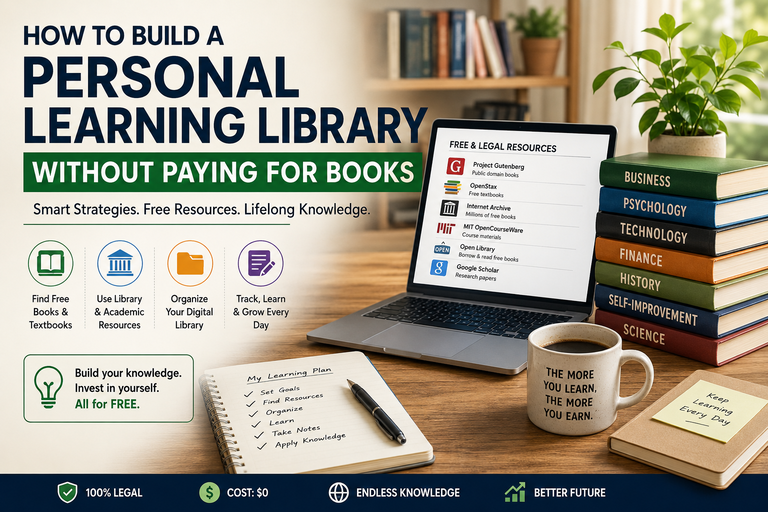
11) Where Students Find Legitimate Free eBooks
Common sources include:
-
National and university digital libraries
-
Open Educational Resource (OER) platforms
-
Public-domain archives
-
Government portals for reports and manuals
-
Publisher-provided free editions or sample chapters
-
Nonprofit education initiatives
A key principle: always verify licensing and source credibility.
12) A Practical Strategy for Using Free eBooks Effectively
Free access alone does not guarantee success. Strategic use does.
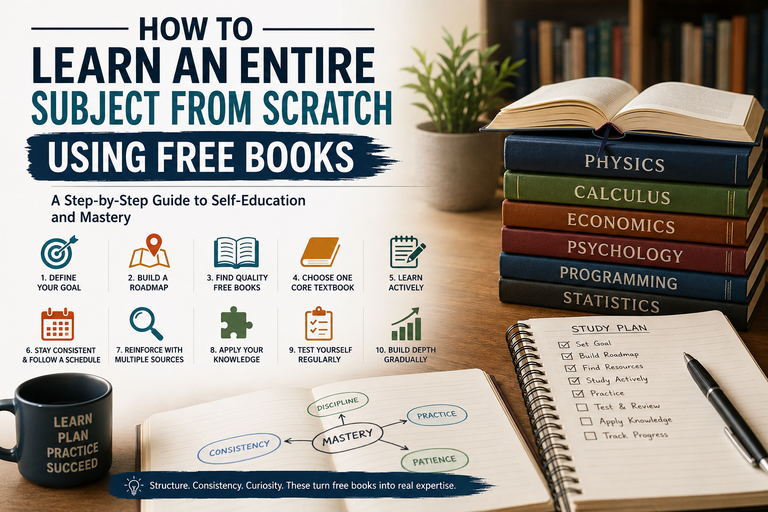
Step 1: Start With the Syllabus and Past Papers
Understand weightage and patterns before selecting resources.
Step 2: Choose a Core Resource Set
For each subject:
-
One foundational text
-
One practice-oriented source
-
One concise revision guide
Step 3: Create Consolidated Digital Notes
Maintain a master file of formulas, mistakes, and key facts.
Step 4: Practice Active Recall
Close the book. Solve questions. Revisit weak areas.
Step 5: Track Progress
Use checklists and mock scores to measure improvement.
Discipline transforms free material into competitive advantage.
Conclusion
Free eBooks are reshaping competitive exam preparation by lowering financial barriers, expanding access, and enabling flexible, practice-driven learning. They empower self-learners, support students in remote regions, and reduce dependence on expensive coaching ecosystems.
However, their true power lies not merely in being free but in being used strategically. When students select credible sources, limit overload, align strictly with the syllabus, and combine reading with consistent practice, free eBooks become more than digital files.
They become tools of opportunity.
In an environment where exams determine educational and professional futures, access to knowledge should not be restricted by income or geography. Free eBooks are helping ensure that preparation and possibility are within reach for more students than ever before