
What Students Read When No One Is Watching: A Look at Private Learning Choices
Public reading is what students can explain in a sentence: the assigned novel, the exam textbook, the “best books everyone recommends,” the impressive title carried across campus or mentioned on LinkedIn. It is reading with an audience teachers, peers, parents, algorithms, future employers. Public reading is visible, legible, and defensible.
Private reading happens after the door closes and the stakes drop. No grades. No optics. No need to justify the choice. Just a person and a question, an itch, a mood, a fear, a fascination. This is the reading that reveals what learners actually want from learning comfort, control, competence, escape, identity, power, novelty, belonging.
Education discourse rarely talks about this kind of reading because it is hard to measure and easy to moralize. It doesn’t fit neatly into syllabi, dashboards, or outcomes frameworks. Yet for self-learners and for anyone who reads to build a life rather than a transcript private reading is the real curriculum.
This article explores what students choose when no one is watching, why these choices make deep psychological sense, and what private reading reveals about how learning actually works when it is self-driven.
1) The “shadow curriculum” is where motivation lives
Formal education depends on legibility. Assigned reading must align with standards, learning objectives, and assessments. It must be explainable to institutions and evaluators.
Private reading follows a different logic. It is not designed to be legible it is designed to be useful to the reader right now, even when that usefulness is emotional rather than academic.
Think of private reading as a shadow curriculum with its own rules:
-
It is self-assigned, not imposed.
-
It is problem-shaped (help me solve this, understand this, fix this).
-
It is mood-shaped (steady me, energize me, distract me, ground me).
-
It is identity-shaped (help me become someone).
That last point matters more than it seems. When learners are free to choose, they don’t just consume information they rehearse identities. They test out versions of themselves: the competent adult, the curious thinker, the creative mind, the person who understands how the world really works.
Private reading is often less about “What should I know?” and more about “Who am I trying to become?”
2) What students actually read in private (and what it’s for)
Private reading is not one thing. It clusters around a few recurring motives. The same student may move between these modes depending on stress levels, life transitions, and personal goals.
Reading to repair: “I need relief, not enrichment”
When academic or life pressure is high, many students read to regulate emotion rather than accumulate knowledge. This often includes:
-
Familiar genres and comfort rereads
-
Romance, cozy mystery, light fantasy
-
Humor, comics, short personal essays
-
Episodic, low-friction content
From the outside, this can look unserious or escapist. From the inside, it is highly functional. This reading lowers emotional arousal, restores attention, and provides psychological safety. A learner who can emotionally reset is far more capable of returning to demanding intellectual work later.
This is why people form deep attachments to so-called “junk” genres. The bond is not about prestige or literary merit it is about reliability of effect.
Reading to control: “Teach me what school won’t”
Another powerful driver of private learning is the desire for control. Students often read privately about:
-
Personal finance, budgeting, investing basics
-
Nutrition, strength training, sleep, anxiety management
-
Productivity systems to reduce life chaos
-
Practical law: tenancy, employment rights, contracts
-
How systems work: economics, politics, negotiation, propaganda
This reading is rarely abstract curiosity. It is often a response to vulnerability. Understanding systems reduces the feeling of being at their mercy. Knowledge becomes armor.
For many students, this is the first time learning feels immediately empowering rather than merely evaluative.
Reading to belong: “Give me a language for my people”
Outside formal curricula, students frequently read to find a tribe. This includes:
-
Fandoms, web serials, shared narrative universes
-
Subculture histories (music scenes, gaming, fashion, internet cultures)
-
Community-specific memoirs and essays
-
Niche newsletters, forums, long threads, commentaries
This reading is social even when done alone. It teaches codes: what to care about, what to notice, how to speak. It is how many learners discover their first genuine intellectual home.
Belonging is a powerful motivator. Once students feel “at home” in a discourse, deeper learning often follows naturally.
Reading to try on identities: “Let me practice being someone”
Private reading often functions as a low-risk identity lab. Students explore:
-
Introductory philosophy (stoicism, existentialism, Buddhism)
-
Biographies of people they admire or want to emulate
-
“How to think” books: logic, rhetoric, writing craft
-
Career-adjacent reading before commitment medicine memoirs, engineering blogs, design theory
The key feature here is low commitment. Private reading allows experimentation without announcements, applications, or social consequences. A student can imagine a future self quietly before making anything official.
Reading to solve immediate problems: “I don’t need a course; I need an answer”
A large portion of modern private reading is just-in-time learning:
-
Troubleshooting guides and manuals
-
Documentation and FAQs
-
Q&A platforms and wiki rabbit holes
-
Short explainers, diagrams, cheat sheets
-
Practical books on coding, Excel, cooking, home repair, language basics
This reading is not linear. It is surgical. Learners dip in, extract what they need, apply it, and return when necessary. This mode is remarkably effective because it closes the loop between reading and doing.
Reading the “forbidden” shelf: “I want to know what I’m not supposed to”
When no one is watching, students sometimes read what they cannot safely ask about:
-
Sex education beyond sanitized curricula
-
Religious doubt, deconversion, taboo philosophy
-
Lived mental health experiences
-
Political ideas outside their environment’s acceptable range
This is not always rebellion. Often it is a search for coherence: I feel something; I need language for it. Private reading becomes a laboratory for questions that would be socially expensive to voice.
3) Why private choices differ from public recommendations
Public reading recommendations carry hidden constraints: sound intelligent, appear respectable, align with institutional values, be defensible.
Private reading follows different psychological rules.
Autonomy changes attention
When learners choose freely, attention deepens. Reading is no longer split between comprehension and performance. Even light material can produce deep engagement when it is self-chosen.
Social risk disappears
Many students avoid certain books not because they lack interest, but because they fear judgment. Remove the audience, and entire categories open up fanfiction, stigmatized genres, controversial histories, vulnerable memoirs.
Learners optimize for felt value, not official value
Official value is what institutions reward. Felt value is what actually helps a person emotionally, practically, existentially. Felt value usually wins because it meets immediate needs.
4) Private reading is not “less serious” it often trains core learning muscles
Private reading can look chaotic: scattered topics, strange formats, guilty pleasures, obscure authors. Yet it often builds the capacities formal education depends on:
-
Self-direction
-
Tolerance for ambiguity
-
Pattern recognition across domains
-
Taste formation
-
Metacognition
-
Persistence driven by care, not compliance
In many cases, private reading is where students learn how to learn because no one is telling them what to do next.
5) The formats students choose reveal what they’re optimizing for
When no one is watching, students change formats strategically:
-
Short-form content for orientation and quick insight
-
Genre fiction and serials for emotional regulation and sustained attention
-
Narrative nonfiction for concept learning through story
-
Manuals and documentation for immediate competence
-
Old or public-domain books for depth and fewer trend cycles
-
Random PDFs for opportunistic learning
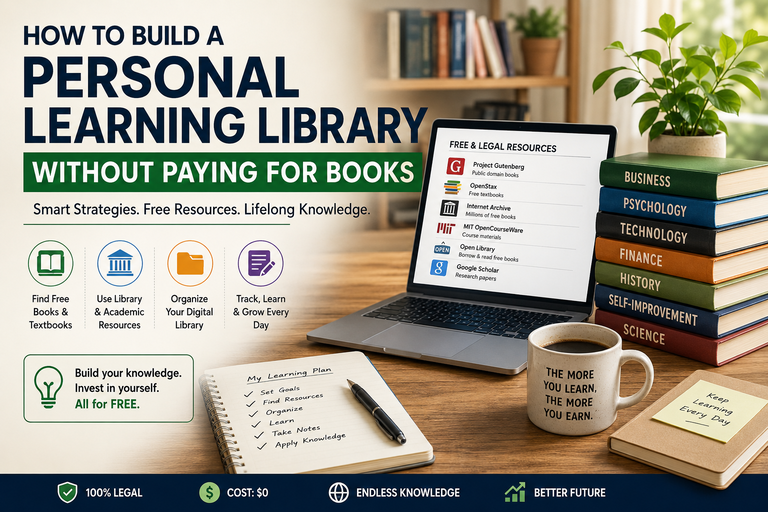
Private learning is often constrained by friction cost, access, time, fatigue, and shame. The chosen format minimizes friction so learning can actually happen. This is where free books and open libraries matter most.
6) What educators miss and what self-learners already know
Education systems focus on compliance metrics: pages read, quizzes passed, grades earned. Private reading operates on different metrics:
-
Did I feel less alone?
-
Can I do the thing now?
-
Did something click?
-
Do I have better questions?
-
Did this change how I see myself?
These are not anti-intellectual measures. They are often more honest about why knowledge matters.
7) How to use private reading to become a stronger learner (without turning it into homework)
The goal is not to optimize private reading into another performance. It is to notice its intelligence.
-
Notice repeat patterns. Comfort, control, escape, ambition these reveal needs.
-
Track stopping points. Boredom, confusion, shame, fatigue all suggest different adjustments.
-
Build two shelves:
-
Shelter books (restore you)
-
Stretch books (grow you)
-
-
Let weird interests lead. Niche fascinations often become gateways to expertise.
No study plan required just attention.
Conclusion: Private reading is the most honest form of education
When no one is watching, students do not simply read easier books. They read truer ones true to their fears, questions, ambitions, secret tastes, and need for competence and relief.
Private reading does not compete with formal education. It supplies what formal systems often cannot: autonomy, intimacy, and a direct link between knowledge and lived experience.
If you want to understand how learners really learn, don’t ask what they were assigned. Ask what they read in the dark on their phones, in library corners, in borrowed PDFs, in genres they never brag about.
That is where the real curriculum lives