The Invisible Curriculum: What Students Learn Outside Classrooms Using Free Books
Education is often defined by what is visible: syllabi, lectures, assignments, grades, and credentials. These formal structures are planned, scheduled, and measurable. Yet, much of what shapes a student’s development happens outside these boundaries. Students navigate an invisible curriculum a set of lessons learned privately, away from evaluation, social pressure, and the constraints of timetables.
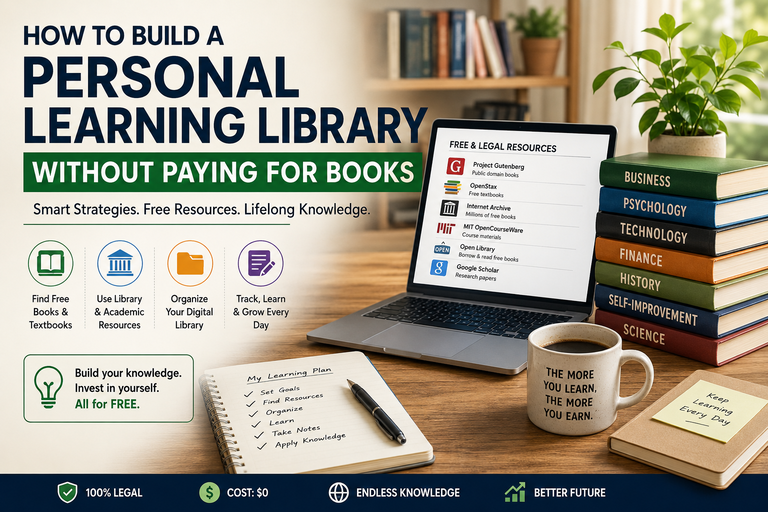
This hidden learning often determines who students become, influencing how they manage stress, solve problems, communicate, build skills, and make life choices. One of the most powerful tools of this invisible curriculum is free books from public-domain classics to open-access textbooks, scanned manuals, community-published guides, and legally free online resources. These books aren’t just cheaper alternatives to paid texts; they enable learning that is timely, personal, and deeply transformative.
Life Assigns Homework That Classrooms Cannot
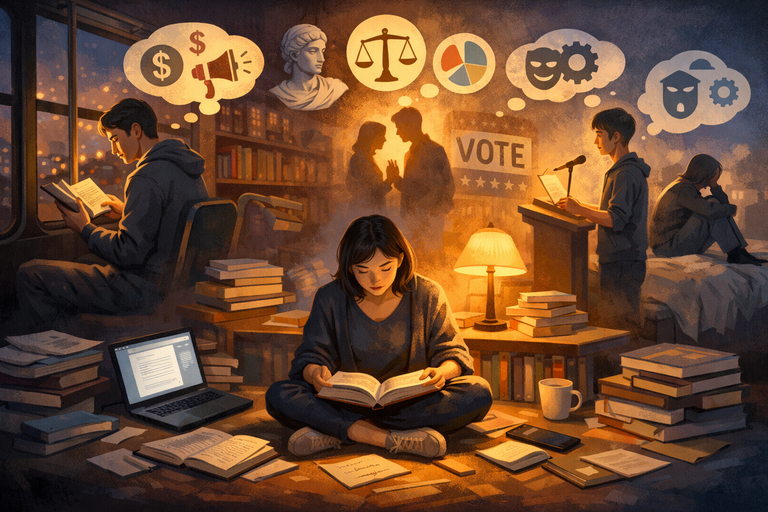
Classrooms are designed around planned outcomes, but life is messy and unpredictable. Real-world challenges arrive with urgency and emotional weight:
-
Negotiating your first paycheck.
-
Resolving roommate conflicts.
-
Managing anxiety or sleep issues.
-
Preparing a speech or presentation under pressure.
-
Understanding politics before casting your first vote.
-
Entering a new field without guidance.
These “assignments” are rarely sequenced or predictable. Students often face them alone, without a safe space to ask questions. Free books meet learners where they are, offering private, immediate guidance whether at midnight, between jobs, or in a quiet library corner.
Why Free Books Are Perfect for Learning Outside Classrooms
While many resources can teach, free books have unique advantages for self-directed learning:
-
Low-stakes exploration – Free access removes the cost of experimentation, encouraging students to sample subjects, switch topics, and follow curiosity.
-
Privacy – Students can investigate sensitive or stigmatized topics—mental health, sexuality, religion, politics—without fear of judgment.
-
Depth without permission – Books allow time to wrestle with complex ideas, fostering lasting understanding.
-
Ownership and repeat access – Saved books can be revisited whenever they become relevant, allowing learning to unfold over months or years.
-
Serendipity – Browsing free libraries often leads to accidental discoveries, sparking new intellectual interests.
What Students Learn in the Invisible Curriculum
The invisible curriculum isn’t random; it addresses real human needs that formal education often overlooks. Students often organize their private learning around several recurring motives:
1. Self-Regulation: Managing Attention, Emotion, and Stress
Many of the most urgent lessons are about functioning rather than formal knowledge. Students ask questions like:
-
Why can’t I focus even when I care?
-
How do habits form, and how can I stick to them?
-
How can I sleep, manage anxiety, or stop spiraling after failure?
Books on psychology, cognitive science, mindfulness, and mental health memoirs become informal tutors, helping students stabilize their inner lives an essential foundation for everything else.
2. Practical Literacy: Money, Work, and Adulting
Formal education may teach theory but rarely explains the practical rules of adult life:
-
Budgeting and debt management
-
Taxes and contracts
-
Workplace dynamics and boundaries
-
Negotiating pay and understanding hiring processes
Students build their own “courses” with personal finance guides, career handbooks, negotiation manuals, and industry-specific primers. Free books make this self-education possible before students have the resources to pay for it.
3. Communication Skills: Writing, Speaking, and Social Navigation
Outside classrooms, communication skills are critical:
-
Writing emails, essays, and applications clearly
-
Arguing without escalating conflicts
-
Persuading ethically
-
Handling disagreements and setting boundaries
-
Speaking publicly without freezing
Books serve as rehearsal partners, letting students revisit techniques repeatedly before applying them in real life.
4. Identity and Worldview: Philosophy, Religion, Politics, Meaning
Much of the invisible curriculum addresses existential questions:
-
Philosophy: ethics, purpose, and how to live
-
Religious texts and commentary: faith, doubt, and interpretation
-
Political theory and history: power, ideology, and social systems
-
Memoirs: seeing life through someone else’s perspective
Free books allow students to explore contradictory ideas privately, without the pressures of demonstrating certainty. This slow, personal engagement shapes their worldview over time.
5. Skill-Building: From Curiosity to Competence
Students also teach themselves concrete skills using free books:
-
Programming, data analysis, and digital tools
-
Design, music, languages, and creative arts
-
Cooking, repair, craftsmanship, and practical crafts
-
Research methods and self-study techniques
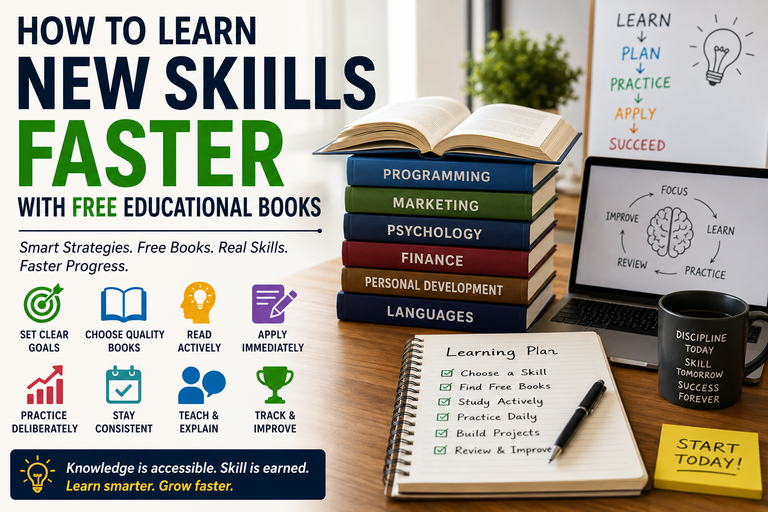
Learning here is non-linear attempt, fail, reference, retry. Free books facilitate this loop, enabling multiple explanations until the concept clicks.
6. Secret or Stigmatized Knowledge
Some of the most intense reading happens where social constraints make discussion unsafe:
-
Trauma and family dynamics
-
Sexuality, consent, and identity
-
Addiction or recovery strategies
-
Discrimination or marginalization
-
Leaving or entering belief systems
Free books provide a private, low-risk way to acquire essential language and frameworks to understand these experiences.
Why Learning Outside Classrooms Often Sticks
Invisible learning is scattered, yet it has psychological advantages:
-
Immediate relevance – Students learn what solves real problems, creating strong memory encoding.
-
Self-paced and shame-reducing – Learning privately removes performance pressure, allowing slow, messy, and repeated engagement.
-
Integration across domains – Knowledge is applied across contexts, combining psychology, finance, communication, coding, and creativity.
-
Learning identity – Students internalize the belief: “If I don’t know, I can find out.” This self-directed identity is arguably more valuable than grades.
Beyond Access: What Free-Learning Platforms Really Provide
Free books do more than solve affordability problems. They support:
-
Continuity – Learning doesn’t end with semesters.
-
Optionality – Students can switch topics or methods without penalty.
-
Privacy – Learning without observation encourages risk-taking.
-
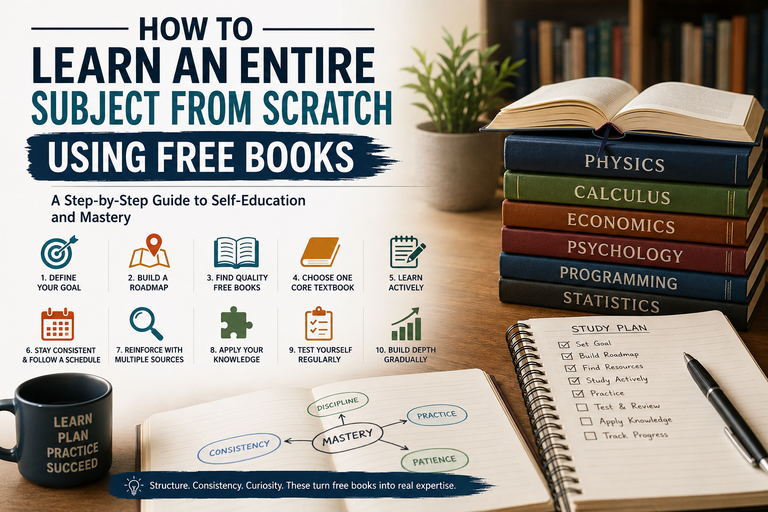
Breadth – Students can build personalized curricula.
-
Serendipity – Accidental discoveries guide new trajectories.
This ecosystem cultivates the invisible curriculum, creating conditions where self-driven learning thrives.
The Tension: Power vs. Loneliness
While invisible learning is powerful, it can also be isolating:
-
Students may not know what to read next.
-
They may misjudge difficulty and quit early.
-
They may collect knowledge without practicing it.
-
They may lack feedback and confidence.
Free-learning platforms can help without turning self-directed learning into formal school by offering:
-
Curated paths with room for detours
-
Multiple resources at different levels
-
Short introductions explaining relevance
-
Communities normalizing confusion and persistence
-
Prompts encouraging reflection, projects, and practice
Conclusion: The Most Important Education Is Often Invisible
Students are learning constantly outside classrooms. They regulate themselves, navigate complex systems, communicate under pressure, explore identity, and build skills that change their daily reality.
Free books quietly support this learning not as cheap alternatives to textbooks, but by fostering autonomy, privacy, depth, repeat access, and freedom to explore.
To understand modern students, don’t just ask what they’re assigned in class. Ask what they’re reading at midnight when no one is watching, the problem is urgent, and the only curriculum that matters is the one they create to become capable.