
Career Growth Through Free Books: Must-Read Business, Tech, and Skill-Building Titles on JunkyBooks
Career growth isn’t only about taking a new course or getting another certificate. A lot of the biggest career breakthroughs come from better thinking, sharper skills, and stronger decisions and books are one of the cheapest (often free) ways to get there.
If you’re building a future in business, tech, or any skill-based field, reading the right books at the right time can help you:
-
think like a professional (strategy, leadership, problem-solving)
-
learn in-demand tech skills (coding, data, cybersecurity, AI basics)
-
improve “career multipliers” (communication, confidence, productivity)
-
build a portfolio and real proof of skills (projects, systems, case studies)
This guide shows you how to use JunkyBooks to build a practical “career library,” plus a curated list of must-read titles and topics to search for—organized into Business, Tech, and Skill-Building paths.
How to Use JunkyBooks for Real Career Growth (Not Just Casual Reading)
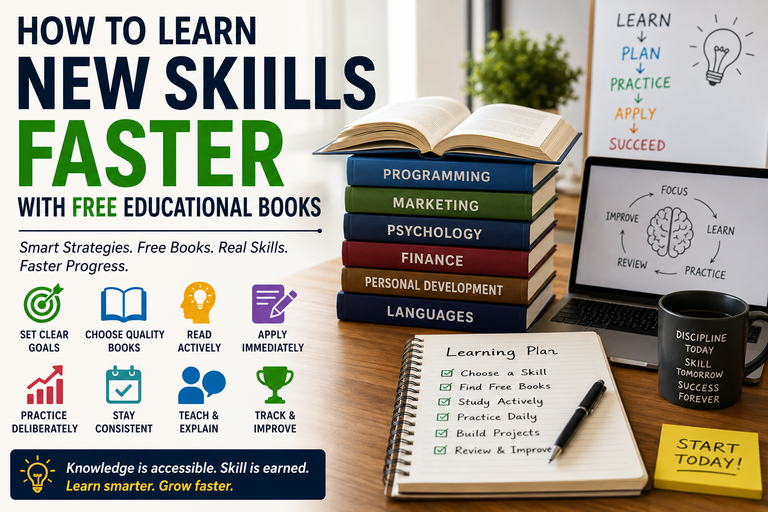
Free books only help if you turn reading into action. Here’s a simple system that works for students, job seekers, and career switchers.
1) Pick a career direction (even if you’re not 100% sure)
Choose one “main track” for the next 30 days:
-
Business track: entrepreneurship, marketing, management, finance
-
Tech track: programming, data, cloud, cybersecurity, AI
-
Skill track: communication, writing, productivity, negotiation, career planning
You can switch later. The goal is momentum.
2) Build a 3-book stack
When you search JunkyBooks, aim for:
-
One foundation book (big-picture understanding)
-
One practical playbook (step-by-step methods)
-
One execution guide (templates, projects, exercises)
3) Read with a “portfolio mindset”
After each chapter, ask:
-
What can I apply this week?
-
What can I create (a project, document, plan, script, checklist)?
-
What proof can I show on my CV/LinkedIn?
Even simple proof like a case study, GitHub repo, Notion dashboard, or mini report can boost your credibility.
4) Use JunkyBooks features strategically
Depending on what your version of JunkyBooks offers, these features can support learning:
-
Read online for quick study sessions
-
Download for offline reading and consistent habits
-
Book requests to find specific topics you need next
-
Publishing tools (if available) to share your own writing and build authority
The Business Shelf: Must-Read Titles & Topics to Search on JunkyBooks
Business books are powerful because they help you understand how money, teams, customers, and markets work—skills that are useful in any career.
A) Entrepreneurship & Startups
Search on JunkyBooks for titles and topics like:
-
The Lean Startup (build-test-learn thinking; reduce wasted effort)
-
Zero to One (unique ideas and competitive advantage)
-
The E-Myth Revisited (systems and processes, not just hustle)
-
“business model,” “startup validation,” “product-market fit,” “MVP”
Career value: helps you think like a builder—even if you’re applying for a job.
Action task: Write a one-page “mini business model” for any idea (even a small service).
B) Marketing, Sales & Growth
Marketing is basically communication + psychology + strategy.
Search topics and titles like:
-
Influence (persuasion principles)
-
This Is Marketing (positioning and trust-based marketing)
-
Traction (channels and growth experiments)
-
“copywriting,” “SEO,” “digital marketing,” “brand strategy,” “sales funnel”
Career value: marketing skills help in business roles, freelancing, content creation, and even job interviews.
Action task: Create a simple landing page outline (headline, offer, proof, CTA).
C) Leadership & Management
Even if you’re not a manager yet, leadership books teach decision-making and communication.
Search titles and topics like:
-
Leaders Eat Last (team culture and trust)
-
Good to Great (long-term excellence thinking)
-
The Five Dysfunctions of a Team (team problems and fixes)
-
“performance management,” “leadership communication,” “OKRs,” “team building”
Career value: helps you sound mature and structured in interviews and workplace discussions.
Action task: Write a “team principles” document (5 rules you’ll use if you lead a project).
D) Personal Finance & Wealth Basics
Career growth is also financial growth. Knowing money rules reduces stress and improves choices.
Search titles and topics like:
-
The Psychology of Money (behavior and financial decisions)
-
“budgeting,” “investing basics,” “financial literacy,” “wealth building,” “income streams”
Action task: Create a personal finance dashboard: income, expenses, goals, savings rate.
The Tech Shelf: Must-Read Titles & Topics to Search on JunkyBooks
Tech reading becomes powerful when it turns into projects. If you read and build at the same time, your skills grow fast.
A) Programming Foundations (Beginner to Intermediate)
Search for:
-
“Python for beginners”
-
“JavaScript fundamentals”
-
“HTML CSS responsive design”
-
“data structures and algorithms basics”
-
“software engineering principles”
Best strategy: pick one programming language and stick with it for 30 days.
Action task: Build 3 small projects:
-
a simple portfolio website
-
a calculator or to-do app
-
a small API or form project
B) Data & Analytics
Data skills apply to business, finance, marketing, and tech roles.
Search for:
-
“Excel for data analysis”
-
“SQL beginner guide”
-
“Power BI” / “Tableau”
-
“data storytelling”
-
“statistics fundamentals”
Action task: Create one dashboard (even a basic one) and write a 300-word insight summary.
C) Cybersecurity & Digital Safety
Cybersecurity knowledge is valuable even if you’re not becoming a security engineer.
Search for:
-
“cybersecurity fundamentals”
-
“networking basics”
-
“ethical hacking overview”
-
“security awareness”
-
“privacy and safety online”
Important note: Stay on the legal/ethical side—learn concepts, defenses, and best practices.
Action task: Make a personal security checklist (password manager, 2FA, backups, updates).
D) Cloud & DevOps Basics
Cloud skills show up in many tech job descriptions.
Search for:
-
“cloud computing fundamentals”
-
“AWS beginner”
-
“Linux basics”
-
“Docker basics”
-
“DevOps introduction”
-
“CI/CD basics”
Action task: Write a “cloud concepts” cheat sheet and build a tiny deployable project.
E) AI & Automation (Career-Friendly, Not Overhyped)
AI is part of almost every industry now. Learn the basics and how to apply it responsibly.
Search for:
-
“AI fundamentals”
-
“prompting for productivity”
-
“machine learning basics”
-
“automation with Python”
-
“AI in business”
Action task: Pick one real workflow you do (emails, reports, CV editing) and automate part of it.
The Skill-Building Shelf: Must-Read Titles & Topics to Search on JunkyBooks
Skill books are career multipliers—because they improve how you learn, communicate, and deliver results.
A) Communication & People Skills
These books help you interview better, work better with teams, and sell ideas.
Search titles and topics like:
-
“public speaking”
-
“business communication”
-
“conflict resolution”
-
“emotional intelligence”
-
“presentation skills”
Action task: Write a short “About Me” script (60 seconds) and practice it daily for a week.
B) Productivity & Time Management
You don’t need motivation—you need systems.
Search for:
-
“deep work”
-
“time blocking”
-
“habits”
-
“focus and discipline”
-
“productivity systems”
Action task: Create a weekly schedule that includes:
-
5 study sessions
-
2 project sessions
-
1 review session
C) Career Strategy, CVs & Interviews
Career books help you stop guessing and start positioning yourself properly.
Search for:
-
“career planning”
-
“interview preparation”
-
“job search strategy”
-
“CV writing” / “resume writing”
-
“LinkedIn optimization”
Action task: After reading, rewrite:
-
your CV summary (one strong paragraph)
-
5 achievement bullets using metrics
-
10 interview answers using STAR format
D) Freelancing & Remote Work Skills
Freelancing is a real career path, especially when jobs are competitive.
Search for:
-
“freelancing guide”
-
“remote work communication”
-
“client management”
-
“proposal writing”
-
“pricing strategies”
Action task: Create a one-page freelance offer:
-
service + price range + delivery time + what the client gets
A 30-Day Reading Plan Using JunkyBooks (Business + Tech + Skills)
If you want a structured plan that doesn’t overwhelm you:
Week 1: Foundations
-
30–45 minutes/day
-
Pick one foundation book in your main track
-
Create a notes document: “What I learned → What I’ll apply”
Week 2: Practical Tools
-
Start a playbook-style guide (templates, frameworks)
-
Build a small project from what you read
Week 3: Proof & Portfolio
-
Turn notes into outputs:
-
a project
-
a case study
-
a checklist
-
a mini presentation
-
Week 4: Career Packaging
-
Update your CV/LinkedIn with proof:
-
projects
-
measurable skills
-
clear role direction
-
-
Prepare 5 interview stories based on your new skills
How to Choose the Right “Must-Read” Book (Quick Filters)
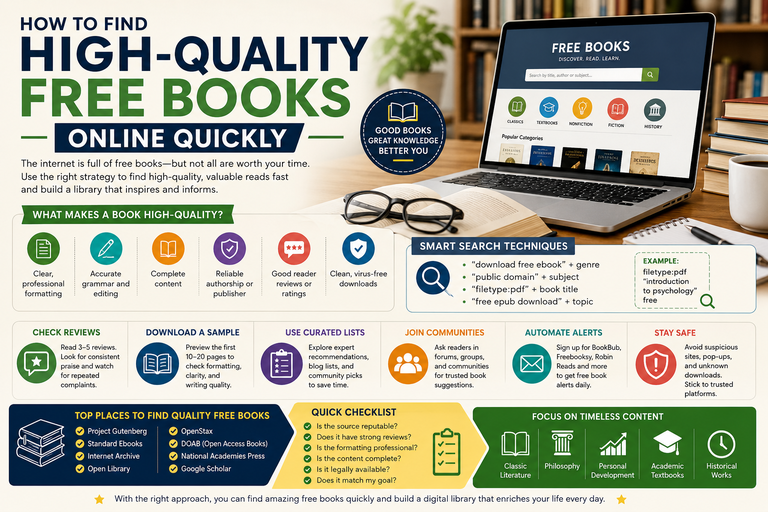
When you find a book on JunkyBooks, use these filters:
-
Is it practical? (steps, examples, exercises)
-
Is it relevant to your goal right now?
-
Can you apply it within 7 days?
-
Will it help you create proof? (project, case study, portfolio item)
If a book is too theoretical, skip it for now. Return later when you need depth.
Reading Ethically and Safely
When using any free-book platform, always prioritize legal and ethical reading:
-
choose public-domain books, author-permitted free releases, or properly licensed uploads
-
if a title is restricted, look for summaries, alternatives, or legitimate free versions
This protects creators and keeps your learning journey sustainable.
FAQs
Can free books really compete with paid courses?
Yes—if you apply what you read. Many paid courses are structured versions of what books teach. The difference is execution.
What if I don’t know what career path to choose yet?
Start with the Skill-Building shelf (communication + productivity + career strategy). Those skills help in every field, then you can specialize.
How many books should I read per month?
Aim for 1–2 books with deep implementation, not 6 books with zero action.