Free Educational Printables & Workbooks for Kids (By Age & Subject)
Free educational printables and workbooks can turn almost any kitchen table into a productive learning space without subscriptions, apps, or expensive curriculum packages. Whether you’re homeschooling, supporting classroom learning, tutoring, or simply looking for meaningful screen-free activities, printable resources offer flexible practice in reading, math, science, handwriting, and life skills.
Used thoughtfully, printables can reinforce key concepts, fill learning gaps, and build confidence without overwhelming kids or adults.
This comprehensive guide covers:
-
What educational printables and workbooks really are
-
Why they work so well (when used correctly)
-
What to look for in high-quality free resources
-
The best types of printables by age and subject
-
Where to find reliable free materials
-
Practical tips for using, printing, and organizing them effectively
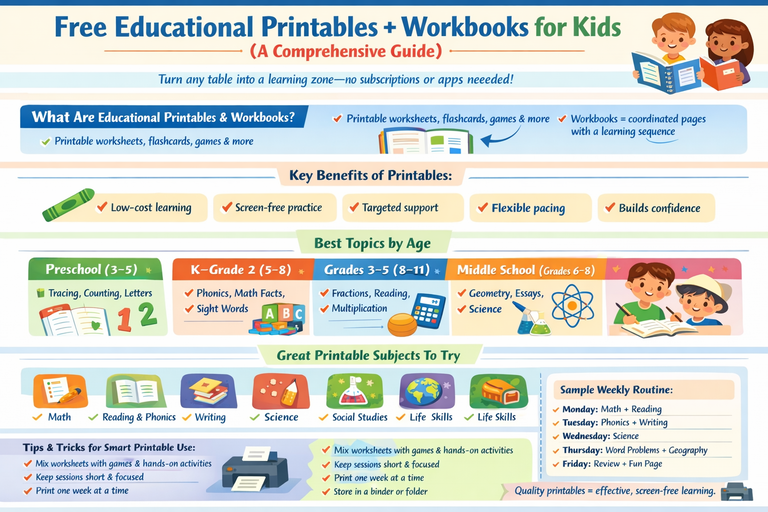
What Are “Educational Printables” and “Workbooks”?
Educational printables are downloadable learning materials designed to be printed at home or school. They include:
-
Worksheets
-
Flashcards
-
Writing prompts
-
Games and puzzles
-
Charts, posters, and reference sheets
Printable workbooks are curated sets of coordinated pages meant to be used in sequence, often organized by:
-
Grade level
-
Skill progression
-
Theme or unit of study
A well-designed printable workbook usually includes:
-
A consistent layout and visual style
-
Gradual progression from easy to more complex tasks
-
Repeated practice of specific skills
-
Review or assessment pages
-
Sometimes answer keys or teacher notes
Both printables and workbooks can be used for:
-
Skill practice: phonics, math facts, grammar, handwriting
-
Enrichment: puzzles, creative writing, science observations
-
Remediation: extra support for challenging concepts
-
Structure: daily routines or weekly learning plans
Why Printables Work So Well (When Used Smartly)
Key Benefits
Low-cost learning: Ideal for families, teachers, and tutors on a budget.
Screen-free practice: Helps balance device and app usage.
Targeted support: Print exactly what a child needs—nothing extra.
Flexible pacing: Use one page, a mini-unit, or a full workbook.
Confidence building: Short, repeatable pages encourage mastery.
Best Use Cases
Printables are especially effective for:
-
Morning work or warm-up activities
-
Independent practice while you work with another child
-
Catch-up or remediation support
-
Summer review and skill maintenance
-
Travel learning packs and quiet-time activities
What to Look for in High-Quality Free Printables
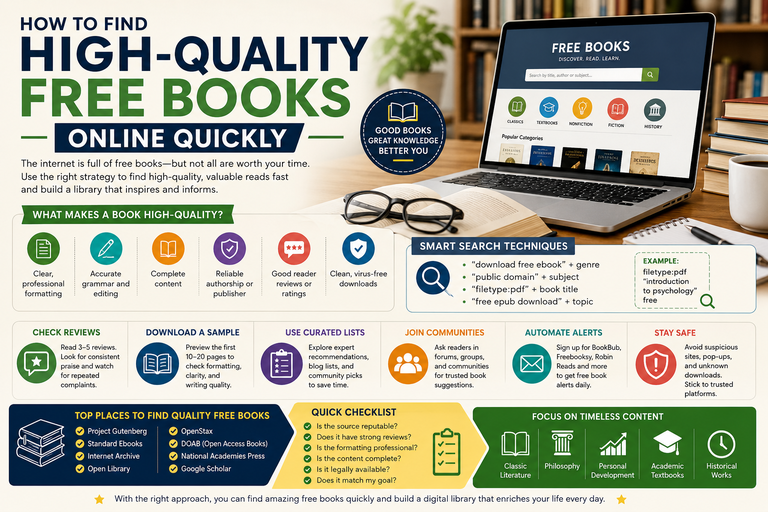
Not all free worksheets are created equal. Before printing large sets, use this quality checklist.
Quality Checklist
-
Clear learning objective: You can quickly identify the targeted skill (e.g., “subtract within 20”).
-
Age-appropriate design: Not cluttered, not overly childish.
-
Accurate content: Clear instructions and correct answers.
-
Logical progression: Skills move from simple to more complex.
-
Answer keys (when needed): Especially helpful for older grades.
-
Printer-friendly layout: Minimal ink-heavy backgrounds.
-
Standards alignment (optional): Useful for classroom or formal homeschooling.
Red Flags
-
Random mixed skills with no explanation
-
Overcrowded pages with tiny spacing
-
Distracting clipart or dark backgrounds
-
Poor formatting or obvious errors
-
Uncredited or suspiciously copied content
Best Free Printables and Workbook Topics (By Age)
Preschool (Ages 3–5)
Focus: readiness skills, fine motor control, early math, letter awareness.
Popular printable types:
-
Tracing lines, shapes, and patterns
-
Pre-writing strokes (vertical, horizontal, curves)
-
Letter recognition (matching, coloring, circling)
-
Counting to 10 and number tracing
-
Sorting activities (big/small, same/different)
-
Simple patterns (AB, AAB)
-
Basic color-by-number pages
Tip: Keep sessions short 5 to 15 minutes and focus on consistency rather than volume.
Kindergarten–Grade 2 (Ages 5–8)
Focus: phonics foundations, reading fluency, core math skills.
High-value workbook themes:
-
Phonics: CVC words, blends, digraphs, vowel teams
-
Sight word practice and mini-books
-
Handwriting: letter formation and spacing
-
Reading comprehension with short passages
-
Math: addition and subtraction within 20, place value, time, money
-
Grammar basics: nouns, verbs, sentence building
Tip: Mix formats worksheets, games, cut-and-paste, and short writing tasks.
Grades 3–5 (Ages 8–11)
Focus: fluency, multi-step thinking, writing, and content knowledge.
Effective printables include:
-
Multiplication and division drills
-
Word problems and math strategies
-
Fractions and decimals practice
-
Reading comprehension (main idea, inference, text evidence)
-
Writing prompts and paragraph organizers
-
Grammar and editing practice
-
Science passages and labeled diagrams
-
Geography and map skills
Tip: Look for scaffolded pages that teach strategies, not just answers.
Middle School (Grades 6–8)
Focus: organization, analysis, abstract thinking, and independence.
Useful workbook areas:
-
Math: ratios, integers, equations, geometry basics
-
Reading analysis: theme, argument, author’s purpose
-
Writing: essays, outlining, citations
-
Study skills: note-taking, test prep, time management
-
Science: graphing, data tables, lab report formats
Tip: Choose clean, mature designs older students often resist “cute” worksheets.
Subjects That Work Especially Well as Printables
1) Math
Ideal for repetition and mastery:
-
Fact fluency drills
-
Spiral review pages
-
Word problems
-
Place value charts and number lines
-
Fraction strips and visual models
Pro tip: Print reusable math tools on cardstock or laminate them.
2) Reading & Phonics
Printables support structured practice:
-
Phonics patterns and decoding pages
-
Reading logs and trackers
-
Comprehension questions
-
Vocabulary organizers (Frayer model, synonyms/antonyms)
Pro tip: Pair worksheets with real books to avoid worksheet-only reading.
3) Writing
Consistent, low-pressure practice improves writing:
-
Daily journaling prompts
-
Narrative, opinion, and informational planners
-
Story starters and comic-strip templates
-
Editing and revision checklists
Pro tip: Use a simple two-draft system write, then revise with a checklist.
4) Science
Printables structure observation and reinforce concepts:
-
Diagram labeling
-
Experiment recording pages
-
Life cycle sequencing
-
Scientist biography studies
Pro tip: Use worksheets after hands-on activities, not instead of them.
5) Social Studies & Geography
Best for reference and skill practice:
-
Map labeling and keys
-
Timeline templates
-
Primary source analysis sheets
-
Civics and community vocabulary
6) Fine Motor, Art, and Life Skills
Often overlooked but highly valuable:
-
Scissor skills and tracing
-
Mazes and dot-to-dot pages
-
Drawing and art prompts
-
Chore charts and habit trackers
-
Money skills and budgeting pages
Where to Find Free Educational Printables (Reliable Sources)
1) Museums, Libraries, and Public Institutions
Many offer high-quality educational PDFs:
-
Museum education departments
-
Library reading challenges
-
National parks and science organizations
2) Teacher Communities and Marketplaces (Free Sections)
Many platforms allow educators to share free resources.
Tip: Filter by grade, subject, rating, and “free,” and preview before downloading.
3) Open Educational Resources (OER)
OER platforms provide openly licensed materials:
-
Especially strong for middle school
-
Often standards-aligned
-
Printable and adaptable
4) Education Blogs and Homeschooling Sites
Many creators share:
-
Skill-based workbook sets
-
Seasonal and themed units
-
Guided learning sequences
Tip: Look for creators who explain goals and show sample pages.
How to Use Printables Without “Worksheet Burnout”
A Simple 3-Part Daily Structure (15–40 Minutes)
-
Warm-up (5–10 min): quick review page
-
Core skill (10–20 min): focused workbook pages
-
Apply/extend (5–10 min): game, reading, or hands-on activity
Make Printables More Engaging
-
Use colored pencils or highlighters
-
Cut worksheets into task strips
-
Turn pages into games or challenges
-
Offer choice (“Pick 2 of these 4 pages”)
Don’t Over-Print
Instead of printing 100 pages at once:
-
Print one week at a time, or
-
One short unit (10–20 pages), then reassess
Printing and Organization Tips (Save Time and Ink)
Printing Smart
-
Use draft mode for practice pages
-
Avoid heavy-ink designs
-
Print double-sided when possible
-
Keep:
-
Plain paper for daily use
-
Cardstock for games and tools
-
Sheet protectors + dry-erase markers
-
Organization Systems That Work
Binder system:
-
Tabs for Math, Reading, Writing, Science, Extras
Weekly folder system:
-
One folder per child with daily pockets
Clipboard basket:
-
One clipboard per child with only today’s work
A Ready-to-Use Weekly Printable Routine
-
Monday: Math review + reading comprehension
-
Tuesday: Phonics/grammar + writing prompt
-
Wednesday: Math focus + science diagram
-
Thursday: Word problems + social studies map
-
Friday: Review/quiz + fun printable
Most kids thrive with just 2–4 pages per day, plus reading and hands-on learning.
Copyright and Safety Notes
-
Respect licenses (personal or classroom use only).
-
Avoid sites that re-upload content without permission.
-
Be cautious of excessive pop-ups or required downloads.
-
Store files in a dedicated folder and scan when needed.
Final Thoughts
Free educational printables and workbooks can be a powerful learning tool especially when chosen carefully and used with intention. By focusing on quality over quantity, organizing materials simply, and pairing worksheets with real-world learning, you can support steady progress without overwhelming kids or yourself.
With the right approach, a printer, a binder, and a few good resources are often all you need to create a flexible, effective learning environment at home or in the classroom.