Best Storybooks for Kids (Free Reading Lists by Age 3–12)
Choosing the right storybook isn’t about picking the most famous title on the shelf. It’s about matching a book to a child’s age, interests, and current reading stamina so reading feels exciting, not stressful.
The lists below are designed as a starting point. From there, let your child’s curiosity do the steering.
Ages are flexible.
If your 6-year-old devours chapter books or your 9-year-old still loves picture books, that’s completely normal. The goal is always the same: more joyful reading time.
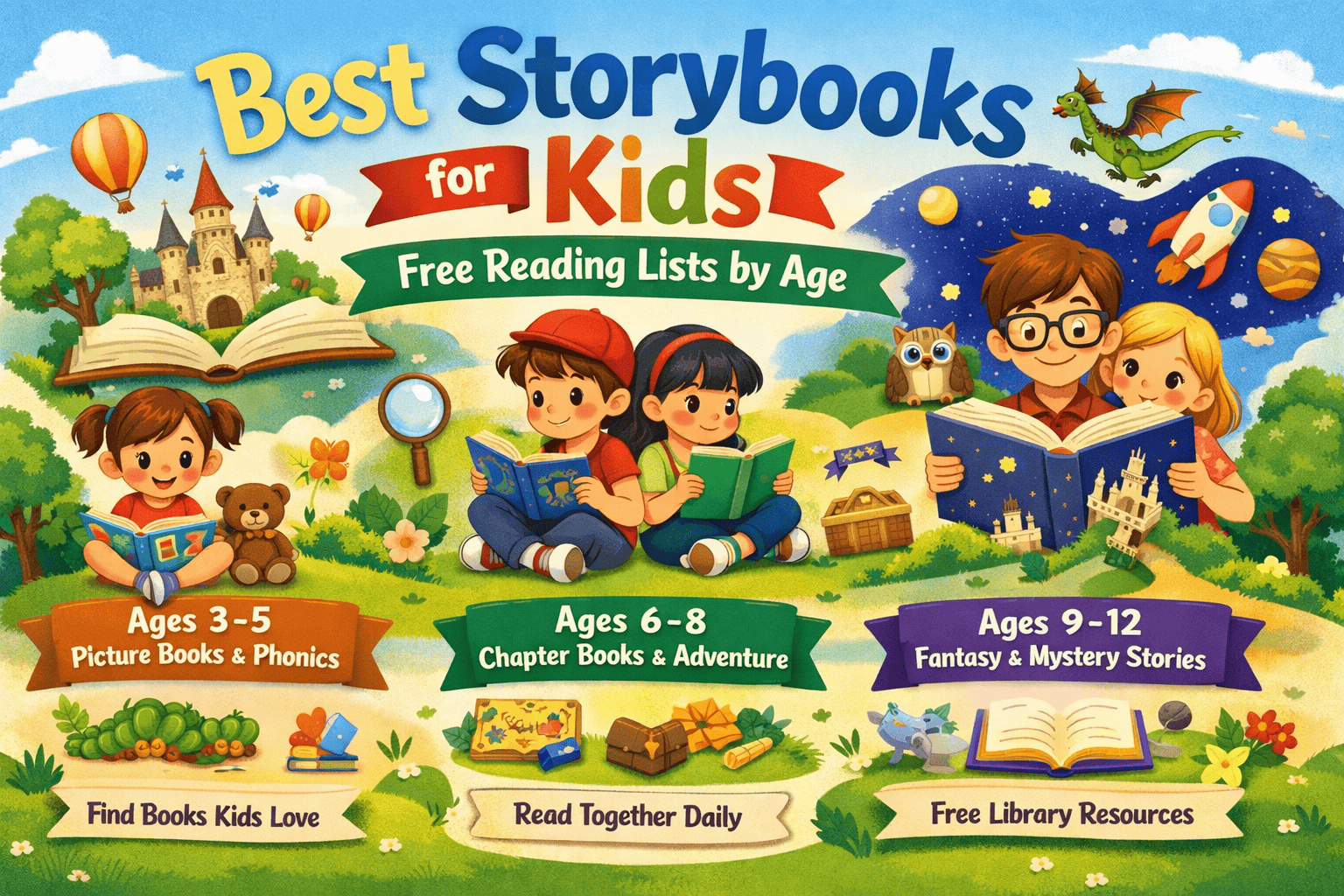
Free Reading Lists by Age
Ages 3–5
Best for: picture books, phonics stories, simple fairy tales
What to look for:
Strong, engaging illustrations
Rhythmic or repetitive language
Short, simple plot arcs
Predictable patterns
Books that are fun to read aloud (again and again)
Picture Books Kids Ask for “Again!”
These classics build early language skills while sparking imagination:
The Very Hungry Caterpillar — Eric Carle
Brown Bear, Brown Bear, What Do You See? — Bill Martin Jr. & Eric Carle
Goodnight Moon — Margaret Wise Brown
Where the Wild Things Are — Maurice Sendak
The Snowy Day — Ezra Jack Keats
Don’t Let the Pigeon Drive the Bus! — Mo Willems
The Gruffalo — Julia Donaldson
Room on the Broom — Julia Donaldson
Corduroy — Don Freeman
Click, Clack, Moo: Cows That Type — Doreen Cronin
Llama Llama Red Pajama — Anna Dewdney
Pete the Cat: I Love My White Shoes — Eric Litwin
Phonics-Friendly and Early “I Can Read” Picks
Perfect when children start noticing letters, sounds, and sight words:
Bob Books (early reader sets) — Bobby Lynn Maslen
Biscuit — Alyssa Satin Capucilli
Pete the Cat: Phonics (series) — James Dean
Step into Reading (Levels 1–2; choose by interest)
Simple Fairy Tales (Great for Bedtime)
Goldilocks and the Three Bears (picture-book retellings)
The Three Little Pigs (picture-book retellings)
Little Red Riding Hood (gentle retellings)
Tip: Choose versions with warm illustrations and less-scary pacing.
Ages 6–8
Best for: early chapter books, animal stories, adventure tales
What to look for:
Short chapters
Large print
Lots of dialogue
Humor
Series books (series = motivation!)
Early Chapter Books That Build Confidence
Frog and Toad — Arnold Lobel
Mercy Watson — Kate DiCamillo
Nate the Great — Marjorie Weinman Sharmat
Cam Jansen — David A. Adler
Junie B. Jones — Barbara Park
Ivy + Bean — Annie Barrows
The Boxcar Children — Gertrude Chandler Warner
Magic Tree House — Mary Pope Osborne
A to Z Mysteries — Ron Roy
Dragon Masters — Tracey West
Animal Stories (Big Feelings, Gentle Lessons)
Henry and Mudge — Cynthia Rylant
Poppleton — Cynthia Rylant
The Critter Club — Callie Barkley
Zoey and Sassafras — Asia Citro
Adventure + Humor (For Kids Who “Don’t Like Books”…Yet)
The Bad Guys — Aaron Blabey
Dog Man — Dav Pilkey
Captain Underpants — Dav Pilkey
Ages 9–12
Best for: fantasy, mysteries, moral stories, science fiction
What to look for:
Richer plots
Stronger character arcs
Bigger themes
Longer chapters that still move fast
Fantasy That Hooks Readers Fast
Harry Potter (series) — J.K. Rowling
Percy Jackson and the Olympians — Rick Riordan
Wings of Fire — Tui T. Sutherland
The Chronicles of Narnia — C.S. Lewis
The Hobbit — J.R.R. Tolkien
The Tale of Despereaux — Kate DiCamillo
Mystery and Puzzle-Solving Favorites
The Mysterious Benedict Society — Trenton Lee Stewart
Escape from Mr. Lemoncello’s Library — Chris Grabenstein
Enola Holmes (middle-grade editions vary) — based on Nancy Springer’s character
Moral Stories and Heartfelt Realism
Stories that quietly build empathy, courage, and perspective:
Wonder — R.J. Palacio
Holes — Louis Sachar
Because of Winn-Dixie — Kate DiCamillo
The One and Only Ivan — Katherine Applegate
Science Fiction and “What If?” Adventures
A Wrinkle in Time — Madeleine L’Engle
The City of Ember — Jeanne DuPrau
How to Choose the Best Book for Your Child
Use this quick 5-point match-up:
Interest first – Animals, trucks, princesses, mysteries, sports, jokes. Interest beats “reading level.”
Right length – If attention fades after five pages, choose shorter books or rich picture books.
Comfortable challenge – The story should feel exciting, not exhausting.
Read-aloud still counts – Many strong readers still prefer being read to, especially at bedtime.
Series are your secret weapon – One beloved character can spark dozens of books.
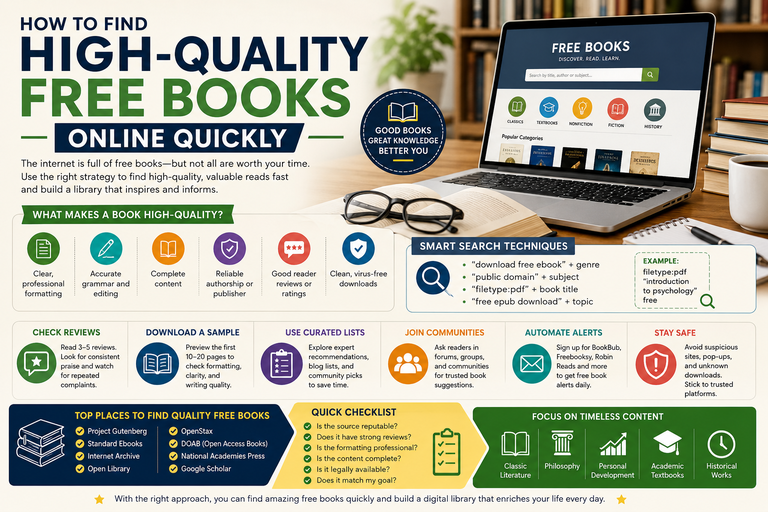
Free Ways to Find Storybooks and Build a No-Cost Reading Habit
1) Public Library Apps (Huge, Free Catalogs)
With a library card, you can borrow ebooks and audiobooks from home:
Libby (OverDrive): https://www.libbyapp.com/
(via OverDrive: https://www.overdrive.com/apps/libby)Hoopla: https://www.hoopladigital.com/
(Availability depends on your local library)
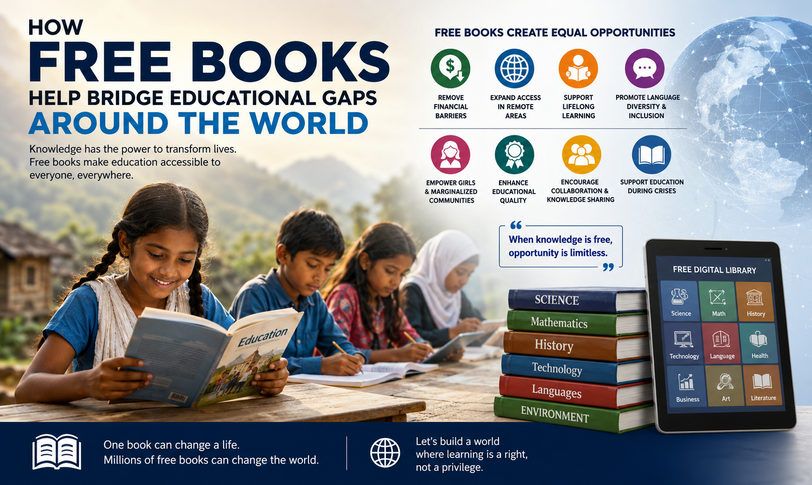
2) Free Digital Libraries (Kid-Friendly Browsing)
International Children’s Digital Library (ICDL): https://www.childrenslibrary.org/
Open Library: https://openlibrary.org/
Project Gutenberg (public-domain classics): https://www.gutenberg.org/
3) Using Free Platforms to Explore Genres
Treat free digital libraries like a genre sampler:
Pick three themes your child loves (animals, magic, mysteries).
Try one book from each theme.
Let your child “DNF” (do not finish) guilt-free and swap.
Mini Reading Routines That Actually Work
Ages 3–5: 10 minutes nightly + reread favorites (repetition builds language fast).
Ages 6–8: 15 minutes daily + one “easy win” book per week to boost confidence.
Ages 9–12: 20 minutes daily + audiobook/ebook pairing for longer novels.
Printable-Style Checklist (Quick Version)
Ages 3–5: Picture books, phonics readers, fairy tale retellings
Ages 6–8: Early chapter books, animal series, light mysteries and adventures
Ages 9–12: Fantasy series, mysteries, realistic “heart” stories, science fiction
Final Thought
The “best” storybook is the one a child wants to open again tomorrow. Whether it’s a silly picture book, a graphic novel, or a thousand-page fantasy epic, every joyful reading moment builds confidence, imagination, and a lifelong love of books.