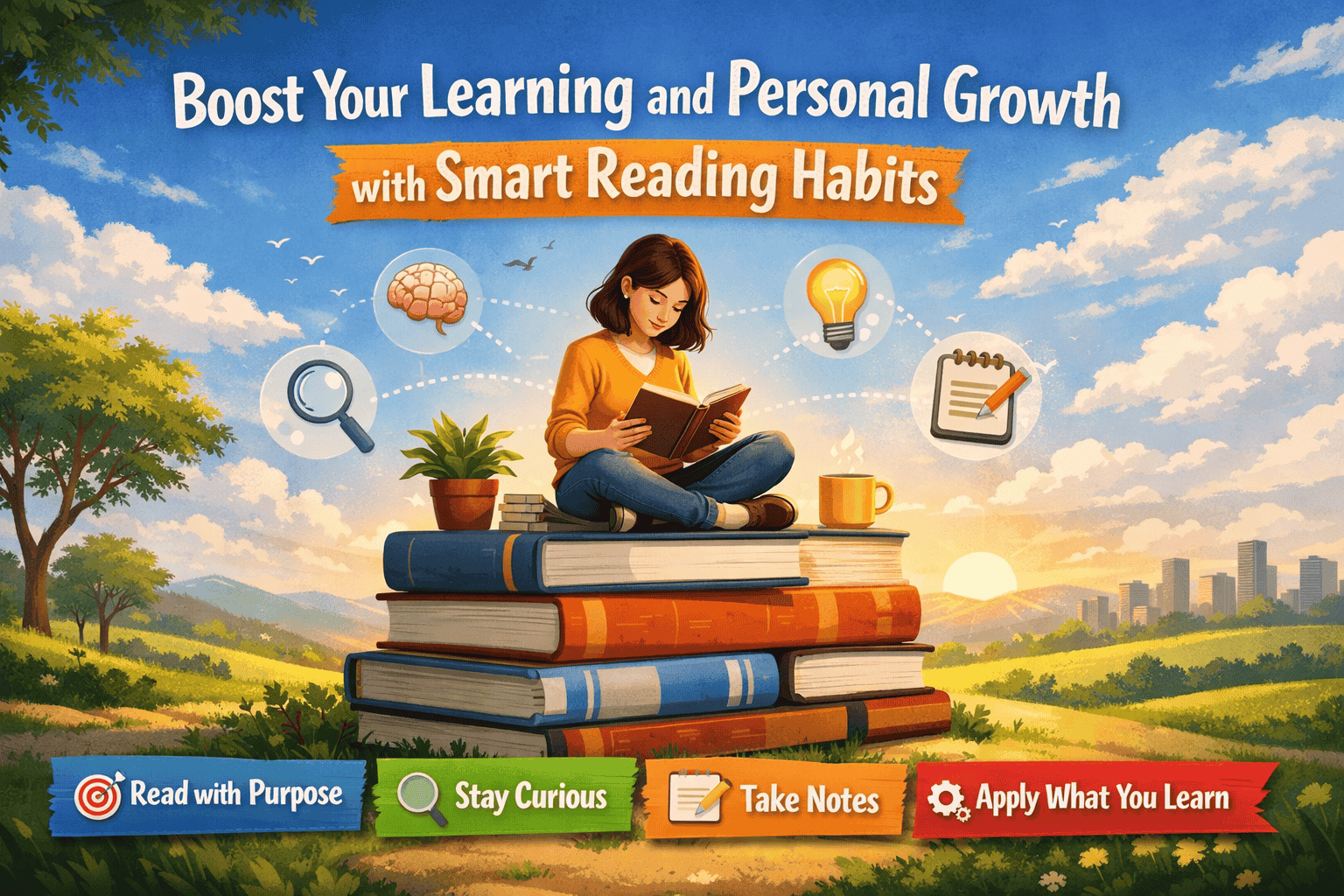
Boost Your Learning and Personal Growth with Smart Reading Habits
Learning is not a finish line you cross once and forget about. It’s a lifelong system one that quietly influences your career trajectory, confidence level, decision-making, and even how you see yourself. The books you read, the habits you build, and the actions you take afterward compound over time, often in ways you don’t immediately notice.
The good news? Meaningful growth doesn’t require expensive courses, elite mentors, or superhuman discipline. What it does require is intentional input (what you read), supportive habits (how you read), and follow-through (what you do with what you learn).
This is where the JunkyBooks blog plays an important role. It goes beyond simply offering free books by helping readers and writers turn reading into real-world progress. Through practical advice, clear frameworks, and step-by-step guidance, the blog bridges the gap between information and action.
Below are three high-impact themes that consistently help people get more value from their time, their reading, and their long-term ambitions.
1) Develop Healthy Digital Reading Habits That Make Screen Time Productive
Digital reading can either be a powerful learning tool or a constant source of distraction. The difference isn’t the screen it’s the system around it. Without intention, reading on a phone or tablet easily turns into endless scrolling, tab-hopping, and half-finished chapters.
Instead of relying on willpower, design habits and environments that make focus the default.
Build a reading routine that actually sticks
Most people fail at reading goals because they aim too big too fast. The key is to prioritize consistency over intensity.
Try this approach:
-
Set a tiny daily minimum (5 pages or 10 minutes). Small goals reduce resistance and build momentum.
-
Attach reading to an existing habit, such as your morning coffee, commute, lunch break, or bedtime routine.
-
Choose a specific time window (“7:30–7:45 PM”) instead of a vague plan like “when I have time.”
When reading becomes automatic like brushing your teeth you stop debating whether to do it and simply do it.
Use friction to protect your attention
Screens are designed to interrupt you, so you need to interrupt the interruptions.
Simple but effective strategies include:
-
Turning on Do Not Disturb mode during reading sessions.
-
Disabling non-essential notifications, especially from social and messaging apps.
-
Keeping only one reading app or browser tab open.
-
Using a timer (20–30 minutes) to create a clear focus window.
If you read primarily on your phone, small design tweaks such as moving social apps to a separate screen, using grayscale mode, or logging out of distracting platforms can significantly reduce impulsive switching.
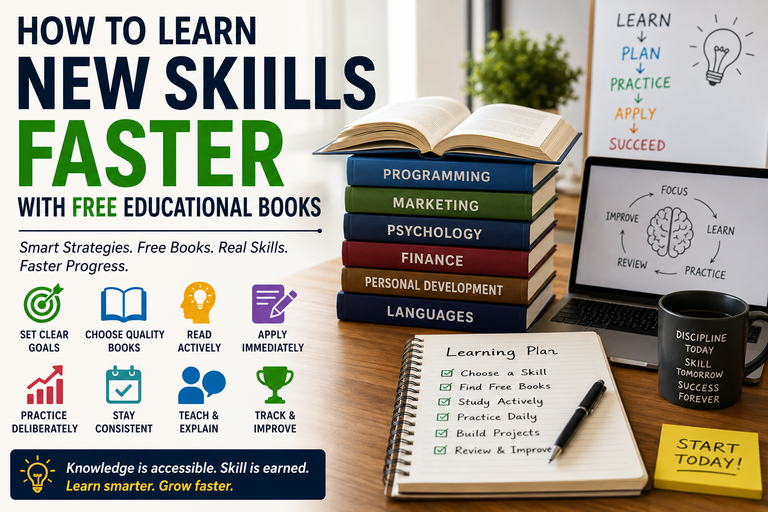
Read with purpose: turn pages into progress
Productive reading isn’t about speed or volume it’s about retention and application.
Use this simple four-step system:
-
Preview: Skim headings, summaries, or introductions so your brain knows what to expect.
-
Question: Ask yourself, “What problem am I trying to solve with this chapter?”
-
Capture: Highlight or note only ideas you can realistically use later.
-
Apply: Write down one concrete action after each session.
A helpful rule to remember:
If you can’t name one thing you’ll do differently after reading, you didn’t truly read you just browsed.
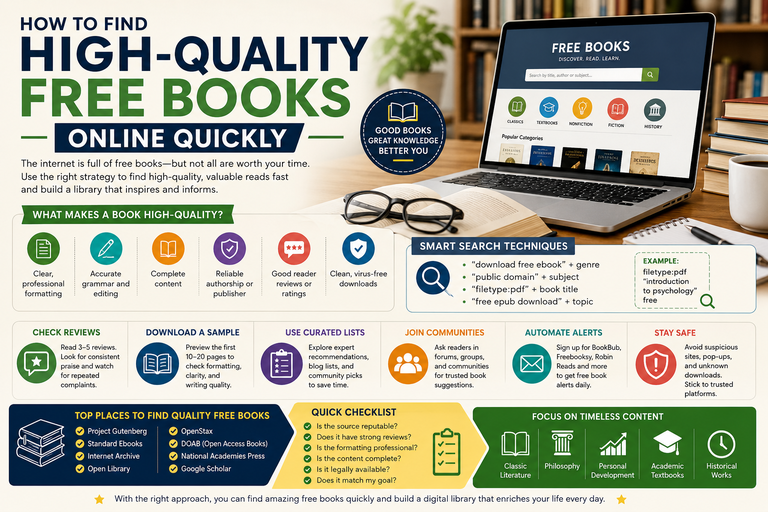
2) Accelerate Career Growth with Free Business, Tech, and Skill-Building Books
Career growth often feels confusing because people treat it as something that happens to them. In reality, the fastest progress comes when you treat your career like a project with clear goals, deliberate learning, and visible results.
When chosen strategically, free books can become an unfair advantage.
Choose books that match your next opportunity
Avoid random reading. Read for leverage.
Before choosing your next book, ask:
-
What skill would make me noticeably more valuable in the next 90 days?
-
What does my industry reward most: execution, communication, analysis, leadership?
-
What skill can I demonstrate, not just understand?
Focus on books in high-impact categories such as:
-
Business fundamentals: strategy, operations, finance basics, negotiation
-
Tech and digital skills: data literacy, product thinking, coding foundations, cybersecurity basics
-
Professional power skills: writing, presenting, time management, critical thinking
-
Leadership and growth: decision-making, managing people, feedback, habit-building
The best career book isn’t the trendiest it’s the one that removes your current bottleneck.
Turn reading into a tangible career asset
Learning only becomes valuable when it produces evidence.
Use this four-week conversion plan:
-
Week 1: Learn the core concepts and terminology.
-
Week 2: Build something small a checklist, template, script, dashboard, or plan.
-
Week 3: Apply it at work to improve a process, save time, or increase clarity.
-
Week 4: Document the outcome (before/after comparison, metrics, lessons learned).
That documentation can become:
-
A resume bullet point
-
A compelling interview story
-
A signal for promotions or raises
-
A portfolio piece when switching roles
Build a skills stack instead of chasing one “perfect” skill
Trying to master a single big skill often leads to burnout or stagnation. A smarter strategy is skill stacking combining complementary abilities that amplify each other.
Examples include:
-
Domain knowledge + communication
-
Data basics + business understanding
-
Technical fundamentals + project management
-
Writing + leadership
Books are ideal for this approach because they allow you to build both breadth and depth without financial barriers.
3) Publish Your First Ebook with a Clear, Step-by-Step Path
For aspiring writers, publishing can feel overwhelming formatting, covers, platforms, pricing, and marketing all seem like obstacles. But your first ebook doesn’t need to be perfect. It needs to be finished, useful, and discoverable.
Here’s a practical path from idea to publication.
Step 1: Choose a narrow, winnable topic
Specific topics outperform broad ones because they promise clear outcomes.
Instead of “self-improvement,” try:
-
“A 14-day plan to build a reading habit”
-
“Interview preparation for junior data analysts”
-
“Beginner’s guide to freelancing in graphic design”
-
“Meal prep for busy students on a tight budget”
Narrow focus builds trust and relevance.
Step 2: Outline before you write
A strong outline saves time and reduces overwhelm. A simple structure could include:
-
Who the ebook is for
-
The core problem
-
Why it matters
-
Step-by-step solution
-
Examples or templates
-
Common mistakes
-
Clear next steps
A good outline turns writing into execution instead of guesswork.
Step 3: Write in short, consistent sessions
Focus on completion, not perfection:
-
Draft quickly without editing.
-
Use clear, simple language.
-
Include checklists, frameworks, and examples to increase perceived value.
Consistency beats marathon writing sessions.
Step 4: Edit for clarity, then for polish
Edit in two stages:
-
Clarity pass: Remove fluff, tighten explanations, define terms.
-
Polish pass: Fix grammar, formatting, headings, and consistency.
If possible, get at least one external reader to identify confusing sections.
Step 5: Package the ebook professionally
Presentation influences trust:
-
Use clean, consistent formatting.
-
Design a simple but clear cover.
-
Write a strong title and subtitle that communicate benefits.
-
Create a description that answers: who it’s for, what problem it solves, and what readers will achieve.
Step 6: Publish and iterate
Treat your first launch as a learning cycle:
-
Start with a reasonable price (or free/low-cost for visibility).
-
Collect reader feedback.
-
Update the ebook based on real questions.
-
Build a second ebook that expands on the first.
Publishing is a skill. Your second book improves because the first exists.
Turn Information Into Action: A Simple Weekly Growth System
To ensure learning actually changes your life, follow this repeatable weekly framework:
-
Pick one focus area (career skill, habit, or writing project)
-
Choose one aligned book
-
Schedule three focused reading sessions (20–30 minutes)
-
Write one actionable page of notes
-
Complete one small deliverable (template, plan, project step, or draft)
This is how you stop collecting information and start building a track record.
Why This Matters
The JunkyBooks blog isn’t just about discovering books it’s about using them effectively. By building healthier digital reading habits, leveraging free resources for career growth, and following practical publishing guides, readers and writers can turn ordinary screen time into long-term personal momentum.